
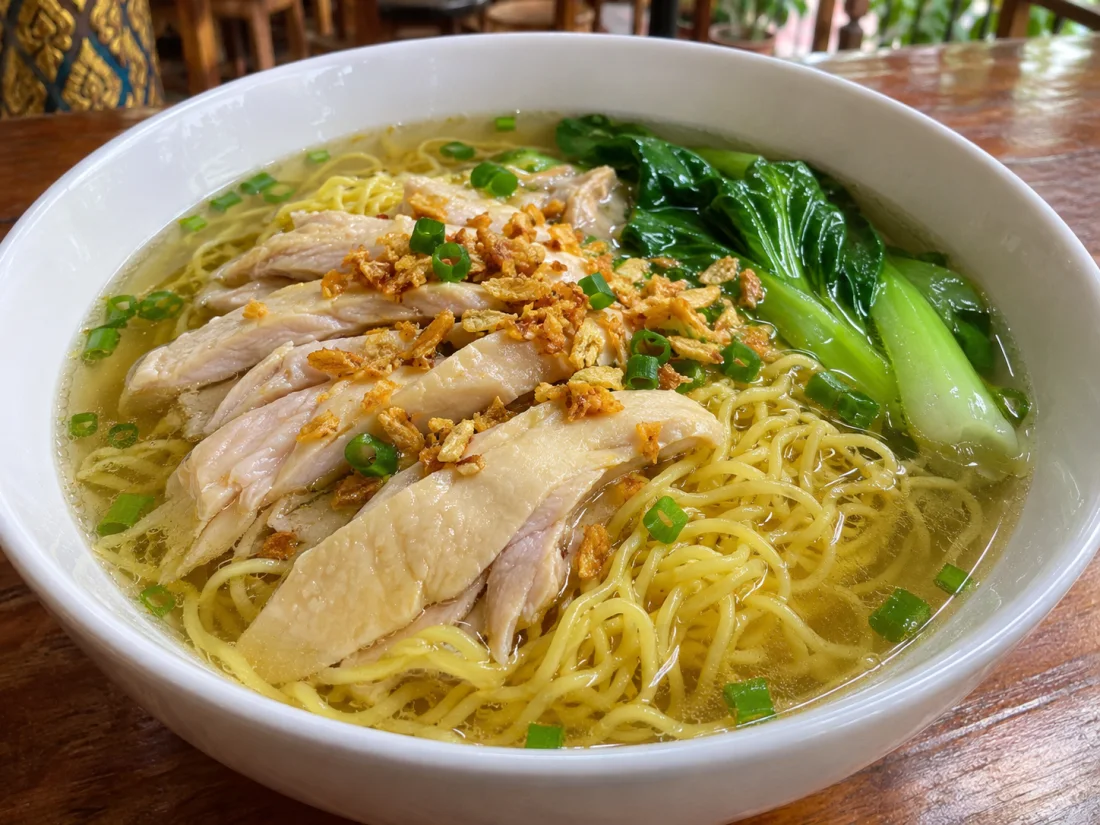

 chicken
The name tells you the noodle and the meat
Ba mee on a Thai noodle menu usually means yellow wheat-and-egg noodles. Gai means chicken. The name gives you the noodles and the main topping, while the broth, chicken cut and seasonings depend on the restaurant. Clear broth, dry tossed noodles, braised wings and separately seasoned toppings can all appear with more words in the name.
Some Thai chicken noodle shops advertise house-made egg noodles. Others use flat egg noodles for shredded chicken in clear broth or serve garlic-seasoned noodles dry. These versions belong to the broad range of noodle bowls found in Thai shops. The basic name cannot establish one province as their birthplace.
The noodles, chicken and vegetables in a clear bowl
The noodles are cooked and transferred to a bowl with chicken, vegetables and broth. Narrow round noodles separate more readily with chopsticks, while flat noodles take up more broth. Wheat egg noodles are often springier than rice noodles. Cooked chicken can be shredded or sliced, or served as a larger bone-in piece.
Chicken or chicken bones can flavor the broth, along with scallions, coriander root, garlic or pepper. Leafy greens, bean sprouts and scallions vary by shop. Fried garlic added at service contributes aroma and a little crunch. Making the components separately allows the cook to attend to both the noodle texture and the chicken.
The flavor of the broth, noodles and toppings
A clear bowl has gentle chicken and savory flavors, with a mild wheaty or egg aroma in the noodles. Fine shreds of chicken can be picked up with a mouthful of noodles. Thicker slices or braised wings make the chicken texture more prominent. Bean sprouts give crunch, while leafy greens, scallions and fried garlic add their own textures and aromas.
Coconut, sourness and pronounced heat are not defining flavors of a clear-broth bowl. A cook might season with fish sauce, soy sauce or sugar, and a shop may set out chilli powder or chilli vinegar. Try the broth first and then season it as desired. Tom yum or other additional words in the menu name can point to a more sour or spicy bowl.
How it fits a quick meal
Thai chicken noodle soup is encountered at street stalls and noodle shops as an individual meal. A shop may ask the diner to choose the noodle and whether they want broth before putting chicken and vegetables in the bowl. Servings vary in the amount of noodles, chicken and broth. Ask about extra noodles or meat if you want a larger bowl.
A bowl combines a starch, chicken and vegetables while warm. The broth and noodles can sometimes be served apart. In a dry bowl, garlic oil, chicken and sauce cling directly to the noodles and the savory flavor is more concentrated. A little bowl of clear soup can come on the side, which also helps keep takeaway noodles from sitting in broth.
Clear, dry and curry noodle names
Nam is a clue that the bowl contains soup and nam sai specifically points to a clear broth. Haeng usually indicates a dry bowl. Gai chik says the chicken is shredded, while pik gai refers to wings. If the menu says only ba mee gai, ask about the broth and how the chicken is prepared.
This dish can be confused with northern khao soi gai, which features curry broth and sometimes a tangle of crisp noodles on top. A clear chicken egg noodle bowl instead features light savory broth and boiled noodles. If both dishes have yellow noodles and chicken, their broth and menu names are better clues.
Allergies in the noodles, broth and toppings
Wheat and egg are common in egg noodles. Fish sauce may contain fish, and soy sauce may contain soy and wheat. Oyster sauce, fish balls, wontons and peanut toppings may add mollusks, fish, crustaceans or peanuts. Chicken in the name gives no assurance about pork bones, fish or powdered seasonings in the broth.
If you have a food allergy, ask whether the kitchen shares noodle water, strainers, ladles and mixing utensils. Dry noodles can also come with crackling or a side of peanuts. Tell the restaurant what you need to avoid and ask about the ingredients in its noodles, broth and toppings that day.
If you have a food allergy, tell the restaurant before ordering and ask about ingredients, sauces and shared cooking equipment.