

 pork neck
 fish sauce
Pork in Thai yellow curry
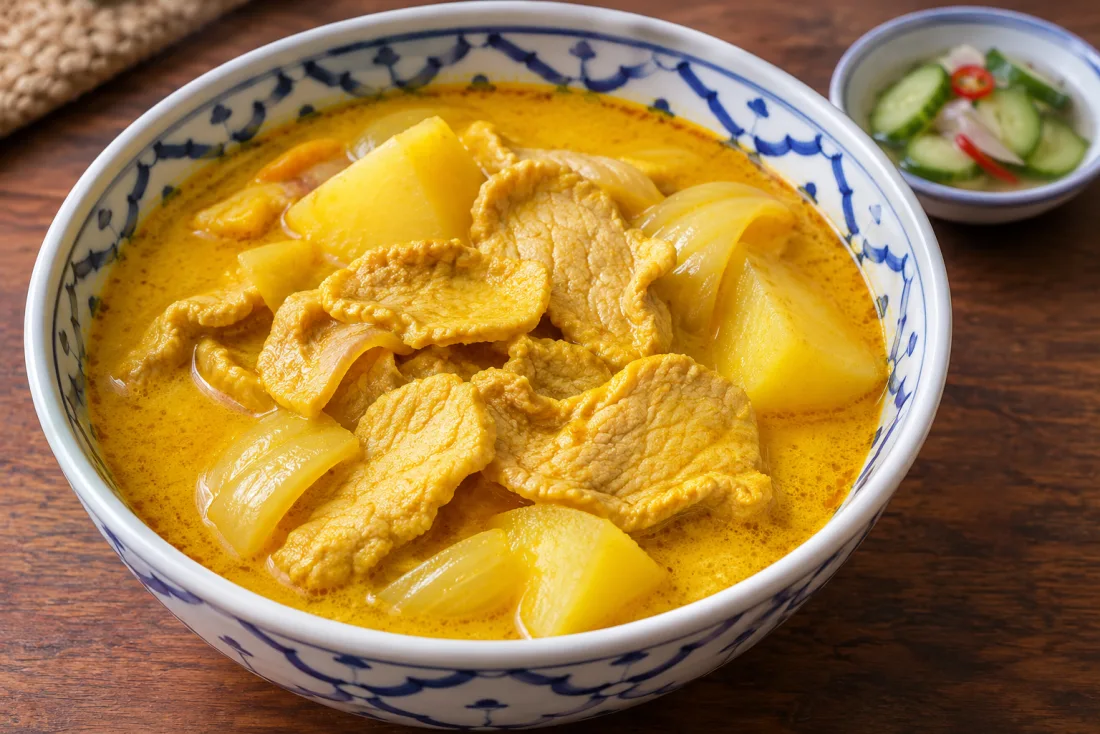
Moo means pork. Thai gaeng kari can use several proteins. A Thai recipe simmers pork neck with potato, onion and coconut milk. The name is used for a curry style, while ingredients vary by kitchen.
Curry powder, coconut milk and potato
Fry yellow curry paste in coconut milk and add curry powder, cardamom and bay leaf. Simmer pork, potato and onion, and season with fish sauce and palm sugar. If the potato pieces vary in size, check the largest one for tenderness. Some pastes also include coriander seeds, cumin, ginger and shrimp paste.
Warm spice, creamy sauce and soft potato
Coconut gives a creamy texture, spices add warmth and onions lend sweetness. Potato softens and slightly thickens the sauce. Turmeric in some blends adds color. Yellow color alone does not indicate heat.
Serving with rice and cucumber relish
Serve with steamed rice and optional sweet-sour cucumber relish. Divide the pork and potatoes and spoon sauce over them. Set any whole spices aside and ask about the pork cut if desired.
Southern sour curry and massaman
Southern gaeng som or gaeng lueang usually uses turmeric, a water base and pronounced acidity. Gaeng kari uses a coconut base and warmer spice. Massaman often adds tamarind and roasted peanuts. Japanese curry can use a prepared roux.
Allergens in paste, seasoning and side dishes
Shrimp paste adds crustaceans and fish sauce contains fish. Declare coconut allergy. Check soy, wheat or milk in packaged paste and marinades, and ask about equipment. Roti can include wheat, dairy or egg.
If you have a food allergy, tell the restaurant before ordering and ask about ingredients, sauces and shared cooking equipment.