

 shrimp
 fish sauce
Shrimp in Thai jungle curry
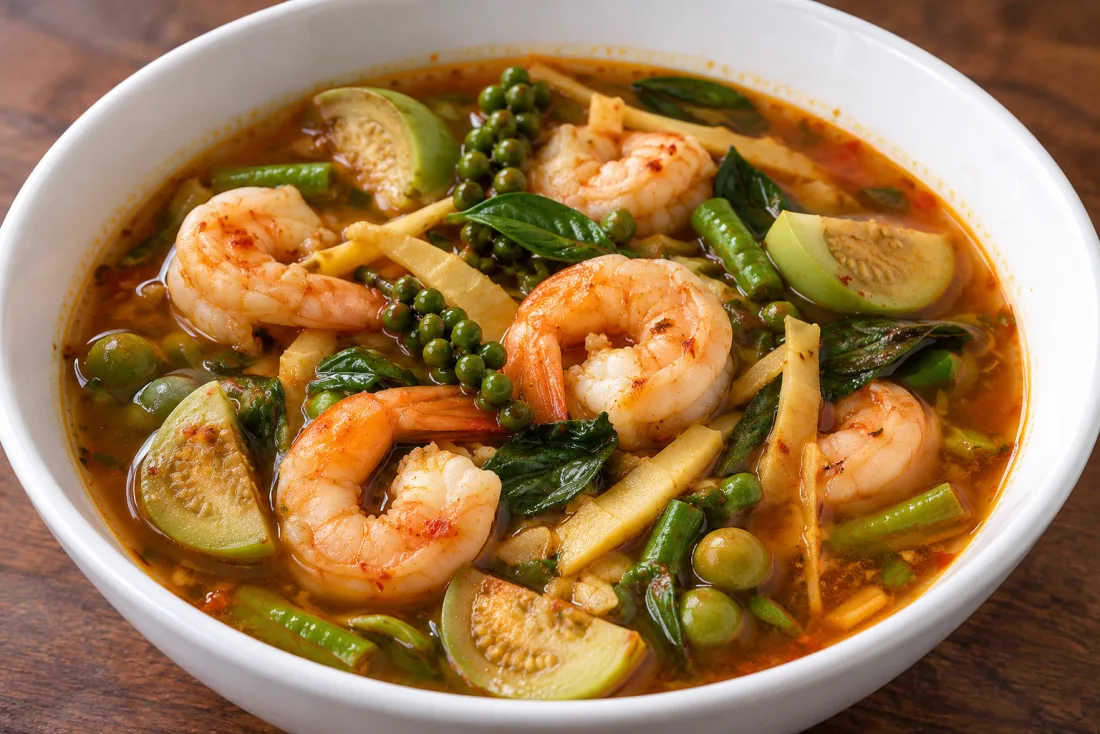
Kung means shrimp. Thai jungle curry has a water and hot herb paste base, and shrimp can be added whole or minced. Shrimp size, species and vegetables vary by recipe.
Shrimp, peppercorn and vegetables
Dissolve the curry paste in water, then cook Thai eggplant, long bean and shrimp. Add fish sauce and finish with fingerroot, green peppercorn, holy basil and optional lime leaf. Another method fries minced shrimp with the paste first.
Sweet shrimp and direct herbal heat
Whole shrimp is sweet and springy; minced shrimp spreads through the broth. Fingerroot, green peppercorn and holy basil give distinct aromas, and pea eggplant can be lightly bitter. Sauce color does not predict chili heat.
Sharing it with rice
Serve with white rice, share shrimp and vegetables, and remove tails or tough stems as needed. Ask whether the kitchen can make it with less paste when the curry has not yet been cooked.
Comparing tom yum and green curry
Tom yum often highlights lime acidity and green curry usually uses coconut milk. Jungle curry emphasizes the hot water-based paste, peppercorn and fingerroot. Kung sap indicates minced shrimp.
Allergens in shrimp, paste and broth
Shrimp and shrimp paste contain crustaceans. Fish sauce contains fish. Check soy, wheat and any mollusk ingredients in packaged seasonings, and ask about shared grinders, boards, woks and ladles.
If you have a food allergy, tell the restaurant before ordering and ask about ingredients, sauces and shared cooking equipment.