

 prawn
The name describes the basic cooking method
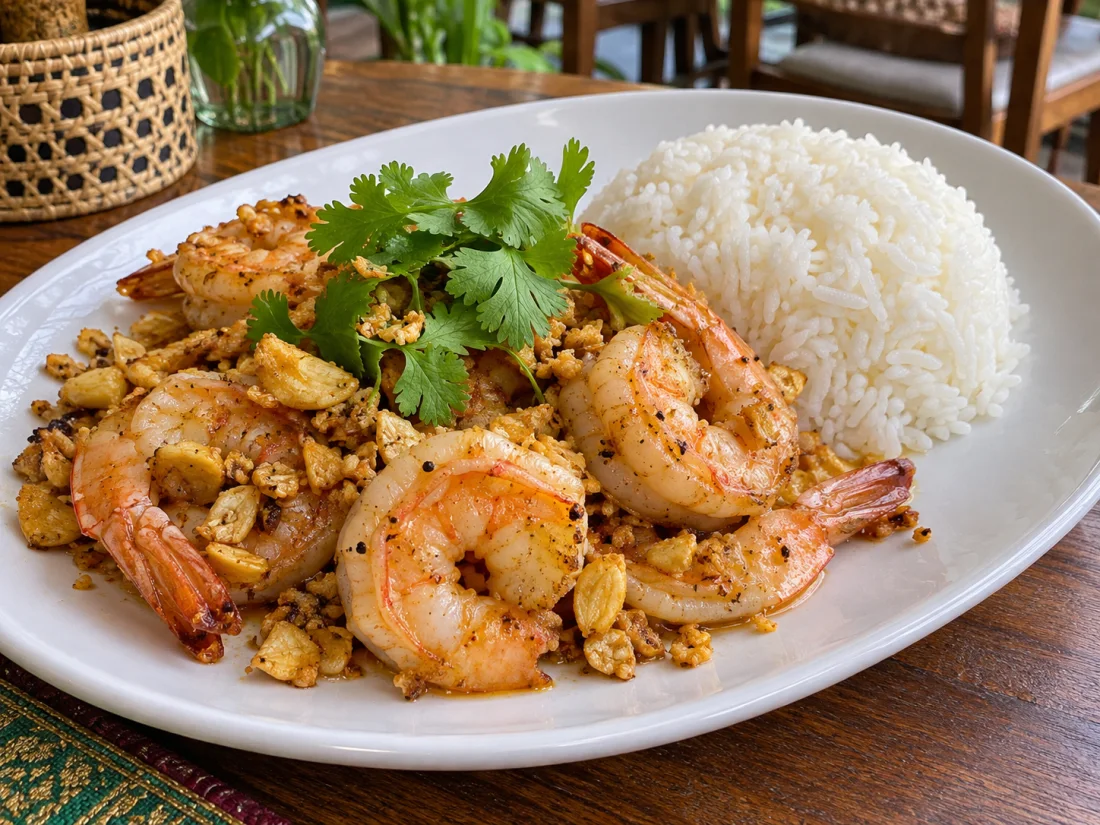
Goong means shrimp, pad means stir-fried and kratiem means garlic. These words tell you what is stir-fried together. Phrik thai specifies pepper if a menu adds that term. Bangkok menus include shrimp with garlic and pepper, while a food hall may list garlic shrimp and rice together as a single meal.
This dish belongs to a family of Thai garlic stir-fries. Versions with pork or chicken change the word for shrimp to the name of the other meat. Its name and restaurant versions show that the technique works with different main ingredients, without pointing to one province of origin. Kitchens can also choose shrimp according to local supplies.
Shrimp, aromatics and a little sauce
The shrimp can be peeled with their tails left on for serving. Large shrimp offer a thicker bite, while smaller shrimp can be more evenly coated in seasoning. Size influences the bite and juiciness. Chopped or pounded garlic can be cooked in oil with white pepper and coriander root. These three aromatics are often called sam kloe in Thai kitchens.
A small amount of seasoning contributes savory flavor when the shrimp and garlic are tossed together. Fish sauce, soy sauce, oyster sauce, seasoning sauce or a little sugar may be used. Some recipes fry a separate portion of garlic to add at service. Soft garlic scents the thin sauce while crisp pieces sit on the shrimp.
Garlic comes first, with heat that depends on the seasoning
Garlic rises first from the hot pan, followed by the sweetness of the shrimp. Pepper brings a warm bite and coriander root adds an herbal scent. Cooked shrimp should have a springy texture, with garlic that can range from soft to crisp. A thin coating of sauce lets more shrimp flavor come through.
A pepper-seasoned version usually has a different kind of heat from fresh chilli, although a heavy dose of pepper can be pungent. Other recipes add fresh chilli to the garlic or serve a sharp, spicy seafood dip. For a milder plate, ask about the shrimp and the dip separately, and look for menu words specifying fresh chilli.
Ordering it over rice or to share
The stir-fry can go over steamed rice, which takes up the thin sauce and pieces of seasoned garlic. Khao in khao goong pad kratiem points to rice and often a serving for one. Ordered separately, the shrimp can be shared with rice, clear soup and other dishes.
The dish appears in restaurant and food-hall menus in Bangkok. Garlic and shrimp make a recognizable pairing, suitable as a simple seafood plate or one dish among several. The amount and size of shrimp, and whether rice comes with it, depend on the menu. Some rice plates may add egg separately.
Deep-fried, chilli-salt and shrimp-head fat variations
In goong tod kratiem, tod signals frying. One river-prawn version calls for frying the prawns after seasoning. Another approach lightly coats shrimp in starch, fries them and tosses them with a garlic mixture. Frying brings the outer texture forward, while the stir-fry emphasizes shrimp tossed with garlic and sauce in the pan.
Some versions add fat from the head of the shrimp, giving the juices a richer orange color. Phrik kluea on a menu signals chilli and salt. If a photo is unclear, ask whether the shrimp were fried first, whether any shell remains, and whether garlic, pepper or chilli leads the seasoning.
Crustaceans and allergens in prepared seasonings
Shrimp are crustaceans and the main ingredient. Fish sauce can contain fish, oyster sauce can contain mollusks such as oysters, and soy or prepared sauces can contain soy and wheat. Ask separately about versions with shrimp fat, egg or butter. A picture can show the shrimp but cannot identify the other ingredients in the sauce.
Tell the restaurant what you need to avoid, then ask about sauces, woks, spatulas, oil for frying garlic and shared preparation tools. Removing the shrimp would leave sauce and garlic cooked with them. The kitchen can confirm whether it can prepare a separate meal.
If you have a food allergy, tell the restaurant before ordering and ask about ingredients, sauces and shared cooking equipment.