

 budu fermented fish sauce
What budu means in southern Thailand
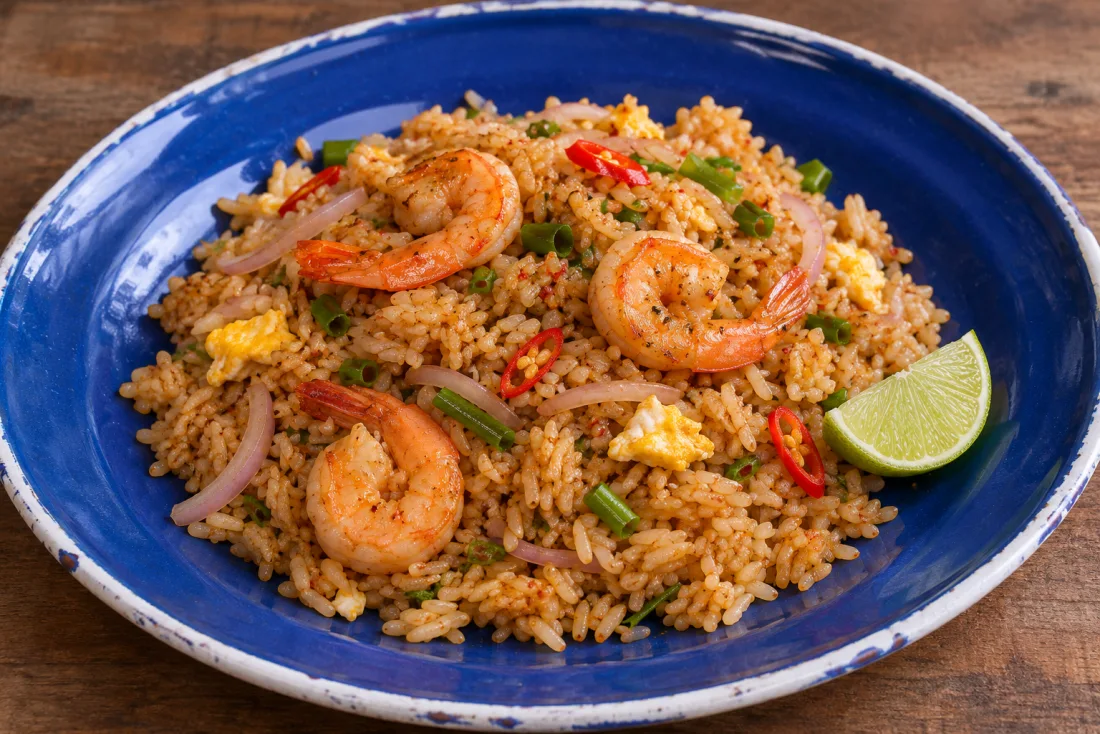
Khao pad means fried rice and budu is a southern Thai fermented fish seasoning. Prince of Songkla University documents sea fish and salt, including anchovy-based preparations in Sai Buri, Pattani. Thai cultural records describe its wider use in the south. One Pattani restaurant serving pairs budu fried rice with stink beans. That serving illustrates local use without establishing one birthplace or recipe.
Rice, budu and variable additions
Cooked rice is loosened in a hot wok and seasoned with budu. Budu is made from fish and salt, and local sources distinguish products of different consistencies as well as salty or sweetened styles. Stink beans give a crisp bite and distinctive aroma in one Pattani serving. Egg, fish, shrimp, vegetables or a lime wedge may be added according to the kitchen.
Loosen the grains before adding the sauce
The identifying step is wok-frying. Separate the rice before adding a little budu according to its strength. The amount and order of other ingredients depend in part on how much water they release. Well-separated grains take seasoning evenly. A sweetened budu changes the balance, and lime or chilli can be added separately.
Wok aroma, fish savouriness and a fermented finish
The hot rice gives a toasted aroma, followed by the saltiness and savoury character of the fish seasoning. Stink beans can add a crisp bite and a distinctive green note. Lime can bring out the savoury taste. A lightly seasoned version leaves more room for the aroma of the rice and other ingredients.
How it differs from the southern rice salad
Southern khao yam can serve rice with aromatic vegetables, toasted coconut, ground seafood and budu to mix at the table. Budu fried rice cooks the rice and sauce together. A restaurant may still plate fish or vegetables separately. Ask how the restaurant seasons its rice and whether it serves stink beans or lime if you want that particular combination.
Allergens in budu and other ingredients
Budu contains fish even when no pieces are visible. Depending on the recipe, shrimp adds crustaceans and egg may also be present. Other cooking sauces can contain soy, wheat or molluscs. Woks and utensils may be shared. Ask what budu and toppings are used, which sauces are already mixed in, and how equipment is handled if cross-contact matters.
If you have a food allergy, tell the restaurant before ordering and ask about ingredients, sauces and shared cooking equipment.