
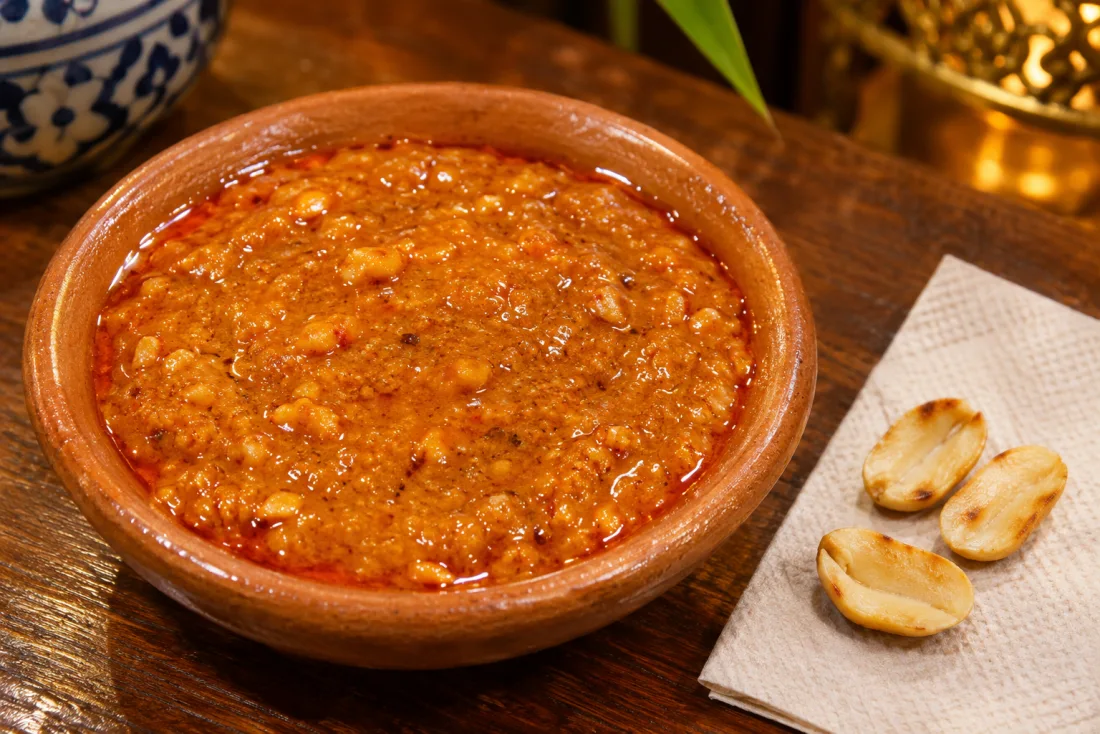

The sauce on a Thai menu
Nam chim means a dipping sauce. Satay shops serve this rich sauce in a small bowl or sell it separately. It is often accompanied by a clearer sweet-sour cucumber relish called achat. The two sauces can be used in alternating bites.
Peanuts and coconut milk
Roasted peanuts can be ground fine or left slightly coarse. Coconut milk and the peanuts make the sauce thick enough to coat a spoon. Some cooks use coconut fat to fry the paste before mixing in the remaining coconut milk.
Curry paste, palm sugar and tamarind
Massaman paste or another curry blend can add warm spice. Tamarind supplies fruit acidity, palm sugar rounds the sauce, and salt balances it. The heat and amount of tang depend on the recipe.
Coarse or smooth sauce
A coarse sauce leaves a little peanut grit. Finer sauce coats a skewer evenly. Some cooked batches show a thin red sheen where oil separates. Colour alone does not establish how spicy a batch tastes.
Serving it with cooked skewers
Dip grilled pork, chicken or another satay a little at a time. Cucumber relish or toast may be served too. If buying the sauce separately, check the retailer's storage instructions.
Allergens in sauce and shared dips
Peanuts are a defining allergen. Curry paste may contain shrimp, and fish sauce contains fish. Check coconut and prepared seasonings for other relevant ingredients, including soy, wheat, sesame or milk. A shared bowl can pick up allergens from seafood or bread.
If you have a food allergy, tell the restaurant before ordering and ask about ingredients, sauces and shared cooking equipment.