

What the Thai name emphasizes
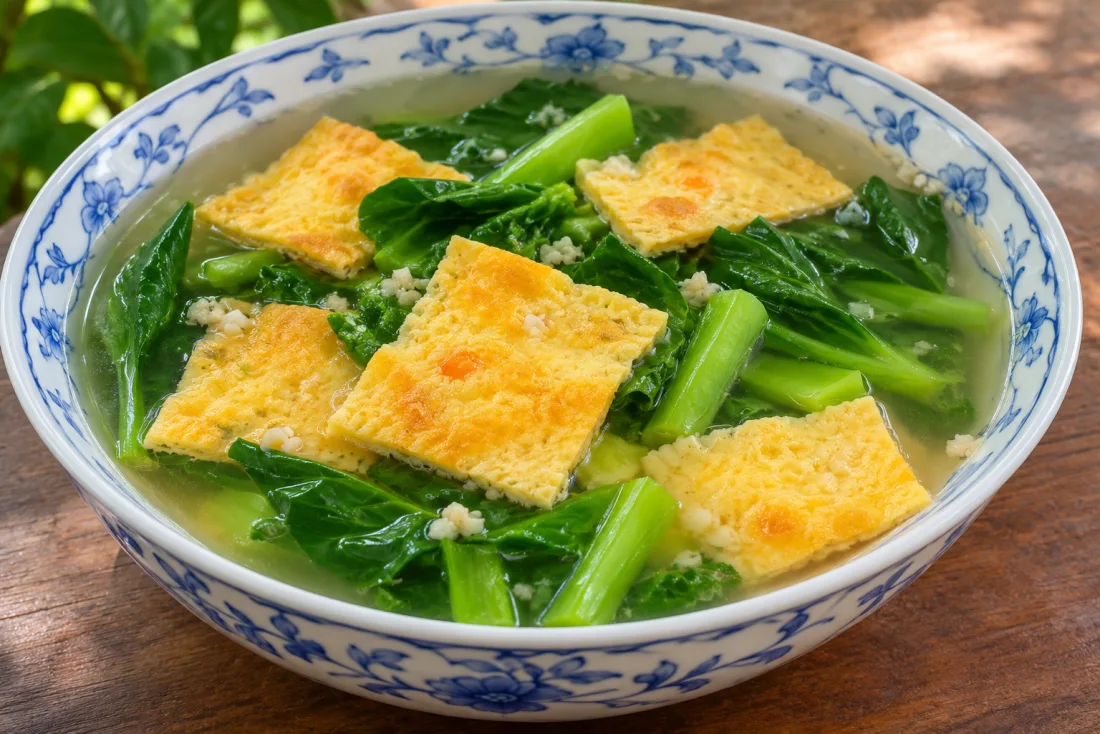
Gaeng jued denotes a mild Thai soup and ton khana names Chinese broccoli, drawing attention to the stems. The historical preparation also includes salted egg, even where a short menu name only mentions the vegetable.
Chinese broccoli, salted egg and rice flour
The reference uses Chinese broccoli, salted egg, ground rice flour, garlic and lard. The rice flour binds the egg mixture. The archive does not specify which bird the salted egg comes from.
Broth and fried egg texture
Stems remain firmer than the leaves and retain some vegetal flavor. The fried egg absorbs the broth at its edges and carries a savory note. Fried garlic gives the bowl a distinct finish.
Searing the egg before simmering
The yolk and rice flour are blended before the white is added back. The egg is fried, cut into square pieces and heated in the soup after the vegetables. The old recipe adds fried garlic near the end and leaves the final seasoning unspecified.
Serving and menu variations
This mild soup can accompany rice, spicy stir-fries or sweet-savory meat dishes. Some kitchens use regular fried egg, tofu or ground pork. Ask about the salted egg pieces and whether the greens include stems.
Allergens, cooking fat and seasoning
The dish contains egg and the historical version uses pork lard. Rice flour is ground rice, but a substitute mix may contain wheat. Ask about stock, fish sauce, oyster sauce, soy sauce and shared equipment. Removing the egg pieces leaves a broth in which they were cooked.
If you have a food allergy, tell the restaurant before ordering and ask about ingredients, sauces and shared cooking equipment.