

 snakehead fish
 shrimp paste
The historical name
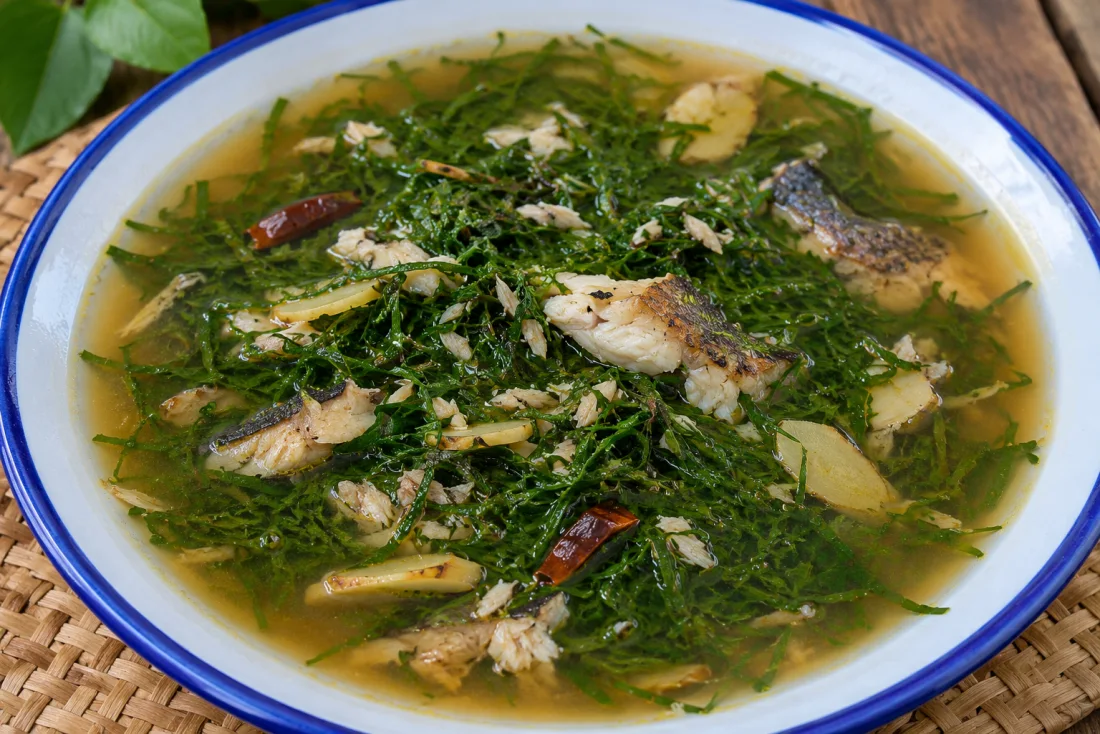
Gaeng ya names this specific soup in the archive. It is a broth of grilled fish, roots and leaves, described as a little thinner than nam ya sauce. The recipe establishes a documented preparation, without identifying a specific birthplace.
Fish, wild betel leaves and plai
The recipe uses grilled snakehead, grilled salted threadfin, dried chili, shallot, shrimp paste, plai rhizome, fish sauce, water and wild betel leaves. Reducing or replacing the fish affects both flavor and texture.
Savory heat and a leafy fragrance
Grilled fish and shrimp paste bring depth, a little chili gives warmth and the sliced leaves leave a fresh, peppery fragrance. Pounded fish can make the broth slightly cloudy.
How the hot broth meets the leaves
The kitchen dissolves the pounded fish and seasonings in hot water, then ladles the broth over finely sliced wild betel leaves. Some kitchens simmer the greens longer or set fish pieces on top.
Serving and other fish soups
Rice suits the warm, savory broth. The historical recipe does not list tamarind or lime, unlike several other Thai sour fish soups. Ask about fish species and heat.
Allergens and possible bones
Fish, salted fish and fish sauce contain fish, and shrimp paste contains crustaceans. Ask about stock, additional sauces, shared utensils and bones. The broth can contain seafood even with few fish pieces visible.
If you have a food allergy, tell the restaurant before ordering and ask about ingredients, sauces and shared cooking equipment.