

The historical dish behind the name
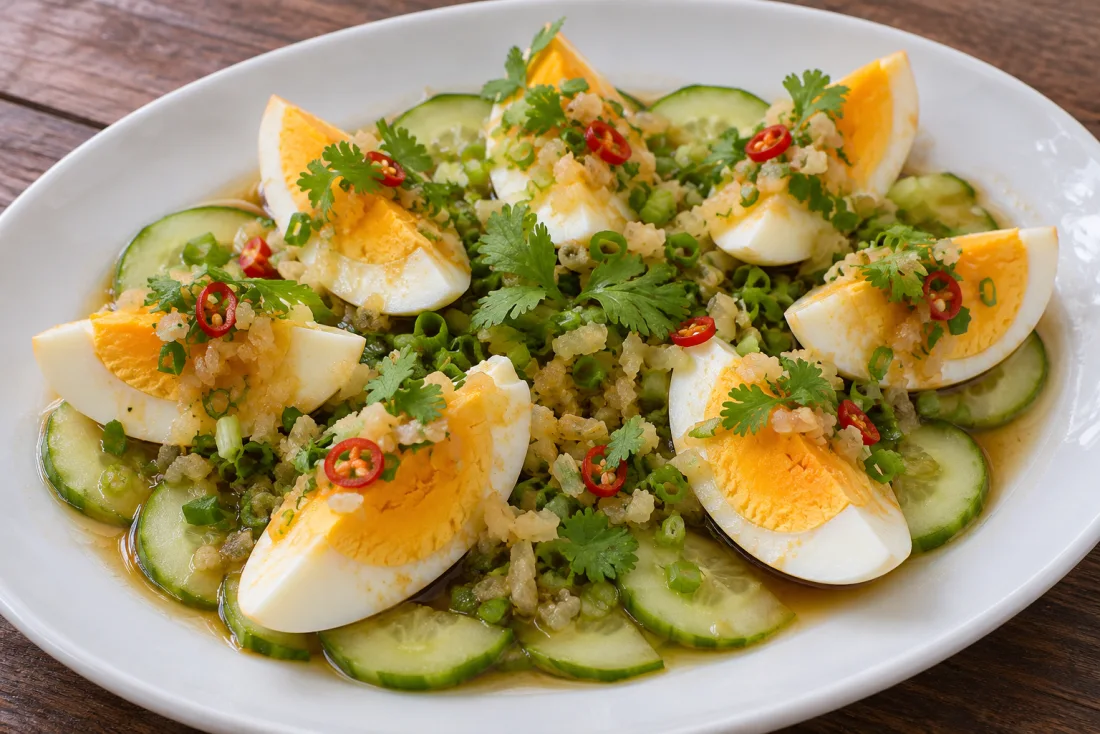
Khai tom means boiled egg. This archived preparation is a dressed side dish of cucumber and egg, finished on a plate. The name can evoke a mixed vegetable stew, but this specific recipe serves no soup.
Egg, cucumber, preserved vegetable and herbs
The historical recipe uses egg, cucumber, tang chai preserved vegetable, spring onion, coriander, soy sauce, vinegar, sugar and fresh chili. The chopped preserved vegetable contributes a salty accent.
Crunch, mild egg and sour-salty dressing
Raw cucumber stays crisp and watery beside the soft egg. Vinegar brightens the dressing, soy adds savoriness and sugar rounds out the acidity. Fresh chili adds varying heat.
Layering and dressing
The cucumber is sliced and the boiled egg cut into wedges. Preserved vegetables and herbs are scattered before the stirred dressing is poured on. The kitchen can adjust egg doneness.
Serving and a historical sausage alternative
The recipe pairs it with hot rice and suggests Chinese sausage as one alternative to egg. Ask about pork in that variation. Plates with the original egg, cucumber and preserved vegetable can be served as a cool side.
Allergens and condiments
Egg and soy are present. Soy sauce may contain wheat. Ask about preserved vegetables, added fish sauce, sausage and shared utensils. Removing egg wedges does not remove contact with the other ingredients.
If you have a food allergy, tell the restaurant before ordering and ask about ingredients, sauces and shared cooking equipment.