

 chicken
 fish sauce
What khanom chin means here
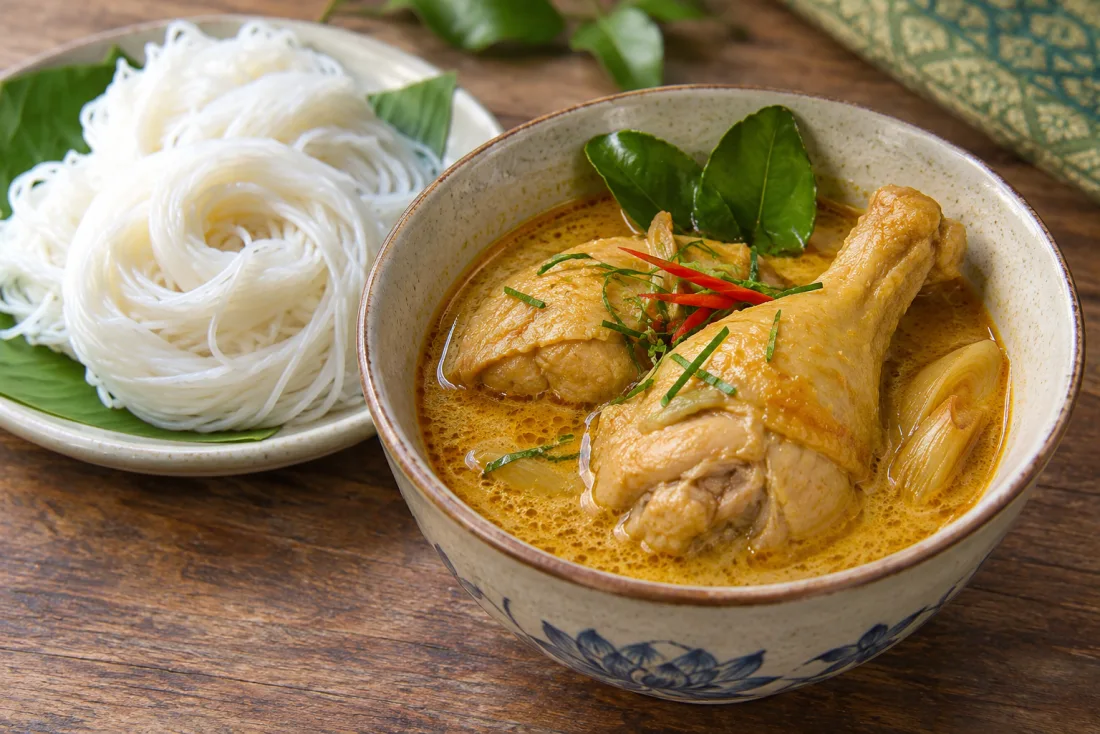
Khanom chin is a thin Thai rice noodle. Kai tom means cooked or simmered chicken. The historical dish pairs pieces of chicken simmered in coconut milk with noodles. Serve the noodles separately or alongside the meat in the bowl.
A Thai cookbook chicken and noodle meal
A historical Bangkok cookbook offers this particular chicken and coconut preparation. Thai kitchens pair khanom chin with many other sauces, so the noodles alone do not identify a single flavor. The chicken and noodles can be shared from separate dishes.
Chicken, coconut, rice noodles and roasted mung bean
The original recipe uses young chicken, coconut milk, roasted chili jam, hulled mung bean, turmeric, aromatic leaf, lime, block sugar, fish sauce, water spinach leaves, lard and khanom chin. Pounded roasted beans contribute texture to the seasoning. Other kitchens may change the oil.
Cook the chicken through and handle noodles cleanly
Simmer until the thickest part of the chicken is fully cooked. USDA guidance uses 74°C for poultry. Keep utensils for raw chicken separate. Use cooked noodles and greens, and store both noodles and chicken appropriately before serving.
Mellow coconut with a chili-lime finish
Coconut makes the sauce rounded and turmeric adds warm fragrance. Rice noodles catch the sauce. Roasted chili jam and mung bean add depth and texture, while lime and fish sauce shape the final tart and savory seasoning.
Allergens in sauces, noodles and oil
Fish sauce contains fish. Chili jam can contain shrimp, while oyster is a mollusk. Ask about coconut, mung bean, soy, wheat and shared equipment as appropriate. The historical recipe uses lard, which matters for anyone avoiding pork.
If you have a food allergy, tell the restaurant before ordering and ask about ingredients, sauces and shared cooking equipment.