

The Thai brand and its release
The Thai label reads เบียร์อาชา. ThaiBev recorded its July 2004 launch and the brand remains separately listed in its Thai beer portfolio. The brand’s launch, packaging changes and a current can may represent different periods. Stock depends on the venue and local distributor.
Identifying the 320 mL can
Tops gives a 320 mL product code, and a Thai retail inventory study identifies the same code as a can. Twenty-four packs describe the trade unit, not one serving. Use the can for the precise alcohol statement. The manufacturer’s figures for the launch era do not establish a current figure for that retail code.
A light golden pour
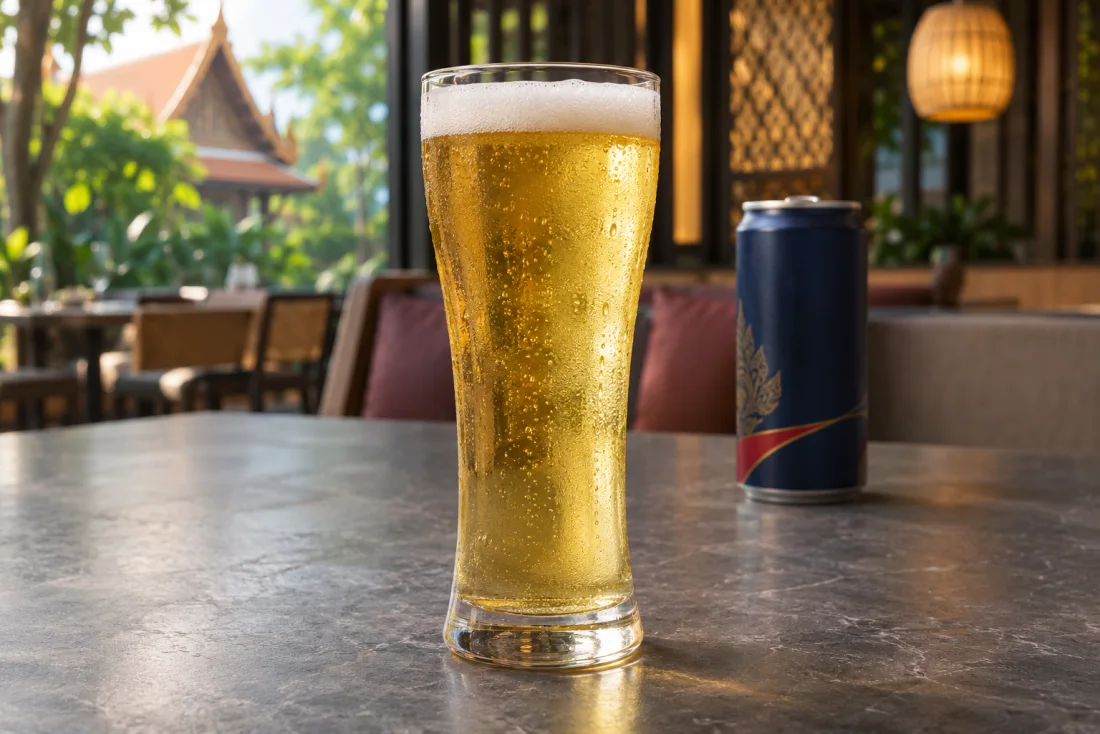
The standard lager presentation is clear pale gold with a light head. A cold first taste feels crisp, then a light grain aroma or slight bitterness may come through. The producer does not publish an exact bitterness figure for the package. The glass, pour and temperature affect what is visible.
Presenting the can at the table
A server may bring a chilled can and glass or pour while keeping the container nearby. A tall glass brings out the color; a wider glass changes the look of the foam. Sharing a pour does not change the original package volume. A 320 mL menu line refers to net contents.
Standard lager and other labels
Original here identifies the standard beer, rather than a named flavored variant. The portfolio and trade documents distinguish the product and package. The venue should name its actual container and volume. A product listing does not establish stock at a particular restaurant.
Allergens and alcohol
Fermented grain beer may contain gluten from barley or wheat. Follow the can or supplier information for a grain allergy or gluten restriction. Some venues use shared glasses or add other ingredients after opening. Keep the specific label’s alcohol value distinct from historical figures for other releases or packaging.
If you have a food allergy, tell the restaurant before ordering and ask about ingredients, sauces and shared cooking equipment.