
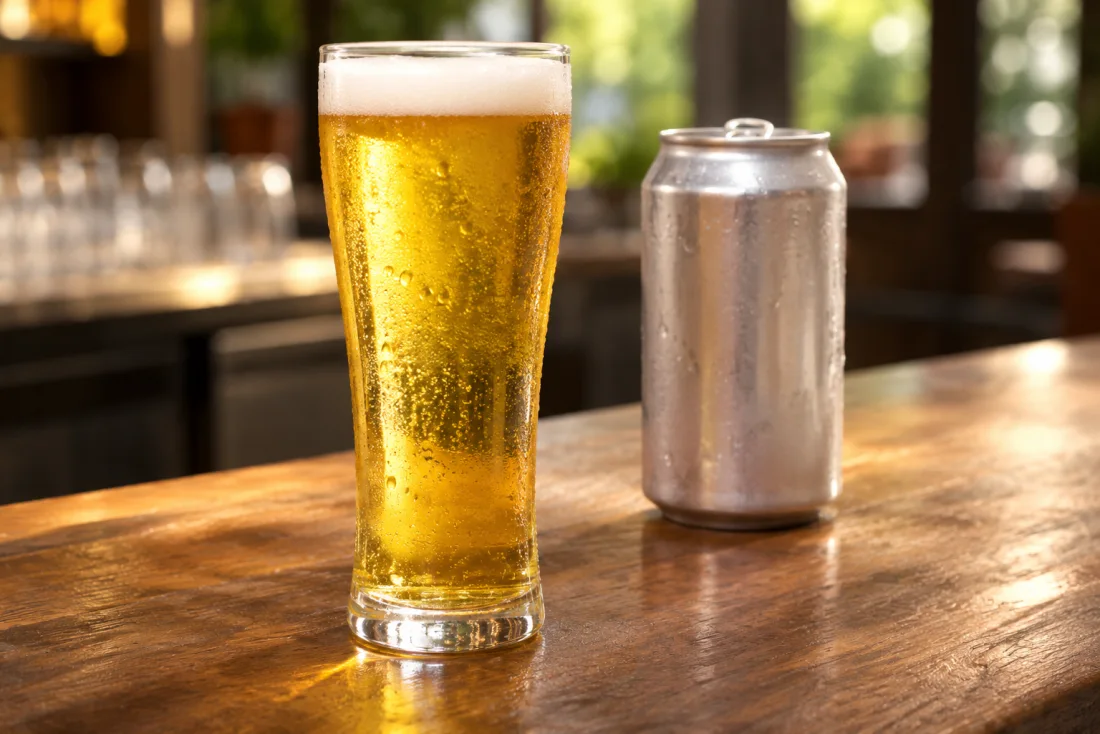

The Thai silver can
Thai distributors and retailers list the 330 mL can, and the distributor shows 5 percent ABV. A glass bottle can have the same volume. The standard Thai pull-tab can should not be assumed to be Japan’s different full-open can presentation.
Maker’s ingredients and local sales
Thai distribution describes barley flavour. The maker’s Japanese domestic label lists malt, hops, rice, corn and starch as a market-specific example. Check the actual can for restricted ingredients. Dry describes this lager’s finish without asserting a sugar-free formulation.
Colour and foam in a glass
The beer pours pale gold with white foam, light grain aroma and a brisk finish. Changing the glass and pouring angle can change the head. Ice gradually softens the taste. Foam by itself does not identify the recipe or package.
Can and bottle differences
An unopened aluminium can is light and keeps light off the drink. A pull tab allows a single-package serving. Opened beer can lose carbonation. Since the 330 mL small bottle has the same volume, the menu can name the package explicitly.
By the can or by the glass
Restaurants can hand the can over unopened, or pour it at the bar and leave it beside the glass. The sealed package makes the label available. Ice and garnishes should be treated as additions to the serving.
Allergens and alcohol strength
Barley malt contains gluten. Rice in the Japanese ingredient list does not make this gluten-free. Read the actual can for alcohol and allergens, and consider restaurant equipment and garnishes if needed.
If you have a food allergy, tell the restaurant before ordering and ask about ingredients, sauces and shared cooking equipment.