
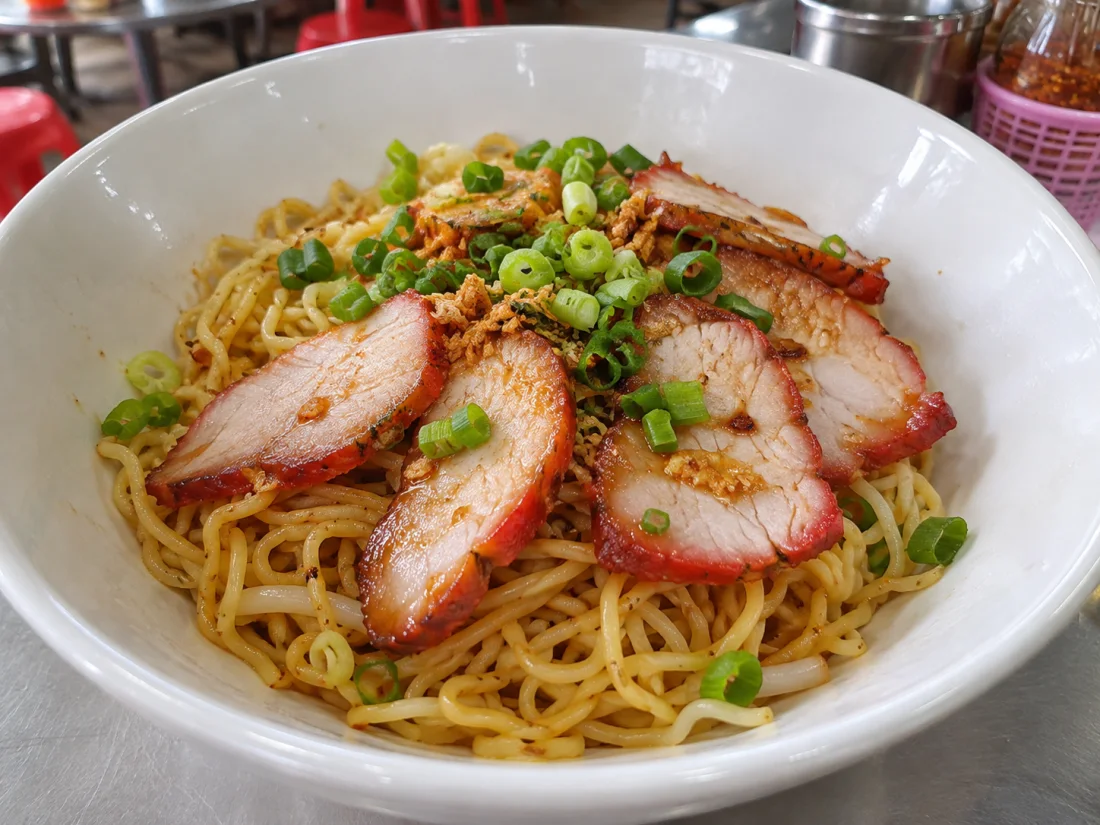

What dry means at a Thai noodle shop
Ba mee denotes egg noodles, and haeng indicates a dressed noodle bowl. The noodles are cooked and drained. Thai-Chinese noodle shops can serve related toppings dry or in soup. A dry order may include roast pork, greens or wontons depending on the menu.
Egg noodles, garlic oil and roast pork
Fine egg noodles hold a light dressing. Fried garlic and its oil add fragrance, with either lard or vegetable oil possible. Some versions use barbecued red pork, bok choy, coriander and white pepper. Soy sauce, fish sauce and roast-pork dressing vary by recipe.
Blanch, drain and dress the noodles
The cook loosens and blanches the noodles, shakes off the cooking water and then tosses them with oil and seasoning. Greens and wontons can be cooked separately and arranged with the pork. If a small side broth is available it is normally served in a separate bowl.
Springy noodles, toasted garlic and savoury sauce
The dressed noodles stay pleasantly springy. Fried garlic gives a little crunch and roast pork adds sweetness and a roasted aroma. A chilli or vinegar condiment can change the finish. Sipping broth separately keeps the flavour and texture of the dressed noodles distinct.
Dry orders, side broth and noodle soup
Haeng indicates dry and nam indicates soup. A dry bowl can have a little sauce and an optional side of broth without the noodles being immersed. Names specifying wontons or roast pork identify particular toppings. Tom yum seasoning may also be offered in a dry preparation.
Allergens in noodles, sauces and wonton fillings
Egg noodles usually use wheat and egg. Soy sauce contains soy and may include wheat, and fish sauce contains fish. Ask whether the wontons contain shrimp or other ingredients and whether garlic was fried in lard. Blanching baskets and other tools can be shared.
If you have a food allergy, tell the restaurant before ordering and ask about ingredients, sauces and shared cooking equipment.