
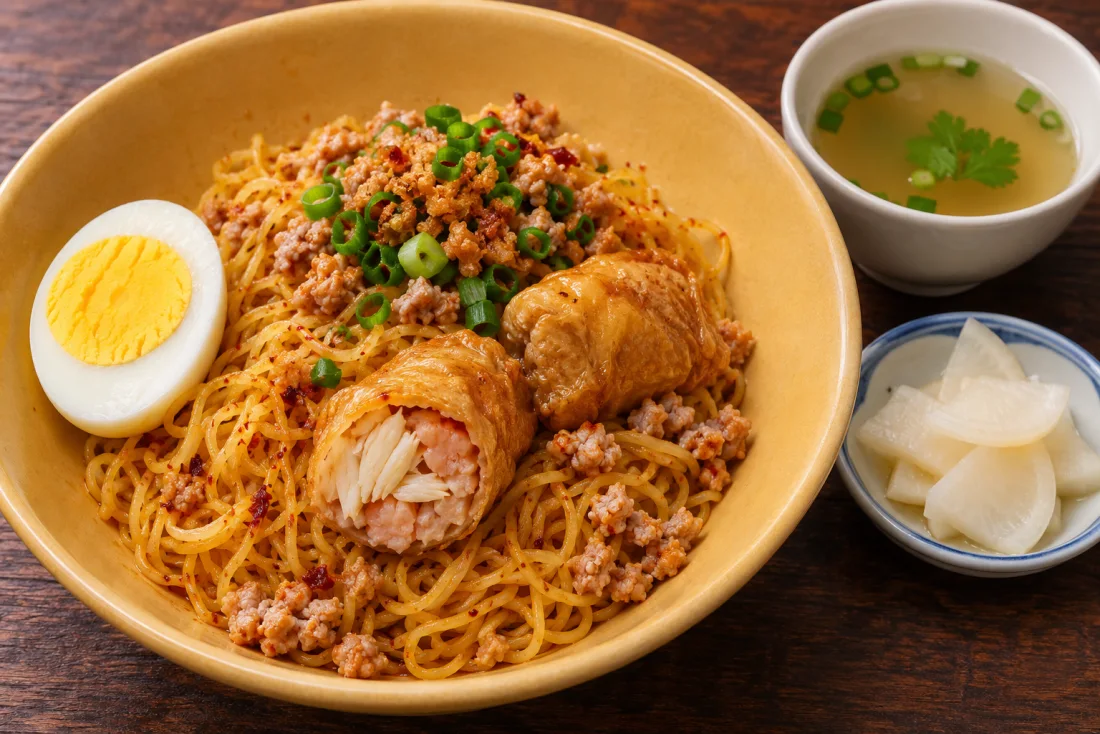

 optional spiced minced pork
Recognising the noodles and rolls
Look for thin yellow noodles and thick golden rounds with wrinkled bean-curd skin. A cut roll can show pale crab or other filling. Mala minced pork is served over some bowls, while others put cooked crab pieces and dipping sauce beside the rolls.
Thai names and Bangkok examples
Ba mee is a wheat egg noodle, and hoi jo is a rolled, steamed and fried snack. A Yaowarat dining account describes egg noodles with a crab roll, mala mince, egg, broth and pickles. A Banthat Thong account shows crab and a crab roll with separate sauces. Plain crab noodles need not include a roll.
How the roll and dry noodles come together
Bean-curd skin encloses a filling that can include crab, pork, water chestnut and egg. Steam to cook before cutting and frying until crisp. The wheat noodles cook separately. Keep the rolls apart from wet sauce until serving if a crisp edge is wanted.
Crisp outside, tender inside
The noodles are springy and the roll is crisp outside, with a softer crab filling. Mala mince brings heat and pepper aroma. A crab sauce or seafood dip adds a different flavour. Pickles or clear soup give a milder bite between richer mouthfuls.
Ordering and choosing photos
Ask how many rolls come with the noodles, whether there is additional crab or pork, and which sauces come separately. Ask about egg doneness and heat if relevant. An image can show dry mala noodles and the roll or cooked crab pieces and separate sauces. List which kind of noodle is used and whether the extra crab and rolls are included.
Allergens in noodles, wrapper and filling
Wheat noodles can contain egg. Bean-curd skin contains soy and crab contains crustacean. Fillings may add shrimp, oyster sauce, wheat, egg or pork. Dips may contain fish, peanuts, sesame or milk, depending on the version. Ask about pre-mixed ingredients and shared strainers, boards and frying oil.
If you have a food allergy, tell the restaurant before ordering and ask about ingredients, sauces and shared cooking equipment.