

 minced pork
 shrimp
 chicken broth
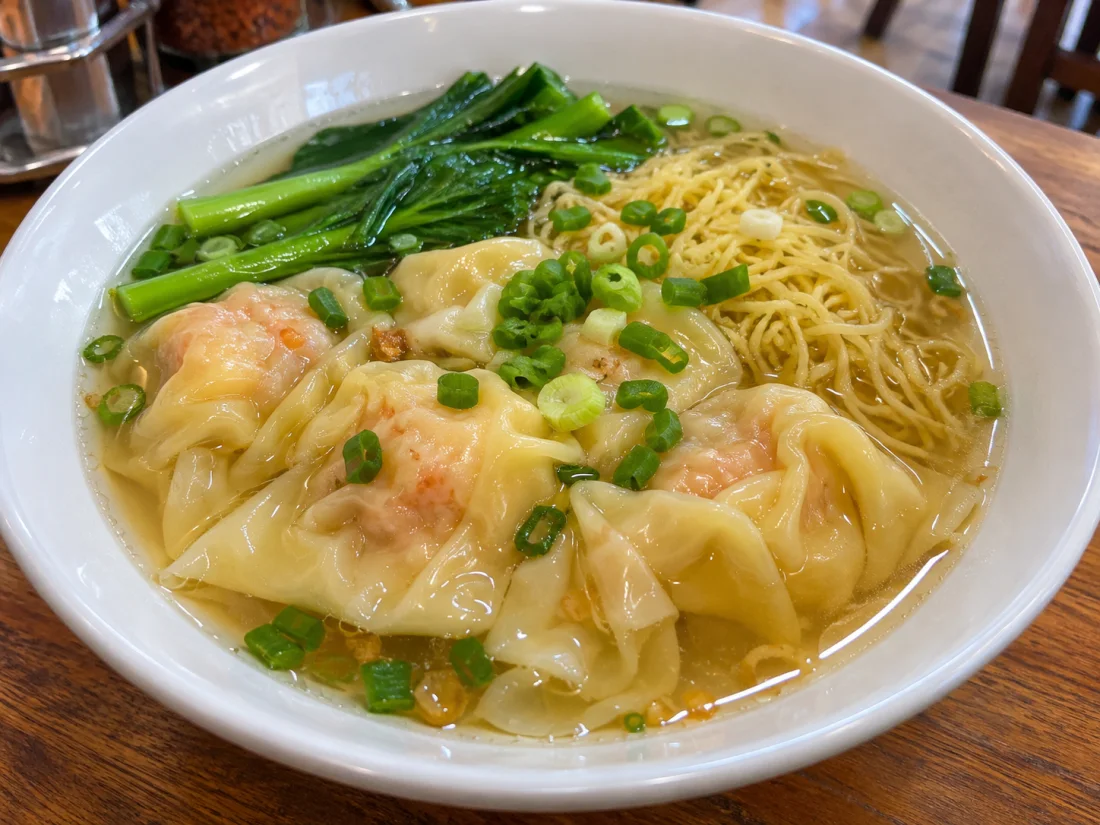
A Thai-Chinese clear wonton noodle soup
The name identifies egg noodles, wontons and clear broth. The Thai-Chinese noodle shop tradition preserves thin noodles and boiled wontons while adding local toppings such as roast pork and fried garlic. Thai menus can distinguish clear soup from tom yum or dry orders.
Fine noodles, thin wrappers and clear stock
Fresh egg noodles commonly use wheat and egg. Thin wrappers hold minced pork, shrimp or a mixture. Chicken or pork bones can form the broth. Some Cantonese methods add dried fish or shrimp shells. Greens, scallions, fried garlic and pepper vary by cook.
Blanching the two components and adding broth
Cook the noodles and wontons separately so each keeps its texture. Drain, arrange them with the vegetables and ladle hot stock into the bowl. The stock may cover only part of the noodles. A dry order with a separate side bowl is a different presentation.
Clear savoury broth, springy noodles and tender wontons
The thin noodles are lightly springy, while boiled wonton skins are silky. Pork or shrimp gives the filling savoury or sweet notes. The clear stock links the flavours, and fried garlic or white pepper can provide a warm finish. Noodles soften as they sit in hot broth.
Clear, tom yum and dry orders
Nam sai indicates a clear soup. A tom yum bowl can use similar noodles and wontons with sour chilli seasoning. Haeng indicates a dry dressed bowl, sometimes with broth on the side. Check that both noodles and wontons are listed if you want both.
Allergens in wrappers, fillings and stock
Wheat and egg are common in egg noodles. Wontons may contain shrimp, soy or sesame, and some stocks include dried fish or shrimp shells. Ask about the stock, noodles, wrapper, filling and shared blanching water or utensils when avoiding a specific ingredient.
If you have a food allergy, tell the restaurant before ordering and ask about ingredients, sauces and shared cooking equipment.