

 minced pork
A Chinese-Thai noodle shop bowl
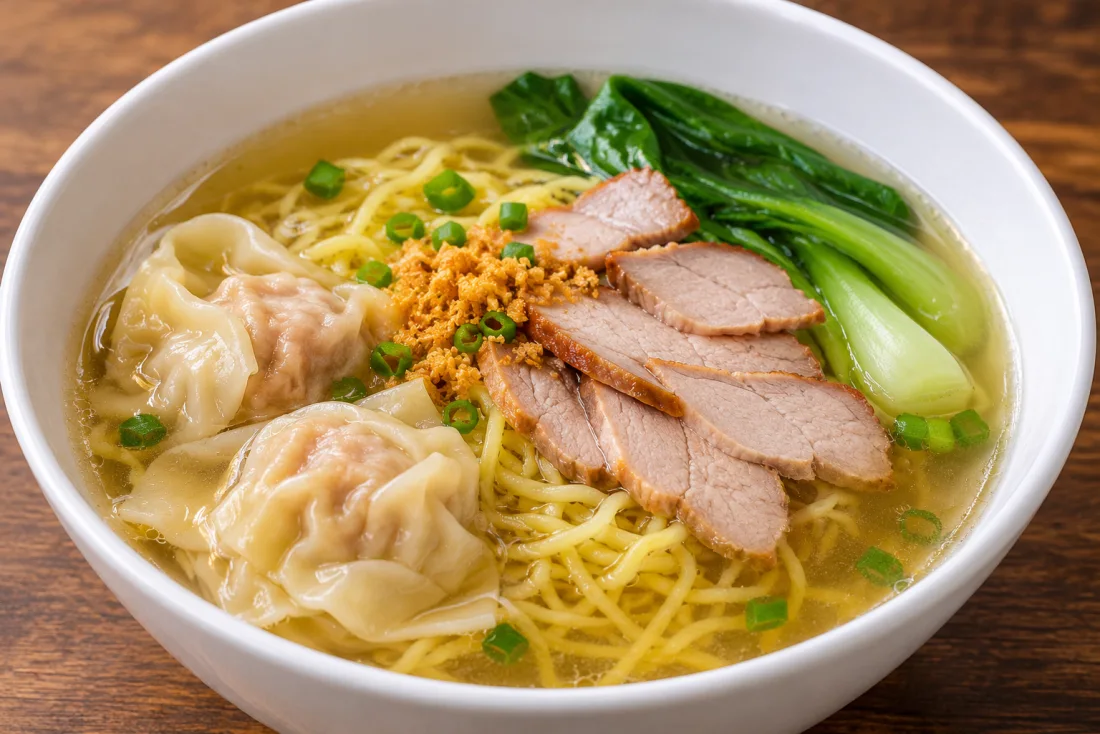
Ba mee usually means yellow egg noodles and kiew refers to wontons. Thai noodle shops serve them in clear soup or dry with seasoning, often with greens and sliced roast pork. Shops vary in filling and how the broth is served.
Egg noodles, wonton wrappers and toppings
Thin noodles usually include wheat and egg. Wontons can contain pork seasoned with garlic, coriander root and pepper, or a mixture of pork and shrimp. Char siu, crisp pork belly and blanched greens can be added separately.
Cooking the noodles and wontons separately
Blanch the noodles and toss them with a little fried garlic oil for a dry bowl. Cook the wontons through and add greens and roast pork. Ladle in clear stock for a soup order or serve the stock separately for a dry order.
Springy noodles, silky skins and garlic aroma
The noodles have a light bounce and the wonton skins feel soft. Pork filling tastes savoury. Shrimp can add a springier texture. Garlic oil is easy to notice in a dry bowl and crispy pork stays firmer before it meets the broth.
Dry, clear-soup and wonton-only orders
Haeng is the dry noodle option. Nam comes in broth, while kiew nam can be wontons in soup without noodles. Tom yum egg noodles may add lime, chilli and peanuts. Ask separately what meat, filling and broth come with an order.
Allergens in noodles, wontons and broth
Egg noodles typically contain wheat and egg. Wonton wrappers may contain wheat and egg, and shrimp filling adds crustaceans. Soy sauces and roast pork seasonings may contain soy and wheat. Ask about fish, molluscs, sesame and shrimp in stock, sauces and shared cooking water.
If you have a food allergy, tell the restaurant before ordering and ask about ingredients, sauces and shared cooking equipment.