
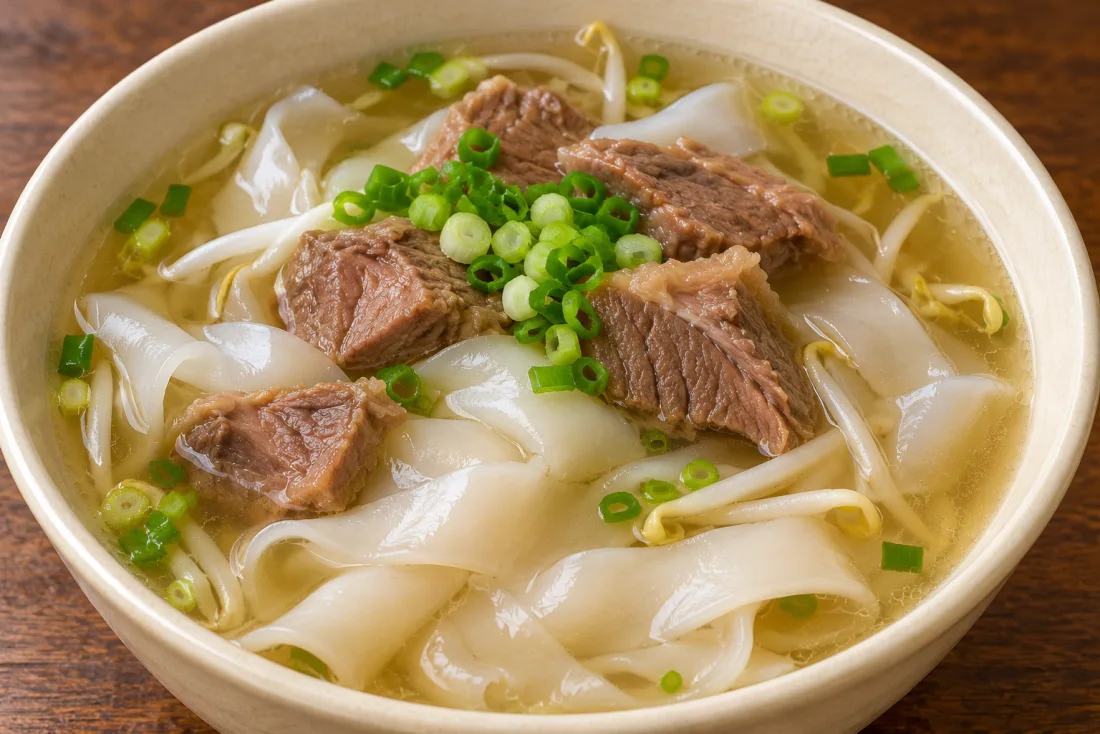

 clear beef broth
Recognising the noodles and clear broth
Wide rice noodles fold into white or translucent ribbons. Clear beef broth can be yellow to amber while still showing the noodles. Braised beef has thicker irregular pieces and thin cooked slices may curl. Bean sprouts and herbs can appear around the bowl.
Actual Thai noodle-shop options
Sen yai means wide rice noodles, nuea means beef and nam sai means clear broth. Nai Sean lists wide noodles with stewed beef and clear soup. Other vendors offer clear broth with mixed beef and allow wide noodles. Boat noodles with the same noodles can have a different broth.
How broth, noodles and beef combine
Beef or beef bones can flavour a clear stock, sometimes seasoned with garlic, pepper, coriander root or soy. Cook the stewed beef until tender and cook slices through. Warm the noodles and bean sprouts, then ladle the broth over them to serve.
Slippery noodles and tender beef
Clear stock has a light savoury beef flavour. Wide noodles are soft and slightly springy. Stewed meat is richer, while slices feel finer. Bean sprouts add crunch. Try the broth before adding vinegar or chili. For takeaway, separate broth can limit soaking.
Ordering and choosing photos
Ask for nam sai and sen yai, then choose the cooked beef toppings. Photos can show braised beef alone or a bowl with cooked slices and chunks. Name the actual broth, noodles and toppings and offer seasoning in a small dish separately if possible.
Allergens and shared utensils
Rice noodles can share strainers with wheat or egg noodles. Stock and sauces can include soy, wheat, fish or mollusc ingredients. Beef balls and marinades can have added ingredients. Ask about the broth and about shared ladles, strainers, boards and containers.
If you have a food allergy, tell the restaurant before ordering and ask about ingredients, sauces and shared cooking equipment.