
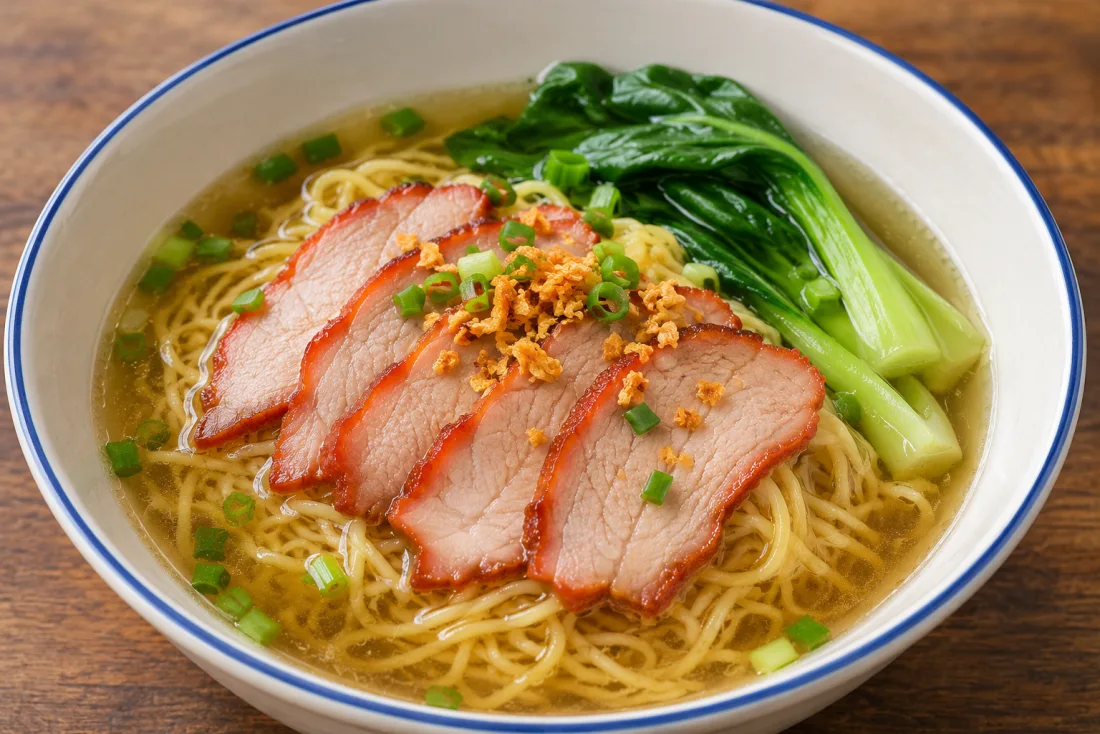

Roast pork egg noodles at a Thai-Chinese shop
Moo daeng means red pork and usually refers here to Thai-style char siu. Slices sit over egg noodles with greens or scallions. Bangkok menus offer the same pork topping in soup and dry servings. The combination reflects Thai-Chinese noodle shop cooking.
Egg noodles, char siu and roast pork sauce
Fine wheat egg noodles are commonly used. A Thai chef marinates pork with garlic, coriander root, pepper, soy sauces, coconut sugar and five-spice before roasting. A separate gravy can use roasting juices, oyster sauce and toasted sesame. Some shops omit that gravy.
Roasting the pork and assembling to order
The pork is cooked and sliced ahead. Blanch and drain the fine noodles and vegetables, then top with the pork. A dry order can be tossed in garlic oil or served with roast pork sauce, while a soup order adds hot broth. A side broth can also accompany a dry serving.
Sweet-savoury roast pork and springy noodles
The red-edged pork combines toasted sweetness and savoury meat. Egg noodles have a springy bite and greens add a fresh crunch. Dry dressing carries the roast flavour directly, while soup gives a lighter broth to sip. Fried garlic or white pepper can add fragrance.
Dry, soup and extra toppings
Nam means soup and haeng dry. Wontons or crispy pork can be added, but the name alone identifies the roast pork topping. This same pork can also be served with rice. Read the menu for noodle and topping choices.
Allergens in the marinade, noodles and sauce
Egg noodles usually contain wheat and egg. The pork marinade can contain soy and wheat. Some sauces use oyster and sesame, and additional wontons can contain shrimp. Ask about the broth, marinade, noodles and shared equipment if avoiding an ingredient.
If you have a food allergy, tell the restaurant before ordering and ask about ingredients, sauces and shared cooking equipment.