
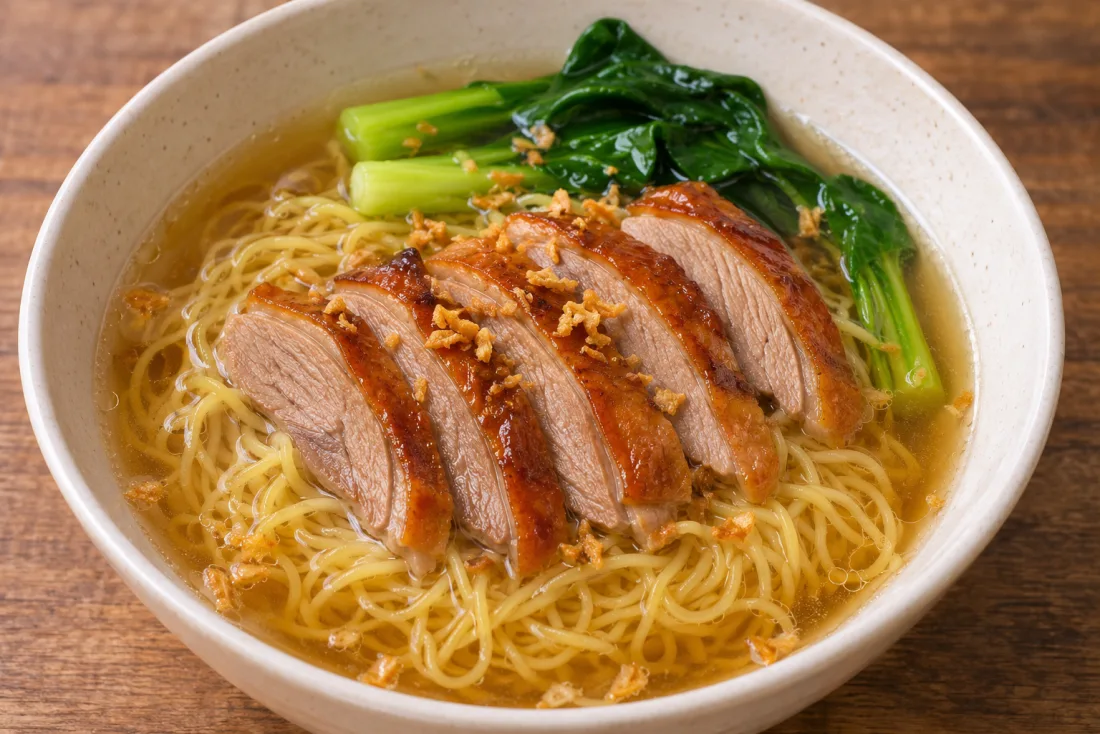

Cantonese roast duck over Thai shop noodles
Ba mee ped denotes egg noodles with duck. Ped yang specifies roasted duck. Thai-Chinese roast meat shops in Bangkok offer the combination dry and in soup. The menu helps distinguish the roast style from other versions with duck.
Roast duck, fine egg noodles, greens and sauce
Fine wheat egg noodles can be yellow or green. A documented Bangkok roast duck recipe uses soy sauce, fermented soybean paste, sugar, five-spice and cooking wine. Blanched greens can join the duck. A dry sauce may use duck juices and seasonings, and some shops make duck-bone stock.
Roasting ahead and assembling to order
The duck is fully roasted before being sliced or chopped. Noodles and greens are blanched separately. A soup bowl gets warm broth. A dry serving can receive just a little dressing or duck sauce and may also come with a separate bowl of broth.
Toasted duck skin and springy noodles
Roast duck has a savoury, spiced aroma. The skin may be slightly toasted, while the meat can stay moist. Fine noodles are springy and greens add crunch. On a dry order the sauce stays on the noodles, while a soup bowl has broth to sip.
Roast, braised and noodle variations
Ped yang is roast duck, ped phalo is spiced braised duck, and ped tun is stewed duck. Dry mixed orders can include both roast and braised meat. Some shops use green jade noodles, while others serve yellow noodles. Look for the actual type of duck and noodle on the menu.
Allergens in noodles, marinade and sauce
Egg noodles usually contain wheat and egg. Soy or wheat can come from the marinade, while oyster, abalone or sesame appear in some sauces. Added wontons can contain shrimp. Ask about the noodles, duck seasoning, sauce, stock and shared tools if avoiding a particular ingredient.
If you have a food allergy, tell the restaurant before ordering and ask about ingredients, sauces and shared cooking equipment.