
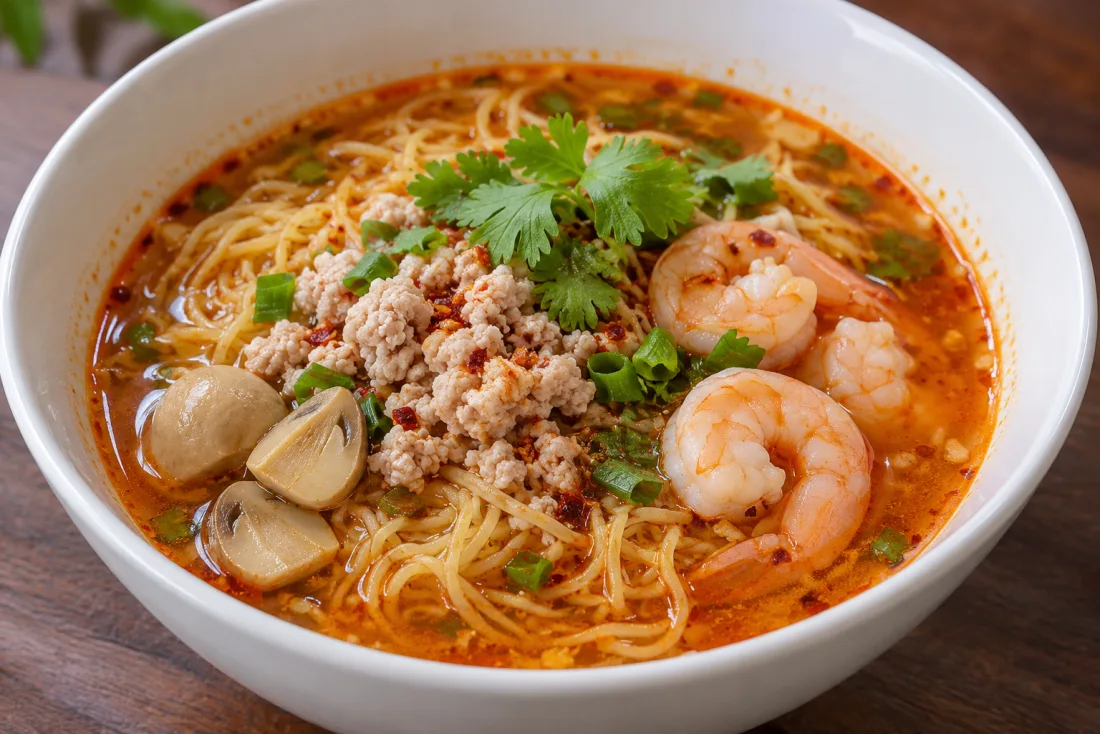

 minced pork
Tom yum seasoning at a Thai noodle stall
Ba mee refers to egg noodles. Tom yum on a noodle menu can mean lime, dried chilli, fish sauce and sugar mixed bowl by bowl. The order may be dry or served in broth and may use pork or seafood.
Egg noodles, pork, peanuts and lime
The wheat-and-egg noodles can be topped with minced pork, roast pork, fish balls, shrimp or crisp pork. Lime, dried chilli, sugar and fish sauce season the bowl. Fried garlic and ground peanuts bring texture and aroma.
Blanching and seasoning each bowl
Blanch the noodles and cook the toppings separately. Pour clear stock over the seasoning for a soup bowl. For a dry order, toss the noodles with a smaller amount of liquid. Add fresh lime and peanuts near serving.
Acid, chilli and a nutty finish
Fresh lime gives quick acidity and dried chilli follows. Ground peanuts add a toasted finish. Clear soup spreads the seasoning, a richer broth can be creamy, and a dry bowl gives a more concentrated flavour.
Dry tom yum and clear wonton noodles
Choose a soup or dry preparation and ask what toppings are included. Clear wonton noodles have more emphasis on broth and wonton filling. Standalone tom yum soup is a related style, while the noodle bowl is often dressed with lime and ground peanuts.
Allergens in noodles, peanuts and stock
Egg noodles typically contain wheat and egg. Peanuts, fish sauce, dried shrimp, fish balls and oyster sauce can add other allergens. Ask about soy, wheat, sesame and dairy in any richer broth, as well as shared ladles and blanching water.
If you have a food allergy, tell the restaurant before ordering and ask about ingredients, sauces and shared cooking equipment.