
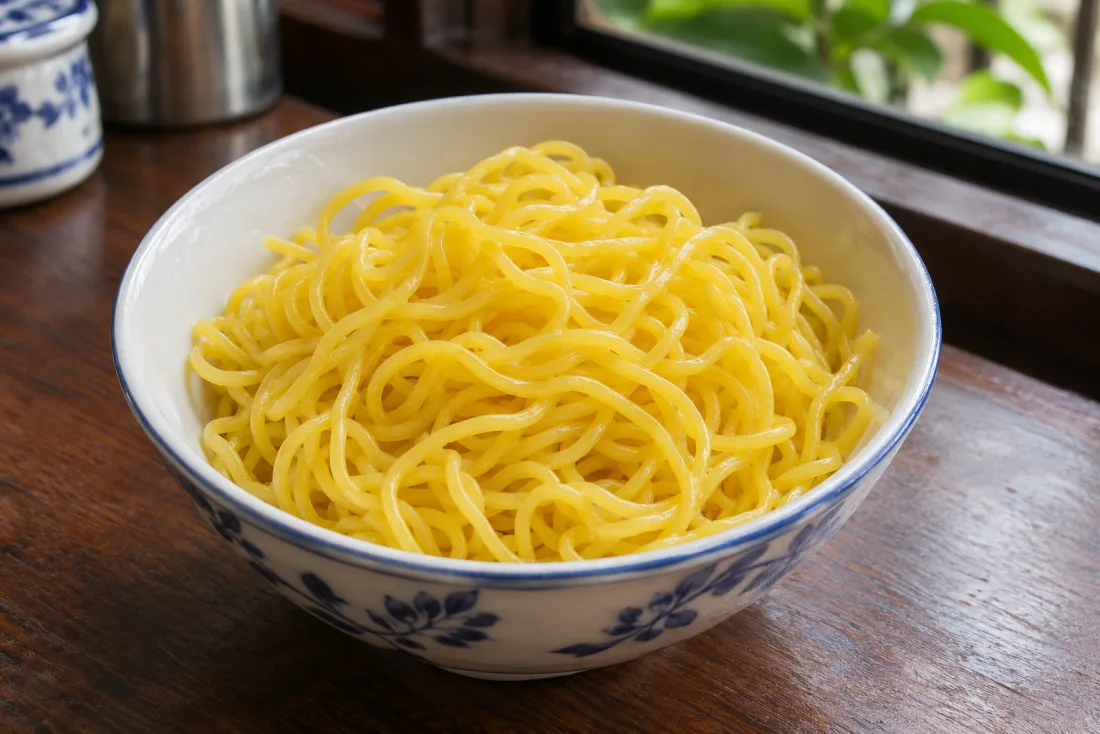

How to recognize the noodles
The term ba mee commonly brings a yellow wheat noodle to mind. Adding khai identifies egg in the dough. Thai producers make both slender round cuts and flat cuts.
Dough and fresh noodles
Fresh noodle makers may use wheat flour, eggs, water, salt and an alkaline ingredient. The dough is rolled and cut. A light flour dusting can keep uncooked strands separate.
From noodle to bowl
Ba mee nam is served in broth. Ba mee haeng is dressed dry, sometimes with broth in a separate bowl. Roast pork, wontons and greens are toppings chosen by the shop.
Taste and texture
Plain cooked noodles have a mild wheat and egg aroma and a light spring. Garlic oil or dressing makes dry noodles richer. Broth, dressing and table condiments set saltiness and heat.
Thai-Chinese noodle shops
Egg noodles are familiar in Thai-Chinese noodle shops and on stalls where diners pick a noodle. The same fresh noodle can meet very different soups and toppings in one establishment.
Allergens and menus
Typical ba mee khai contains wheat and egg. Check the actual noodle and possible contact at a shared blanching station. Fish, soy, wheat, molluscs or crustaceans may also enter through broth, sauce and toppings.
If you have a food allergy, tell the restaurant before ordering and ask about ingredients, sauces and shared cooking equipment.