
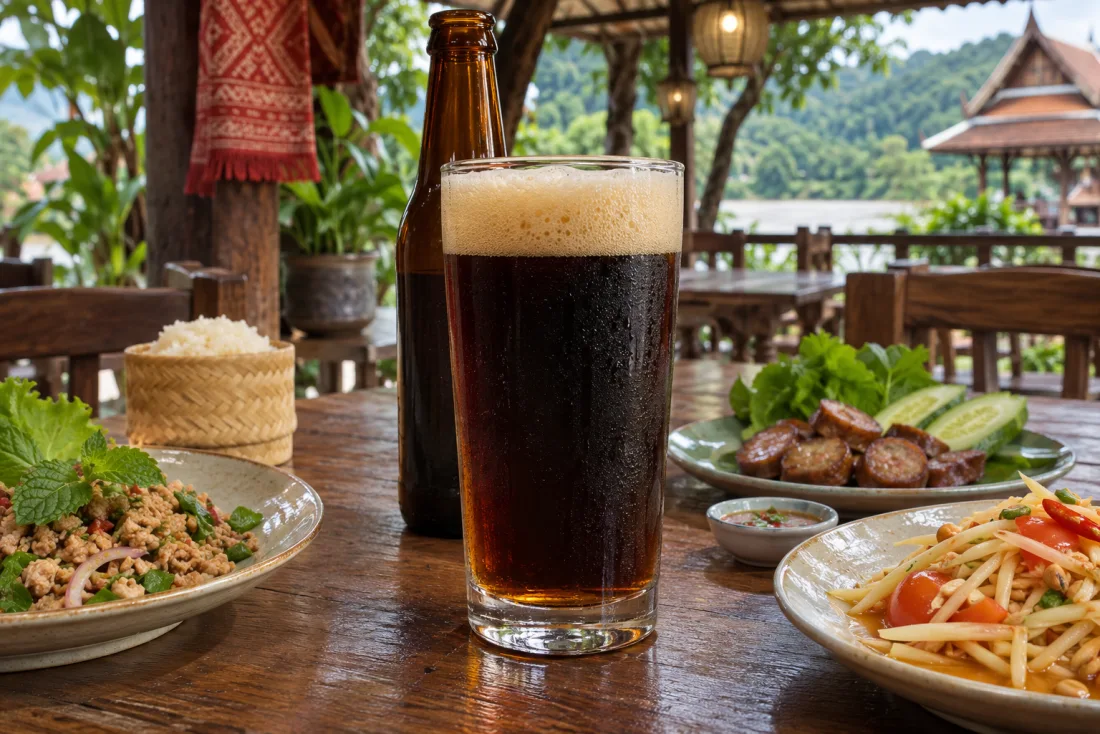

A bottle of the dark lager
Dark identifies the Beerlao dark lager and khuat specifies a bottle on a Thai menu. The beer can pour darker than the regular lager, but the glass colour is not a reliable style indicator. Menus can list a 330 mL Dark bottle. Check the style name, volume, alcohol and current package when ordering.
A Lao dark beer on Thai menus
Lao Brewery lists the origin as Laos and dates this version to 2005. A Thai restaurant lists imported Dark and Lager at 330 mL. The brewery's current Dark page states 5%, while a Thai historical import document identifies a version labelled 6.5%. These refer to different records, not a single alcohol strength for every bottle. Read the actual serving label if they differ.
Roasted malt and the four listed ingredients
The maker lists water, malted barley, rice and hops. It describes the flavour of roasted malt and notes reminiscent of caramel. That flavour does not show that caramel was added. The regular lager can list the same ingredient categories while having a different malt character. Exact varieties, amounts and process are not published on the product page. Check the package if the market label adds further details.
Read the bottle and pour it in a glass
A 330 mL bottle label describes the net liquid before pouring and adding ice. Foam takes up glass space. Keep the dark and pale styles separate when sharing. A pale head over a smaller pour can make the amber colour easier to see. Glass temperature and melting ice change the experience in the cup, without changing the bottle's declaration.
Toasted barley and a caramel-like finish
The brewery describes a full-bodied dark lager with roasted malt and caramel-like notes. Temperature can shift the balance between carbonation and the toasted aroma. A drinker might notice a toast-like or bittersweet association, but that is a tasting impression. Rich cooked dishes can give a contrast. The typical difference from the regular lager is the roasted malt character, not an alcohol rule inferred from colour.
Allergens in the malt
The producer lists malted barley, which supplies gluten. Rice does not remove that ingredient. Check the exact bottle if avoiding barley or gluten. Cooling, dilution or dividing a bottle does not remove the allergen. Ask separately about beer batter, sauces or other mixed products and about shared equipment if needed. Check alcohol content independently.
If you have a food allergy, tell the restaurant before ordering and ask about ingredients, sauces and shared cooking equipment.