
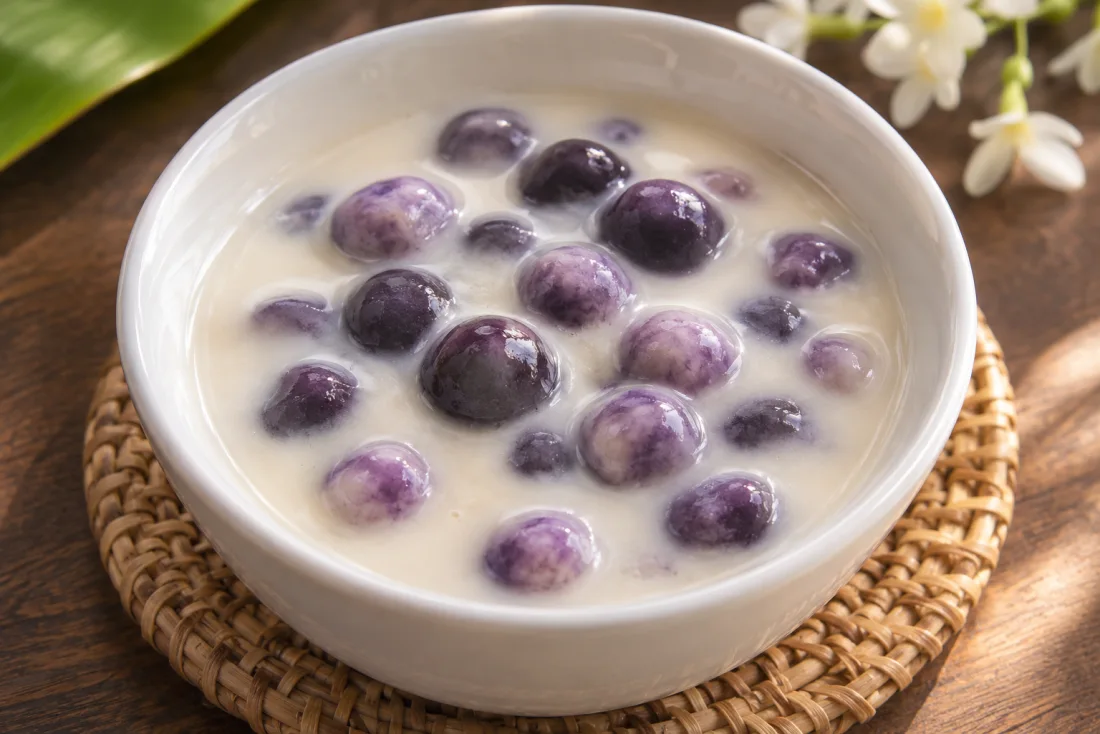

Bua loi dam identifies dark rice-flour balls
Bua loi refers to small dumplings served in a sweet liquid, and dam describes the dark color. Black glutinous rice flour gives these dumplings a purple-black shade. A cook can combine it with white glutinous rice flour. The color does not establish a black sesame filling. Small balls can be unfilled. Unlike a whole-grain black sticky rice pudding, the dumplings remain distinct in the pale coconut milk. If a kitchen colors a dumpling with purple sweet potato or taro, ask about that separately.
A Thai coconut dessert adapted with black rice flour
A Thai home recipe combines black and white glutinous rice flours with coconut milk and young coconut. Another cook incorporates taro. A Phuket restaurant menu lists bua loi and whole black sticky rice as distinct desserts. These describe actual preparations without fixing a province of origin for the black flour version. The dumplings can be served in small bowls after a meal. If offered in several colors, ask the shop which flour gives the dark balls their color.
Glutinous rice flour, coconut milk, water and sugar
Combine black and white glutinous rice flours in the proportions chosen for flavor and chew. Some cooks add coconut powder to the dough. Sweeten coconut milk with sugar and a little salt. Pandan can scent the liquid. Tender coconut slices, toasted sesame or taro belong to particular recipes. Flour makes it possible to roll small smooth balls, unlike whole black grains. Palm sugar, when used, darkens the broth and adds a mild caramel note.
Roll the dough, cook the balls and combine
Add water little by little until the dough can be rolled without sticking badly. Balls of equal size cook more evenly. Simmer them in water and add them to the seasoned coconut milk, or follow a recipe that cooks them in coconut milk. Floating can be one sign, and a larger dumpling can be split to check for a cooked center. Heat the coconut milk gently as the sugar and salt dissolve. Serve the components soon after combining for a springier bite.
Dark rice aroma and sweet coconut richness
The coconut milk tastes lightly sweet and smooth. Biting a dumpling brings out dark rice aroma and a soft chew. A little salt makes the sweetness less sharp. Tender coconut or toasted sesame adds its own texture and aroma. Scoop several balls with a little liquid or taste one first by itself. Taro can soften or change the rice flavor. The shade cannot tell you the sweetness or chew of a bowl.
Allergens in coconut, sesame, eggs and dairy additions
The coconut milk supplies coconut. The rice flour itself is rice, and glutinous describes its sticky texture, but check premixes and shared equipment for wheat. Toasted sesame or sesame filling contains sesame. An added egg or a dairy variation brings its own allergen. Ask about both the dumpling and the liquid, any topping and the kitchen's shared equipment. A dark dumpling does not reveal whether it contains sesame.
If you have a food allergy, tell the restaurant before ordering and ask about ingredients, sauces and shared cooking equipment.