
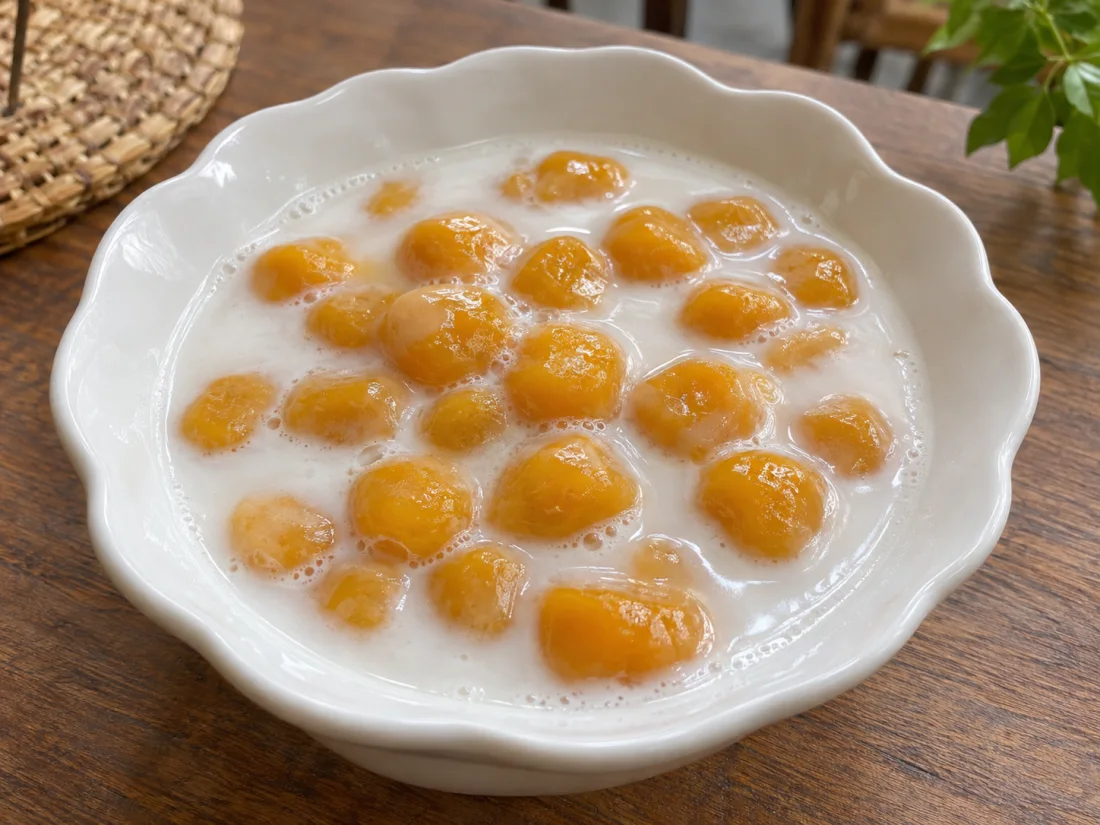

Pumpkin rice balls in the Thai dessert bowl
Bua loi names the family of little Thai rice balls in a sweet soup, and fak thong means pumpkin. The balls are usually unfilled. Pumpkin is kneaded into the dough itself, so the golden colour goes all the way through. Look for small yellow-orange balls in pale coconut milk.
A local teaching text in Narathiwat includes pumpkin among the flavours of coconut bua loi. A municipal record in Chonburi also describes an egg version with pumpkin, taro and sweet potato. These are examples of cooking in different parts of Thailand. They leave the variant’s precise birthplace open.
What pumpkin, glutinous rice flour and coconut milk each do
The Narathiwat formula uses glutinous rice flour, steamed mashed pumpkin and a little water. Pumpkin supplies colour, flavour and moisture. The rice flour gives the cooked balls their chew. Because pumpkins vary in moisture, cooks can let the flour take up the purée before adding water little by little. A smooth dough that rolls without cracking is easier to portion evenly.
The three-colour KRUA recipe adds a little tapioca starch to the pumpkin dough and relies on the water in the cooked squash. Starch choice and water affect the chew. Coconut milk, sugar and a little salt season the soup, so you can taste the coconut in the liquid and pumpkin in the ball.
From kneading pumpkin dough to floating rice balls
Mash steamed pumpkin until it is even. Large pieces can make it difficult to roll evenly. Pinch off small pieces or cut a thin roll of dough into portions and round them by hand. A light dusting of glutinous rice flour can keep the uncooked balls apart. Cooks can boil different colours in separate batches.
The balls gradually rise in boiling water. Thai recipes use floating as a cue to scoop them up. Some cooks cool and drain them before putting them in seasoned coconut milk. The coconut milk only needs heating enough to dissolve the sugar and salt, since a long hard boil can change its smooth texture.
Sweet coconut milk, mild pumpkin and chewy texture
The coconut milk smells rich and tastes sweet, with salt in the background. As you chew, the balls reveal the gentler pumpkin flavour. Palm sugar can give the liquid a deeper caramel note and colour. With white sugar the sweetness is more direct.
Warm balls are soft with a little bounce. Try one or two in a spoonful of coconut milk, then taste one by itself. Sweetness, thickness and ball size vary by shop. A bowl made entirely with pumpkin balls makes their flavour easier to pick out.
All-pumpkin, three-colour and sweet egg versions
A pumpkin serving can be all yellow or orange. A three-colour version can mix pumpkin with taro and pandan balls. Pumpkin is mild and sweet, taro has a starchy aroma and pandan gives a fresh leaf fragrance. Some preparations also use young coconut flesh for another soft texture.
Khai wan on the menu indicates sweet egg. The Chonburi record includes egg alongside pumpkin, taro or sweet potato in the dessert. Egg makes the bowl richer. Ask what is in the balls and coconut milk if you want a specific flavour or want to skip the egg.
Allergens to ask about: coconut, egg, milk and wheat
Coconut milk is usual and some versions add young coconut flesh. Ask about both if you have a coconut allergy. A standard dough uses glutinous rice flour and may include tapioca starch. It can be made without milk or wheat, but ask about prepared mixes, condensed or fresh milk and other added ingredients. The term glutinous refers to the rice’s sticky quality.
A sweet egg version contains egg, and both versions may share a coconut-milk pot, ladle or containers. Name the ingredient you need to avoid and ask about the dough, coconut milk, extras and equipment used for that serving.
If you have a food allergy, tell the restaurant before ordering and ask about ingredients, sauces and shared cooking equipment.