

The name and the filling
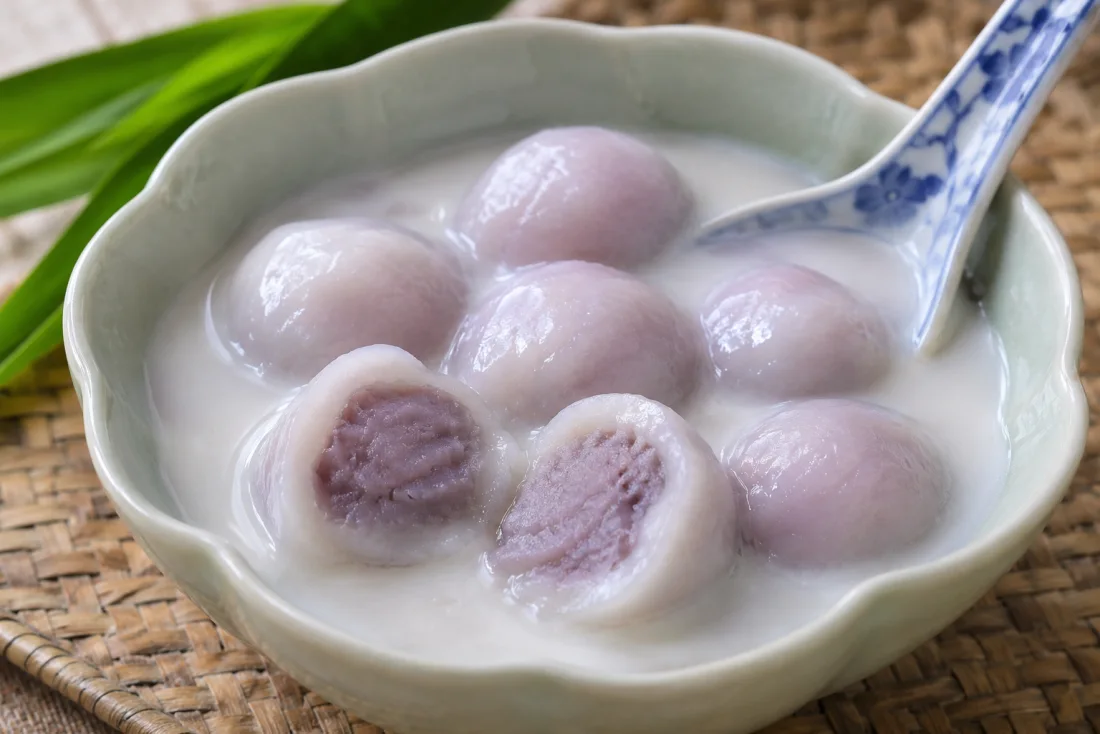
บัวลอย is a Thai dumpling dessert, and ไส้ indicates a filling. Thai homes and dessert shops offer versions such as taro and coconut. A wrapper's colour does not reliably tell you the filling.
Wrappers, filling and coconut milk
Glutinous rice flour forms the wrapper, sometimes with tapioca starch. Cooked mashed taro makes a smooth filling, and toasted coconut provides a separate version. Coconut milk, sugar and a little salt make the broth, with young coconut optional.
Texture and aroma
The wrapper is chewy and the taro is dense and smooth. Coconut filling can be more fibrous. Warm sweet coconut milk adds richness. Size and shell thickness change how the dumpling feels.
Shaping and boiling
Flatten the dough, enclose the filling and pinch it shut. Boil the dumplings until cooked and serve in separately prepared sweet coconut milk. Additional young coconut or cooked pieces may go into the bowl.
Ordering the bowl
Ask about taro, a mixed set or a different filling. Coconut milk and ginger broth are separate options in some shops. Small unfilled bua loi and egg versions may also be listed.
Allergens and shared equipment
Coconut is present. Mixed fillings may add sesame, peanuts, tree nuts, milk or egg. Ask whether blends or shared work surfaces introduce wheat and whether ladles or pots are shared.
If you have a food allergy, tell the restaurant before ordering and ask about ingredients, sauces and shared cooking equipment.