
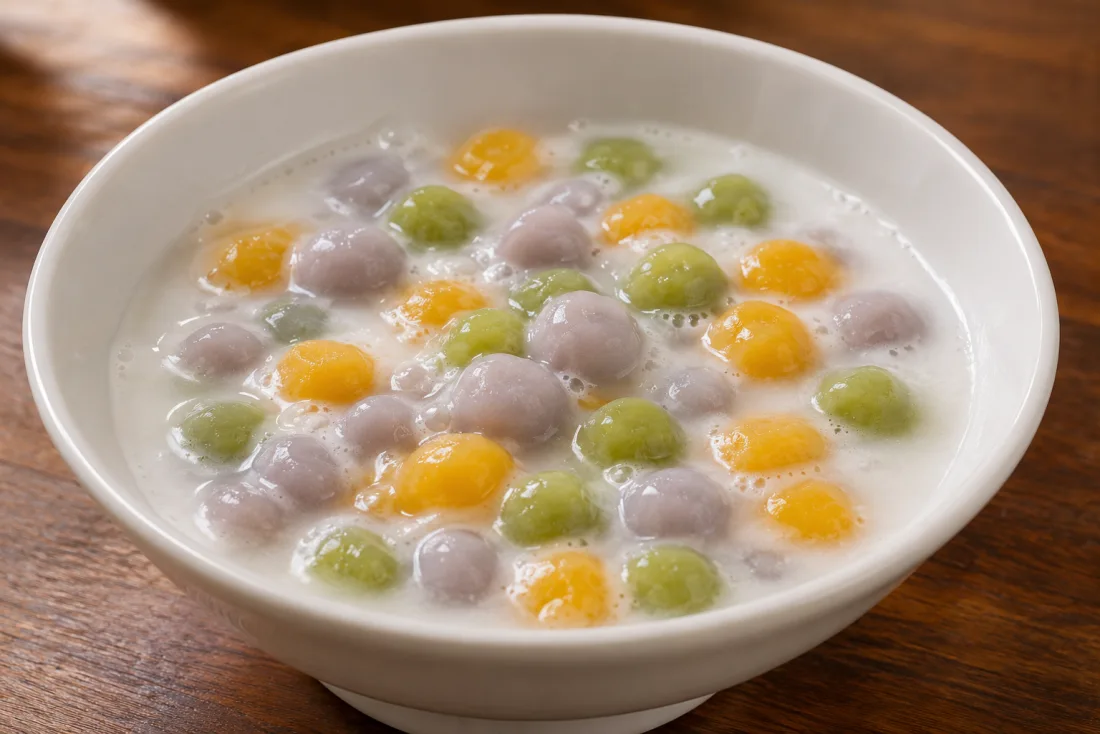

Three colours with distinct ingredients
A familiar bowl has pale taro, yellow pumpkin and green pandan dumplings. Cooked taro and pumpkin are mashed into separate doughs. Pandan juice colours and flavours the green dough. The pale taro pieces can be harder to see under white coconut milk.
A colourful Thai coconut dessert
Bua loi also comes in single flavours or with a sweet poached egg. Three-colour bua loi highlights several doughs in the same bowl. Thai culinary recipes document the combination without establishing a single place of origin. Shops with more colours may use other plants or food colouring.
Glutinous rice flour in each dough
The three doughs use glutinous rice flour. Mashed cooked vegetables and pandan juice provide different levels of moisture. Coconut milk enriches the broth and some doughs. Sugar and a little salt flavour it. Young coconut strips give a smooth contrast.
Mix the doughs separately, then boil
Divide the prepared doughs into small pieces and roll each into a ball. Similar sizes make cooking easier. Boil until the pieces rise, then transfer them to coconut milk prepared separately. Cooking colours in batches keeps the doughs distinct before they meet in the bowl.
Pumpkin, pandan and taro in coconut milk
Pumpkin brings a mellow sweetness, taro a soft earthy note and pandan a mild leafy fragrance. Coconut milk makes them feel smoother and contributes most of the sweetness. Try one of each before mixing them in a spoonful, and notice how coconut strips differ from the soft chew of the balls.
Allergens in each colour, the broth and toppings
Coconut can be in the dough as well as the broth. Find out what makes each colour and whether the shop boils the different dumplings together. Egg, dairy, sesame or nuts may be present in add-ons or shared equipment. Ask about flour blends and utensils if wheat is a concern.
If you have a food allergy, tell the restaurant before ordering and ask about ingredients, sauces and shared cooking equipment.