
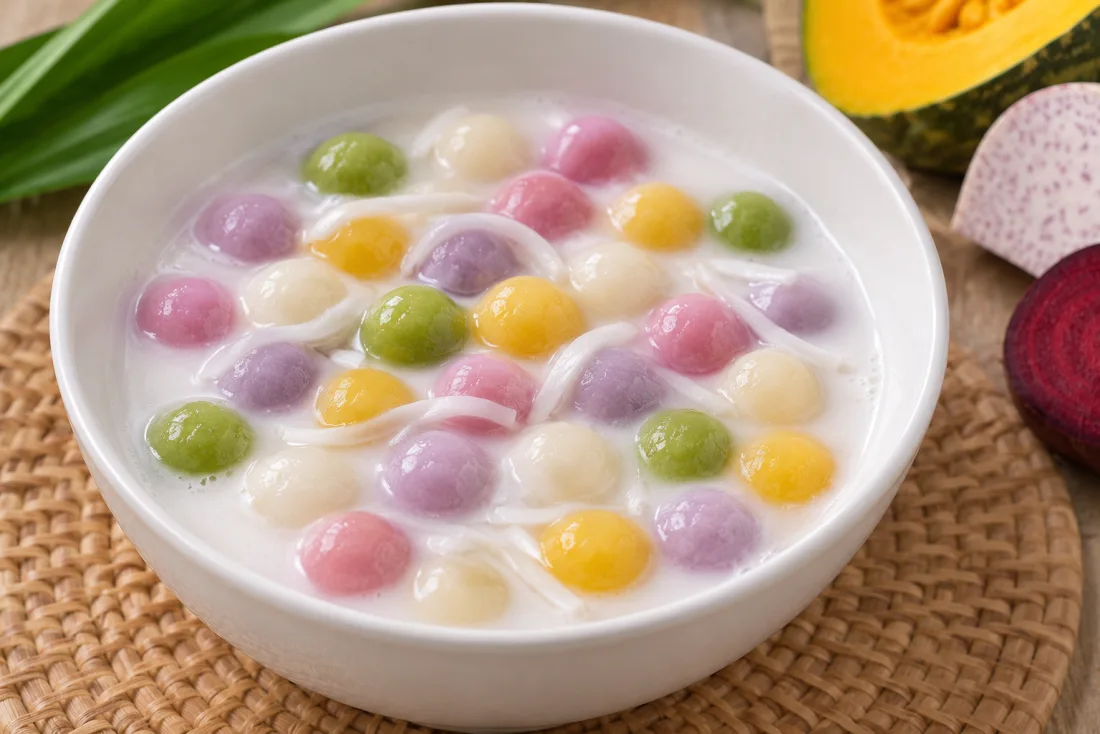

Recognising the Thai dessert
บัวลอยสามสี is three-colour bua loi. Some bowls use more colours. The small unfilled version can be sold alongside filled or sweet-egg variants, which can have separate names.
Flour, colour and coconut milk
Thai recipes use glutinous rice flour with pandan juice, pumpkin, taro or butterfly pea to make coloured dough. Some cooks use food colouring. Coconut milk, sugar and a little salt make the broth. Young coconut is optional.
Chewy and fragrant
The rice dough is gently chewy. Pumpkin, taro and pandan can introduce different aromas and textures, while lightly coloured versions may taste similar. Coconut milk adds a smooth sweetness.
Making the different colours
Mix each dough separately, roll and divide it into small pieces, then boil until cooked. Prepare the sweet coconut milk on its own, then add the cooked dumplings. Separate boiling helps retain distinct colours.
Ordering
Ask what the colours are made from and whether young coconut or sweet egg is included. Coconut broth may be pre-sweetened. Some shops may offer warm and chilled versions.
Allergens and colouring
Coconut is a main ingredient. Wheat can appear in flour blends or through shared equipment. Egg, milk, peanuts, sesame or tree nuts depend on additions. Ask about the colours and shared pots or strainers if needed.
If you have a food allergy, tell the restaurant before ordering and ask about ingredients, sauces and shared cooking equipment.