
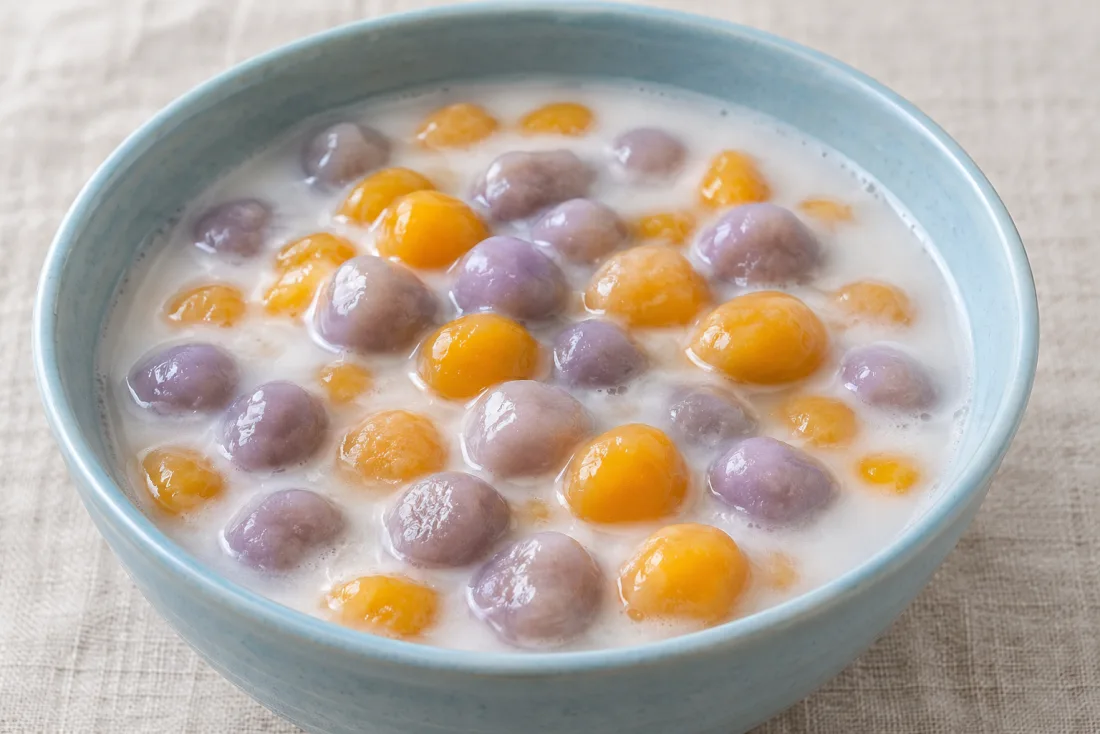

Small rice balls in a Thai coconut dessert
Bua loy is usually spooned from a bowl of sweet coconut milk. The balls are generally smaller than filled tangyuan. Thai dessert stalls and home recipes use either one colour or a mixture, and taro versions are also taught in a Thai culinary school.
Glutinous rice flour, colours and coconut milk
Glutinous rice flour makes a gently chewy dough, sometimes blended with other starches. Pumpkin, taro, purple yam and pandan can colour or flavour it. Sweetened coconut milk may be scented with pandan and balanced with a pinch of salt, with young coconut flesh as an optional addition.
Shaping and boiling the small balls
Knead colours separately, roll them into small balls and boil them in water before adding them to coconut milk. The two preparations can be managed separately so the milk does not simmer too hard. Even sizes make it easier to cook the balls through without losing their bounce.
Gentle chew, coconut aroma and sweetness
The coconut milk tastes rich and gently salty-sweet, and the rice balls are tender with a little bounce. The aroma of pandan, pumpkin or taro depends on the recipe. Taste a ball first and then a spoonful of both textures together.
Sweet eggs, coloured balls and other bowls
Bua loy khai wan adds a sweet poached egg. Young coconut, taro and other colours are recipe choices. Ginger-syrup desserts with larger sesame-filled dumplings have a different filling and broth. Ask which extras are included.
Allergens in the dough, milk and toppings
Coconut milk is typical, while a poached egg adds egg. Dairy, peanuts or sesame can appear in some additions. Glutinous rice flour is rice, but blends, other toppings or shared utensils can introduce wheat and other allergens. Ask about the dough, broth and toppings separately.
If you have a food allergy, tell the restaurant before ordering and ask about ingredients, sauces and shared cooking equipment.