
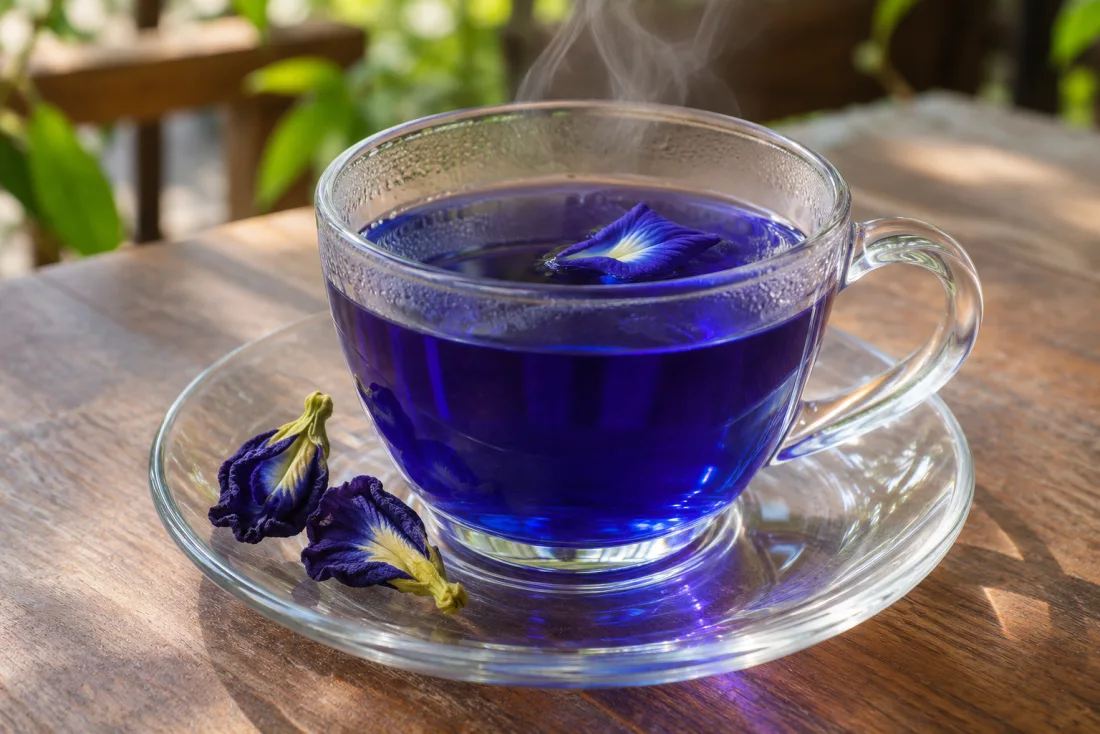

The hot infusion called cha dok anchan
Cha dok anchan means butterfly pea flower tea. Ron specifies hot service. The base is water and flowers, with no tea leaves needed for the color. A flower-only infusion has neither tea-leaf flavor nor caffeine from a tea base. Blends with green or black tea are separate choices. A clear glass shows the color, while white porcelain gives it a light background. Flower strength, steeping, water and acidity affect the shade.
Flower infusions and blends in Thai kitchens
A Thai recipe makes a plain infusion by heating fresh petals in a small cloth filter and serving from a teapot. A tea maker also sells jasmine tea combined with butterfly pea. The former shows the flower-only preparation, while the latter illustrates one blended alternative. Together they give no specific province as an origin for the hot drink. Thai menus can offer it hot, iced or with fresh citrus. Ask about any green tea blended into the hot version.
Food-grade petals, water and optional lime
Use petals sold for food. Fresh petals can be rinsed and separated from the green bases. Follow package directions when using dried flowers, whose weight and water content differ from fresh. The base can be unsweetened. Syrup and honey add sweetness, while lime changes both the taste and the color. Anthocyanins in the flowers look blue near neutral pH and can shift toward purple or reddish tones when acid is added. A color shift alone tells little about sweetness.
Heat, infuse and lift out the petals
The Thai fresh-flower recipe puts washed petals in a clean cloth, briefly heats them in water, then removes the heat and allows a short steep. Remove the cloth before pouring. A teapot can also infuse dried petals using the amount recommended for the product. Add citrus after pouring for a side-by-side taste of plain and tart. A filter gives the drink a smooth finish. Let it reach a comfortable sipping temperature before drinking.
Gentle herbal flavor that takes to citrus
Plain butterfly pea tea has a gentle herbal and floral aroma. It is usually subtler than jasmine or mint. A larger amount of petals can deepen the color and flavor, and the two do not necessarily increase together. Lime adds a direct tartness and citrus fragrance. Syrup gives plain sweetness and honey has its own scent. Unsweetened tea can go with pastries. Try the base first and ask whether the shop presweetens it.
Allergens and ingredients in tea blends
The basic brew uses petals and water without added dairy, soy, wheat or nuts. Anyone with known sensitivity to a flower or other ingredient should ask what the shop uses. Milk, plant milk or powdered drink mixes add their own ingredients and potential allergens. A blend with green or black tea may contain caffeine. If you avoid an allergen, ask about garnishes and shared teapots, filters and mixing pitchers. A cup without visible foam could still have had dairy contact.
If you have a food allergy, tell the restaurant before ordering and ask about ingredients, sauces and shared cooking equipment.