

Pandan on a Thai menu
Cha bai toey or nam bai toey can mean a leaf infusion. A Bangkok vendor documents a pandan and rock sugar drink described as less sweet. A blend with jasmine tea or a pandan milk drink adds other ingredients.
Leaves, water and a little sugar
Pandan is steeped or simmered in water and the fibres are strained out. Some preparations use only leaves and water. The representative cold vendor version uses a modest amount of rock sugar.
Pale colour and leaf aroma
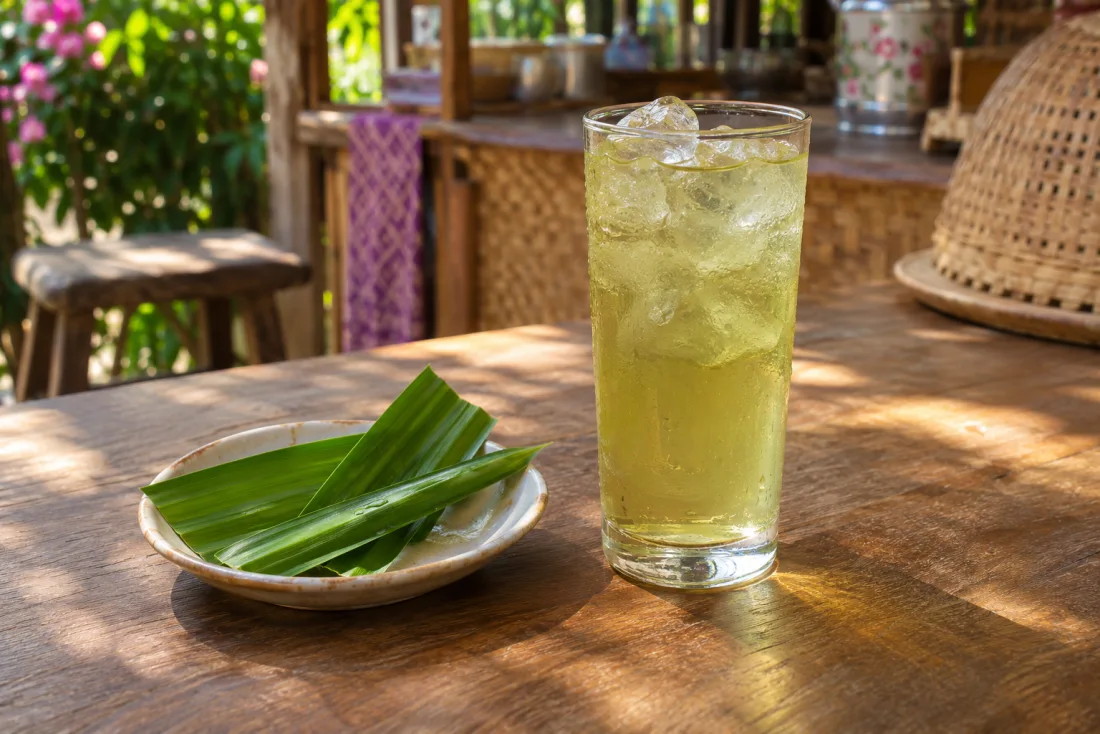
It may look pale yellow-green to straw-coloured, with a soft leafy or rice-like fragrance. Ice cools and dilutes it. Colour varies with leaf strength, glass and light and does not establish sweetness.
What less sweet means
It means lower sweetness than a shop’s usual recipe, not a standard sugar quantity or necessarily sugar-free. A premixed batch may allow less adjustment than a made-to-order drink. Ask if an unsweetened preparation is available.
Serving it cold
A glass with ice or chilled liquid and separate ice can show its clear appearance. A pandan leaf alongside is a visual cue. Milk, coconut preparations and jasmine-tea blends each have their own recipes.
Allergens and other ingredients
Check what leaves and sweetener are actually used. Dairy, soy or nuts can enter through additions or shared tools. Pure pandan infusion and a version containing real tea also differ in caffeine.
If you have a food allergy, tell the restaurant before ordering and ask about ingredients, sauces and shared cooking equipment.