
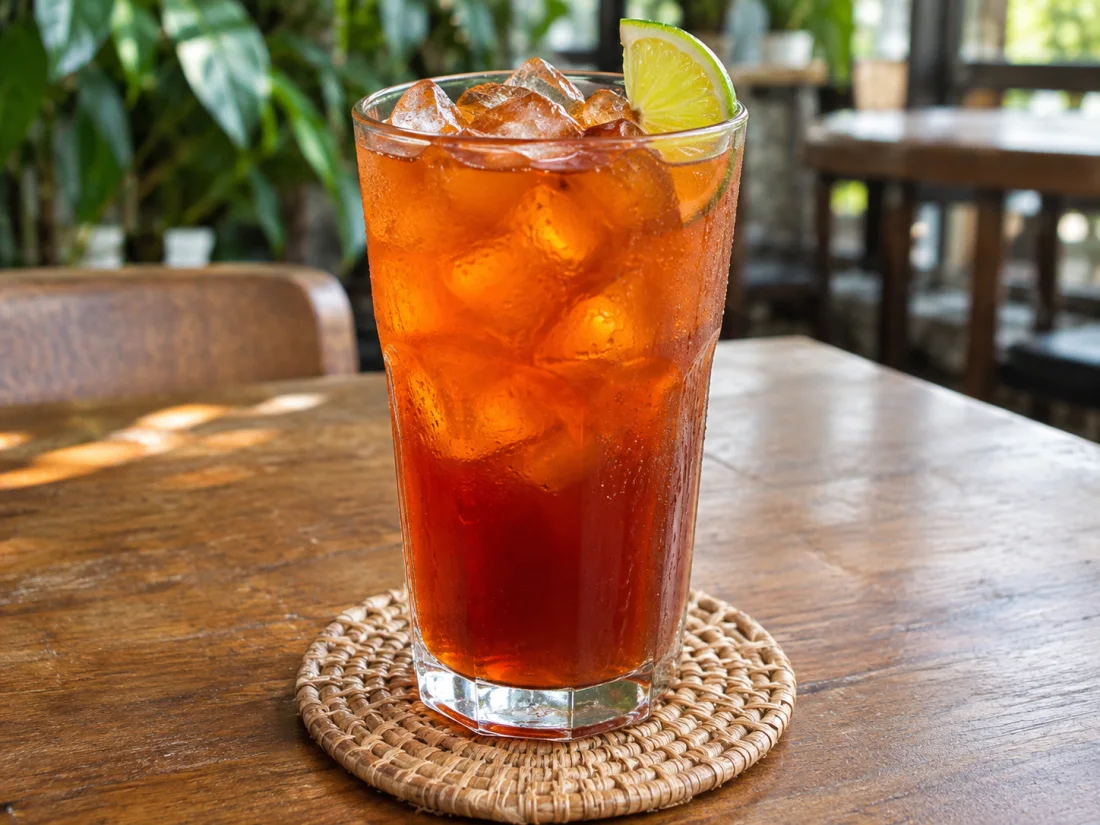

What Thai iced lime tea is and how to spot it on a menu
Cha means tea and manao usually refers to lime in this drink. Menus may write Cha Manao, Cha Manow or Thai Lime Iced Tea. Some English menus use lemon in the translation. Look for ชามะนาว on a bilingual menu. The drink is usually a clear amber to reddish brown with ice and sometimes a slice of lime.
Thai cooking programmes show how a brewed tea becomes two drinks by adding lime to one and milk to the other. Thai restaurant menus also list the pair. These examples document how it is served, while leaving its place and date of invention open.
What the tea, lime, sugar and ice do
Brewing Thai tea leaves or a Thai tea blend in hot water and straining makes the base. Blends differ by maker. Lime supplies acidity and a fresh citrus scent, sugar softens the tartness, and ice chills and dilutes the strong tea. Crushed ice can change the strength more quickly than large pieces.
Phol Tantasathien sweetens the tea base and separately muddles lime with more sugar. Another approach stirs squeezed juice into the tea and uses a slice of lime only as a garnish. Ask the shop what blend or syrup it uses if the ingredient details matter to you.
How the tea is brewed and the lime added
Steep the Thai tea, strain it and dissolve sugar while it is warm. Let it cool. Seeded lime pieces can be pressed lightly with sugar to release some juice and aroma from the peel. Squeezing juice separately lets the maker measure how much goes into each glass.
Stir the tea and ice into the glass. A strong base keeps its flavour as the ice melts, although oversteeping can make it too dry and bitter. Some shops use a concentrate or a sweetened base. Asking for less syrup may not change how much sugar was added to the tea in advance.
Why it tastes tart at first and finishes with tea
The first sip is cold and aromatic. Lime brings a clear tartness, followed by sweetness and a dry tea finish. In a strongly brewed cup the tea’s astringency can linger after the citrus, so the aftertaste is different from the first sip.
Melting ice makes both sweetness and sourness milder. Try a few sips before asking for more sugar. It goes well with fried snacks, grilled foods or richer Thai dishes. Less ice can leave a cup tasting stronger and sometimes sweeter.
Lime tea, Thai milk tea and sweet black iced tea
Cha yen often means Thai iced milk tea made with condensed or evaporated milk. In Phol’s demonstration the same brew becomes one milk tea and one lime tea. Cha dam yen generally refers to sweet iced black tea without milk. When lime is left out, the flavour is more directly tea and sugar.
Shops also vary the blend, fresh juice or syrup, and some use honey. A fizzy variation or a floral tea changes how the lime comes through. Ask what base is used and if the sweetness is adjustable.
Allergens and ingredients to ask about: milk, citrus and mixes
A typical glass uses tea, water, lime and sugar. Shops can use prepared mixes or syrups. If avoiding milk proteins, ask about the tea mix, creamer and any extra topping. If avoiding citrus, ask about juice, syrup and garnish.
Shops that also make milk tea can share a tea sock, pouring cup or spoon. Ask which equipment is used if cross-contact is a concern. Tea brewed from regular tea leaves usually contains caffeine. The taste and colour give little indication of the amount.
If you have a food allergy, tell the restaurant before ordering and ask about ingredients, sauces and shared cooking equipment.