
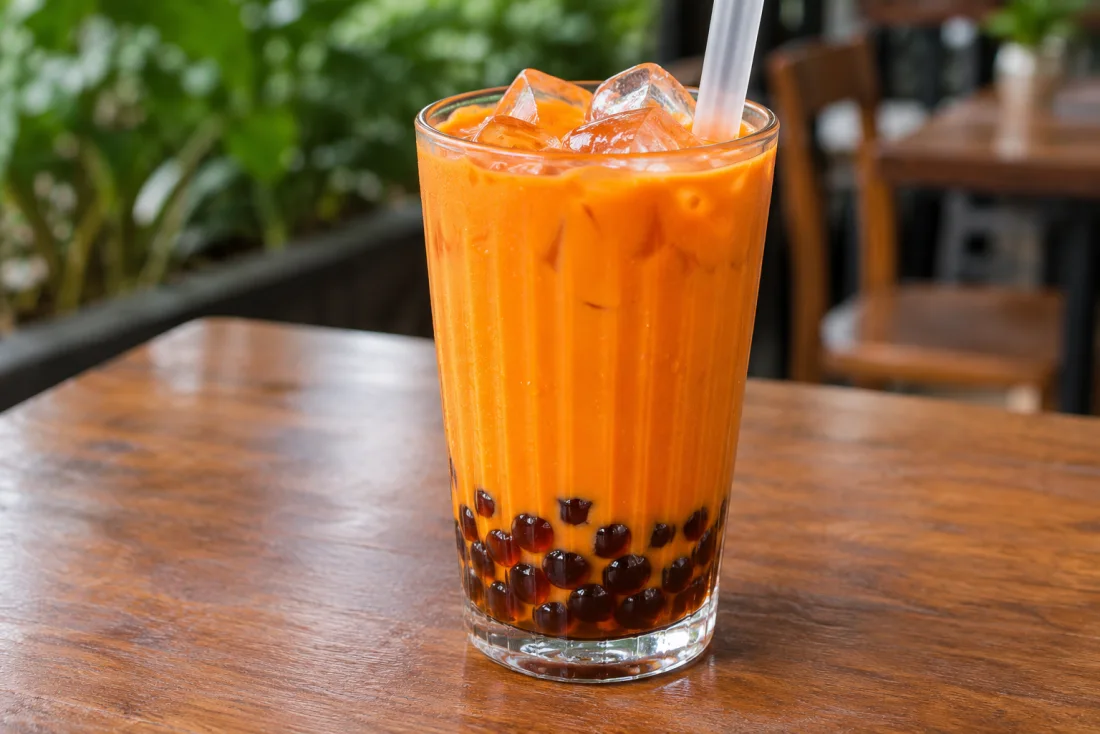

Thai iced tea and pearls on a menu
Cha yen commonly means Thai iced milk tea. Khai muk indicates the pearl topping. The combination is offered in Thai cafés and restaurants, often with a wide straw. It brings the flavour of Thai tea and a separate chewy texture together.
Strong tea, condensed milk and tapioca
Brew the Thai black tea blend strong and use condensed milk for creaminess and sweetness. Some shops add evaporated or fresh milk. Cooked tapioca pearls can be coated in sugar syrup. The tea and the pearls may contribute sweetness separately.
Brew the tea and cook the pearls separately
Strain the brewed tea before adding milk. Cook and drain the pearls separately, then hold them briefly in syrup. Add pearls, ice and the tea to the cup. A little milk can be poured on top or stirred through. Pearls can firm up over time.
Tea aroma, creamy texture and chew
Milk softens the tea astringency and the pearls add a sweet chew. The first sip depends on whether the cup has been stirred. Ice dilutes the tea, while much of the syrup stays near the bottom at first. Ask about the sweetness of both the tea and the pearls.
Tapioca, grass jelly and clear Thai tea
Tapioca pearls have a chewy centre. Konjac pearls, grass jelly or popping pearls feel different and use other ingredients. Clear Thai iced black tea uses a different base from milk tea. Check which topping is offered and whether it can be packed separately.
Allergens, caffeine and pearl ingredients
Condensed, evaporated and fresh milk commonly contain dairy. Prepared powders, pearls and syrups vary by supplier and equipment may be shared with soy or nuts. Thai black tea usually contains caffeine. Pearls need chewing, and a drink without pieces is an option for young children.
If you have a food allergy, tell the restaurant before ordering and ask about ingredients, sauces and shared cooking equipment.