
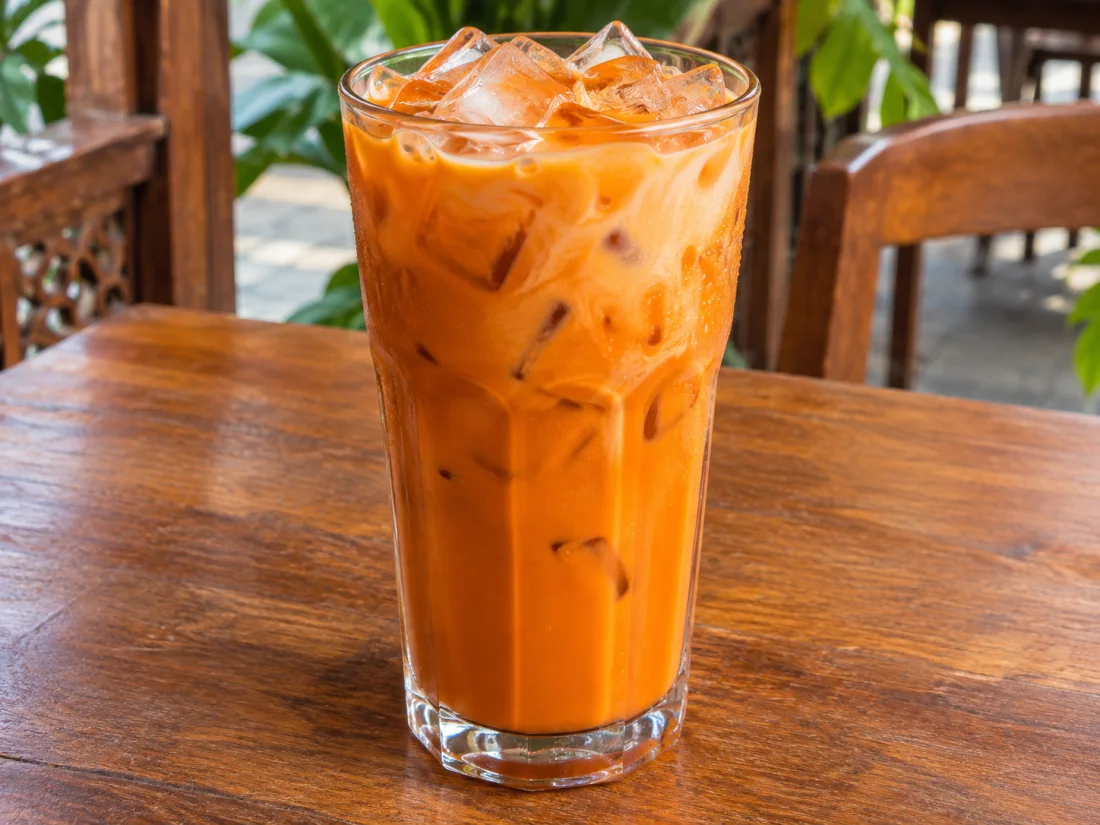

The name and an example from Bangkok’s tea trade
Cha means tea and yen means cool or iced. On a Thai drinks menu Cha Yen commonly means iced tea prepared with milk and sugar. ChaTraMue’s own history describes how its Thai tea blends became part of the business of selling iced milk and black tea, and names 1945 as its founding year. It is one brand’s account of the blend and the drink.
One brand history cannot say who prepared the first cup in its present form. Street shops, Thai restaurants and Bangkok cafés all offer a view of the way it is served. A takeaway stall and a café may use different equipment, cup shapes and quantities of milk.
What tea, condensed milk, evaporated milk and ice do
A Thai black-tea blend is a common base. Blends can contain different leaves, flavourings or colouring, so check the particular label. Strong tea supplies the main tea flavour. Sweetened condensed milk brings sweetness and dairy, while evaporated milk can change the creaminess and the way the tea tastes. Other milks or sugar can also appear in different recipes.
Many cups look orange. Some commercial blends include colouring, and the brewed concentration and amount of milk also affect appearance. You cannot judge the type of tea or whether condensed milk was added from the depth of colour. Even a pale layer on top may be evaporated milk, fresh milk or something different.
How it is brewed and why some cups have layers
One approach is to steep the leaves in hot water, strain them, then stir in condensed milk or sugar while the brew is warm. The base is brewed strong enough to stand up to the ice. A restaurant can prepare a larger batch of tea and assemble it with milk and ice as orders come in.
Some recipes mix all the milk into the tea, so the colour looks even from the start. In others evaporated milk goes in last and leaves a temporary pale streak. The layers reflect the order of pouring and how thoroughly it is mixed. Stirring brings the sweetness and creaminess together, while an unstirred glass can taste different at different levels.
Sweetness, tea flavour and the effect of melting ice
Strong tea can have a drying edge. The sugar and milk soften that impression, so a sip may taste sweet and milky before you notice the tea. Less sugar or milk can make the tea flavour more apparent. More milk can round out the drink and can also mute some of the tea blend’s aromas. The blend itself affects what lingers after a sip.
Ice is part of the final balance. A freshly poured glass may taste more concentrated than it does later, as the ice melts. Crushed ice and larger pieces may melt at different rates. For a fair comparison, smell the tea, taste it after stirring and try another sip later.
Street-stall and café versions
In Thailand you can find cups assembled quickly to order as well as café versions with layers or foam. A stall may serve it over crushed ice in a cup or takeaway bag. Cafés may use a tall glass with a garnish, and turn the flavour into desserts. A MICHELIN Guide interview with a Bangkok café gives a concrete example of the latter. It is an example of presentation rather than a sales measure.
Cha dam yen commonly names iced black tea without added milk, while cha manao commonly refers to lime tea. As these are related drinks, the complete menu name helps you know what to expect. When asking for less sweetness, say whether you mean less sugar or less condensed milk, and ask if the base is already sweetened.
Allergens in dairy, alternative drinks and shared tools
Classic recipes often use sweetened condensed milk or evaporated milk, which normally come from dairy. Tell the shop about a milk allergy before ordering. Leaving out a milk topping cannot remove condensed milk already mixed into the base. Powdered mixes, creamers, foams and other toppings can also contain milk ingredients.
Ask about the precise plant-based product if using an alternative. Soy drinks contain soy, and other products or toppings can have different ingredients. Ask whether the tea is premixed, what is in the alternative and whether brewers, measuring cups, stirrers or foam equipment are shared. Colour, layers and sweetness cannot identify all allergens in a particular cup.
If you have a food allergy, tell the restaurant before ordering and ask about ingredients, sauces and shared cooking equipment.