
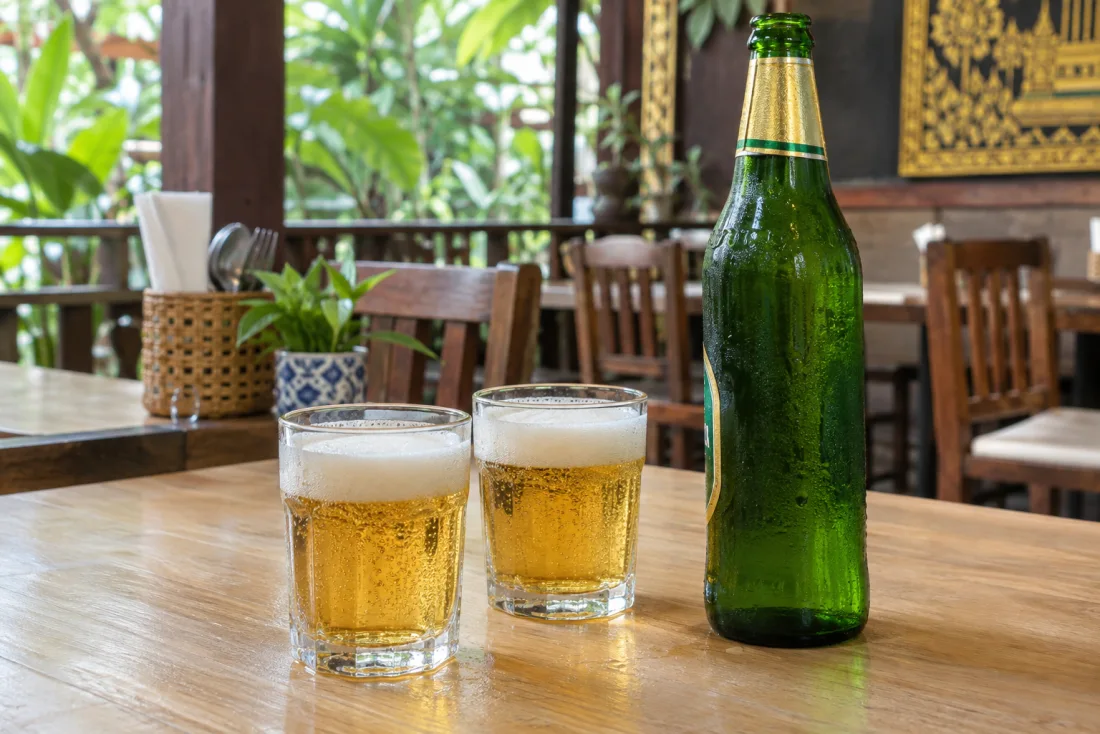

The Thai large bottle
Chang Classic khuat yai means the large bottle. The Thai version is a 620 mL glass bottle of lager at 5% ABV. Chang makes several lagers, so look at the full name, size and strength on the package. Green glass alone is not enough to establish the product. Some menus combine the brand with a large-bottle description, and the 620 mL tells you the nominal size. This bottle has the same Classic style and listed strength as the small bottle.
Why a menu lists the large format separately
A Thai restaurant menu lists Chang Classic Beer at 620 mL. Another lists two Chang volumes under the same heading, so diners can compare the sizes. Khuat identifies the bottle as the serving unit. At a shared meal a table may ask for glasses and divide the bottle into individual pours. The restaurant controls its own glass and ice service, pricing and actual availability. Primary restaurant menus document the format without making it a regional specialty.
The major ingredients of the packaged lager
The manufacturer identifies malt, hops, yeast and water as the major ingredients. Fermentation by yeast gives the beer its alcohol, and hops contribute aroma and bitterness. Malt can add a grain-like character. These general roles in brewing do not tell us which grain varieties, amounts or processing aids the brand uses. The maker lists the beer as a European-style lager. Pouring a bottle with ice is a table service choice rather than a different brewery formulation.
How the table divides a whole bottle
The 620 mL on the label is the original liquid volume. In individual glasses, the volume varies with each pour and how much remains in the bottle. Foam takes up glass space and is not an extra measure of beer. Some restaurants chill the glass as well as the bottle. Ice melts and dilutes the glass, but it does not change the listed 5% starting strength of the lager. As an open bottle warms, later pours may have a different sensory impression from the first.
Amber colour with a gentle hop finish
The manufacturer describes the lager as amber gold with light fruit and hop aromas. Once poured, a pale head can contrast with the gold liquid underneath. Ice, serving temperature and the shape of the glass can change how easily you notice the aroma. Fruit-like notes are not evidence of fruit juice in the beer. With grilled or fried food, carbonation and mild hop bitterness can contrast with a richer bite. The heat of a dish is separate from a beer's strength.
Allergens stay with each pour
The listed malt may come from a grain that contains gluten, and the manufacturer does not identify this bottle as gluten-free. If avoiding a particular cereal or gluten, check the current bottle and ask the maker if necessary. Sharing a bottle, adding ice or letting the foam settle will not change the malt ingredients. Diners at the same table can keep different beers and glasses separate. An alcohol-free beverage has its own ingredient and gluten declaration and should be checked on its own.
If you have a food allergy, tell the restaurant before ordering and ask about ingredients, sauces and shared cooking equipment.