
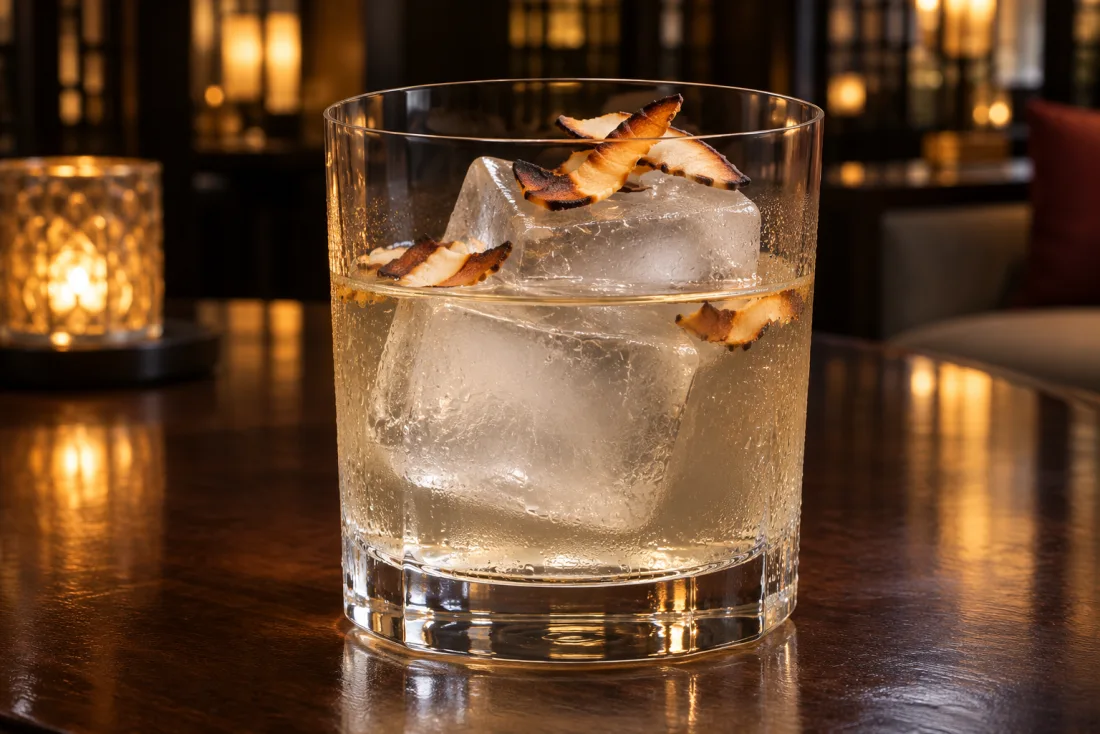

Two different finished drinks
The coconut-water version can look clear or pale. Mango purée gives the other a yellow-orange hue and more body. The glass and garnish vary. Ask whether a menu uses coconut water, coconut milk or a coconut-flavored spirit.
Two Thai bar menus
Banyan Tree Bangkok lists Issan Coco with Issan Thai rum, coconut water and roasted coconut flakes. Hyatt Regency Phuket lists Thai Sunset with rum, mango purée, coconut water, Thai basil and lime. They are contemporary examples from specific menus.
Coconut water, rum and additions
Coconut water brings mild sweetness. Toasted flakes add an extra roasted aroma. Rum supplies the spirit base. Mango makes the second drink thicker and more fruit-forward, while lime and basil add bright and herbal notes.
Mellow sweetness or a tropical fruit note
The simpler drink can taste light and gently sweet. Rum adds warmth. Mango makes the fruit version richer, lime brightens it and basil gives a leafy finish. Melting ice softens the flavors. Glass size and color do not establish strength.
Choosing accurate menu photographs
A clear pour with toasted coconut and an opaque mango version show different recipes clearly. List the actual mixer, spirit and garnish. Label alcoholic and non-alcoholic coconut drinks distinctly on the menu.
Allergens and shared bar equipment
Both versions use coconut. Ask about fruit, herbs and prepared syrups. Shared bar tools may contact milk, eggs, nuts or other ingredients. Both documented versions contain alcohol. Ask the seller about its actual ingredients and portions.
If you have a food allergy, tell the restaurant before ordering and ask about ingredients, sauces and shared cooking equipment.