
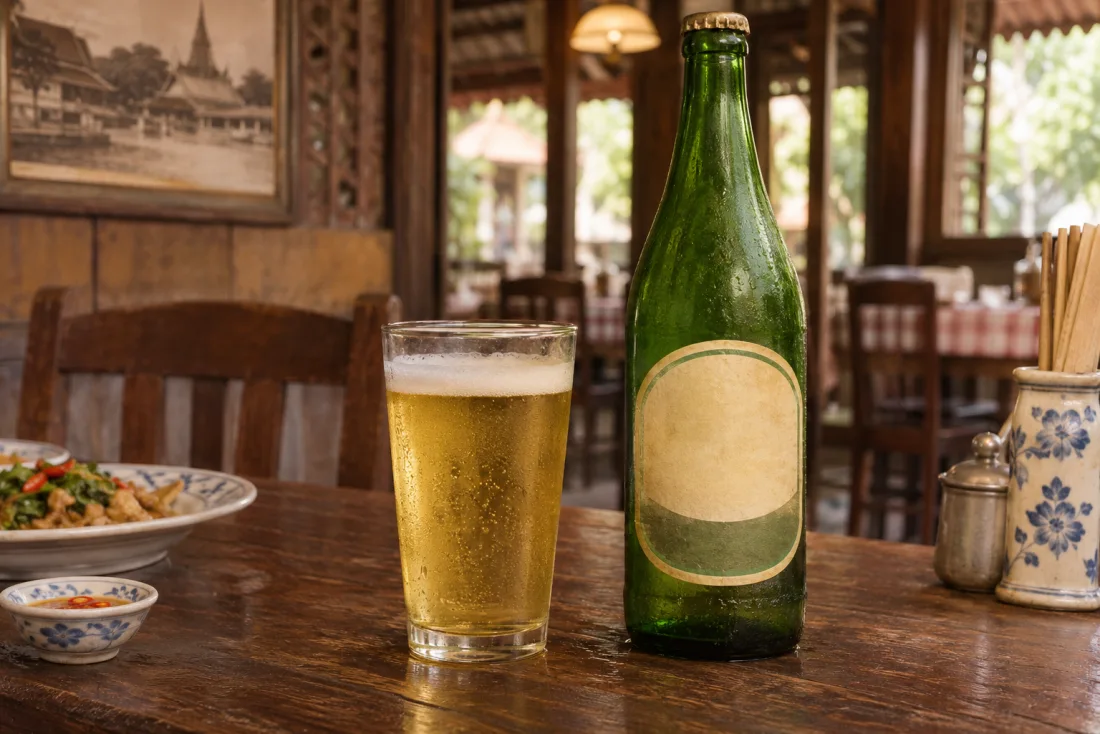

When the green bottle appeared
ThaiBev dates the Chang Light launch to March 2006. Its prospectus describes a 640 mL green bottle distributed mainly in urban markets through selected agents. The producer’s 2012 portfolio still lists it independently. Later Chang editions also used green glass, so bottle color alone is not a reliable identifier.
Strength, package and ingredients
The launch record identifies the 4.2% ABV and the large green bottle. It does not fully disclose the grains or formula of that specific release. Beer generally involves grain fermentation, and water, hops and yeast are familiar brewing inputs. Treat an archival package as evidence for that package and market, not for releases under other names.
How to read Light
The brand used Light for a lower-strength market position. The word alone does not establish a calorie value or sweetness level. Pale gold and light foam in the images recall a lighter beer presentation. They do not reconstruct the precise malt aroma or hop bitterness of an old batch. Glass, temperature, pour and lighting can change the appearance.
Identifying old packaging
The green glass is visible but the label and neck are better identifiers. Look for the Light designation and the strength along with the bottle size. The images illustrate the style poured into a glass with its period bottle nearby. Cases and other multipacks may give a total volume that differs from the single bottle measurement.
Product retirement and legacy menus
In its 2015 financial presentation, ThaiBev reported stopping Chang Light and consolidating several Chang editions under its main brand. An old menu, collection or travel photo can document the product’s former availability. Read the date before using such a record as evidence about what a venue serves today.
Allergens and alcohol
Conventional grain beers can contain gluten from malted barley or wheat. The surviving product details do not allow a gluten-free claim or a complete grain list. Use the relevant package information if gluten or grain allergy is a concern. The historical 4.2% figure is an alcohol-by-volume statement, and the amount of alcohol in a serving depends on its volume.
If you have a food allergy, tell the restaurant before ordering and ask about ingredients, sauces and shared cooking equipment.