
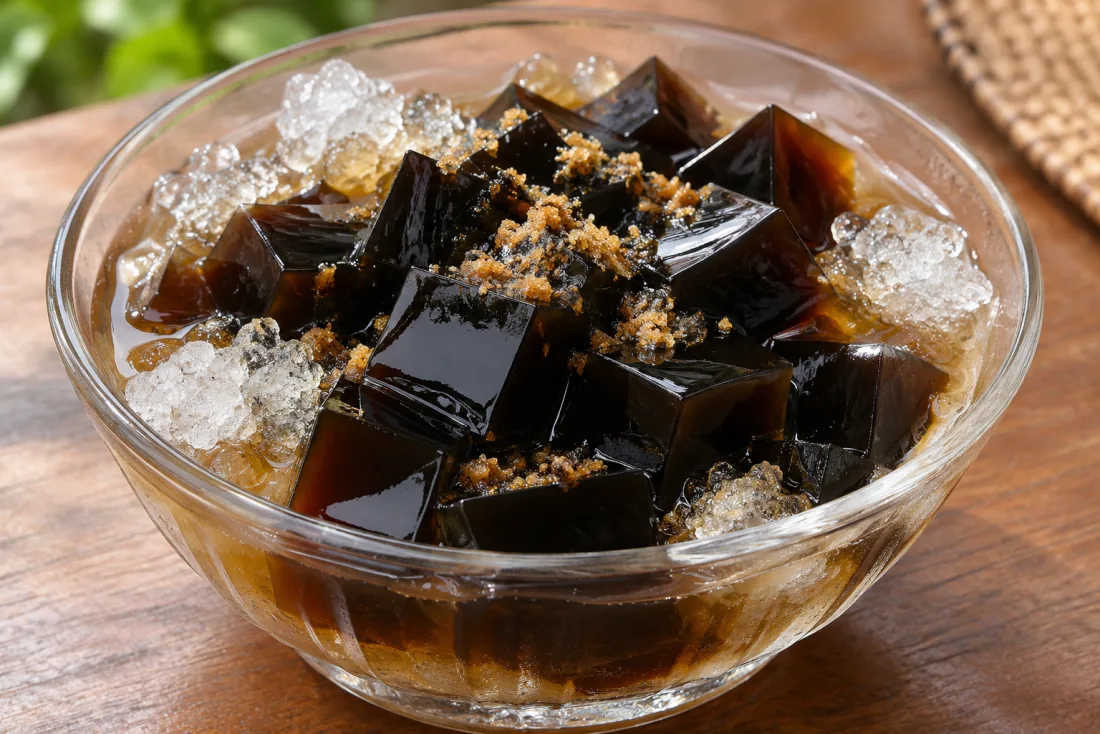

Black grass jelly at Thai stalls
Chao kuay can mean the jelly itself or a bowl of iced dessert. It belongs to a wider Asian grass-jelly tradition. Local records from Kamphaeng Phet document a Thai producer and its method. They do not identify the first stall.
Grass jelly herb, tapioca, sugar and pandan
KRUA uses dried grass jelly herb, water, pandan, brown sugar and tapioca starch. The extract brings colour and aroma, while the starch helps it hold a cut shape. Pandan is optional and packaged products may use different ingredients.
Extracting, straining and setting the gel
Simmer the herb, press out the liquid and strain off the solids. Heat the extract again, stir in dissolved starch and allow it to thicken. The gel sets as it cools. Cut or scoop it at serving, then add syrup and ice.
A mild herbal finish and a cool, springy bite
The gel is smooth and soft with a little chew. Its mild herbal note can seem slightly bitter; brown sugar or clear syrup balances the flavour differently. Taste a piece before adding more syrup.
Plain, longan, milk and packaged versions
Some menus serve it with longan syrup. Shops also offer milk teas and mixed iced desserts with grass jelly. Ask about the base and extra sweetener. For a packaged cup, use its own label.
Allergens to ask about: gelling ingredients and toppings
The reference plant-and-tapioca recipe can be made without dairy or wheat. Other gels and toppings can contain additional ingredients. Ask about milk, soy or other ingredients and shared utensils.
If you have a food allergy, tell the restaurant before ordering and ask about ingredients, sauces and shared cooking equipment.