
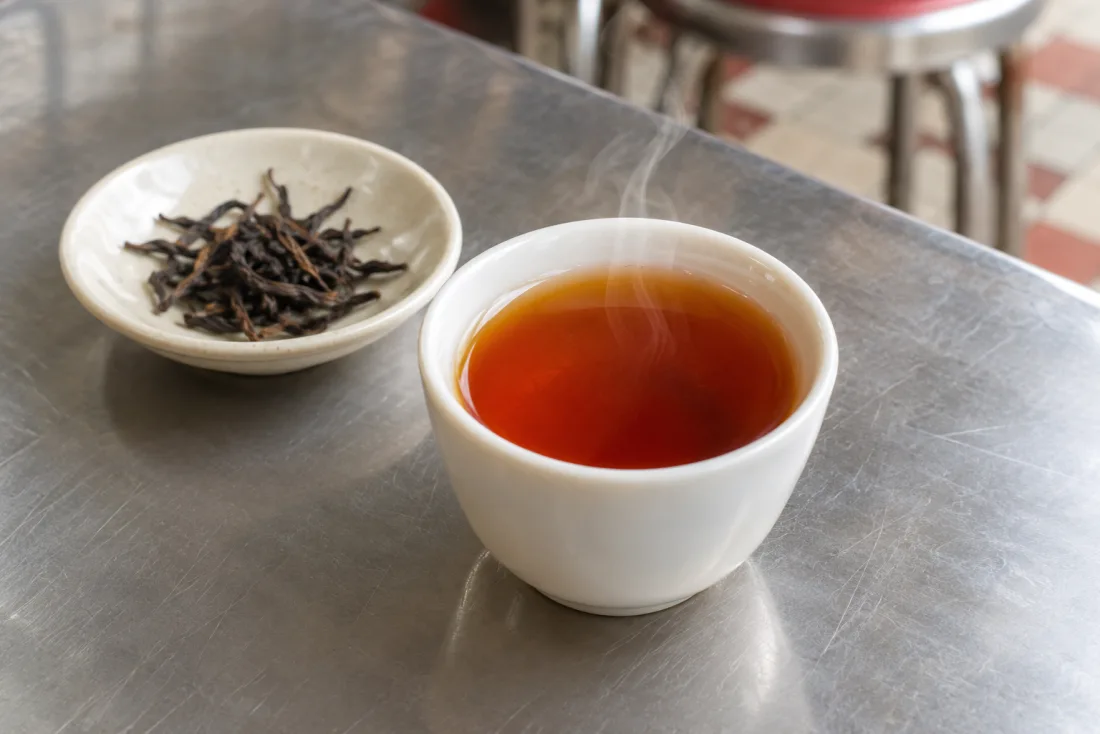

Chinese tea at a Thai table
Thai restaurants may list ชาจีนร้อน by the cup, person or pot. China has developed several major tea styles, including green, white, yellow, oolong, black and dark tea. The menu may use a single house selection or name the specific leaf.
Tea leaves and hot water
Plain tea uses tea leaves and water. Loose leaf, compressed tea or bags can be used. Jasmine scent or blended flowers are possible. Pots, covered bowls and baskets allow leaves to be kept out of the serving cup.
What the cup may taste like
A lighter tea may be floral and astringent, oolong may show roasting or flowers, and a darker tea can have mellower or aged notes. Colour alone cannot reliably identify a tea or its strength.
Brewing and refills
Temperature and time depend on the leaf. Some teas can be infused in several short rounds. Restaurants may also brew in a pot and divide it among smaller cups. Ask whether refills are included.
Serving and ordering
Hot plain tea can accompany dim sum or a meal. Ask for the variety, a cup or pot, and no added sugar or milk if preferred. Tea has naturally variable caffeine.
Allergens and blends
Plain tea and water do not normally add milk, egg or tree nuts. Dairy, plant milk, flowers, fruit and flavourings need separate checks. Ask about shared pots, strainers and cups. Caffeine is a separate consideration.
If you have a food allergy, tell the restaurant before ordering and ask about ingredients, sauces and shared cooking equipment.