
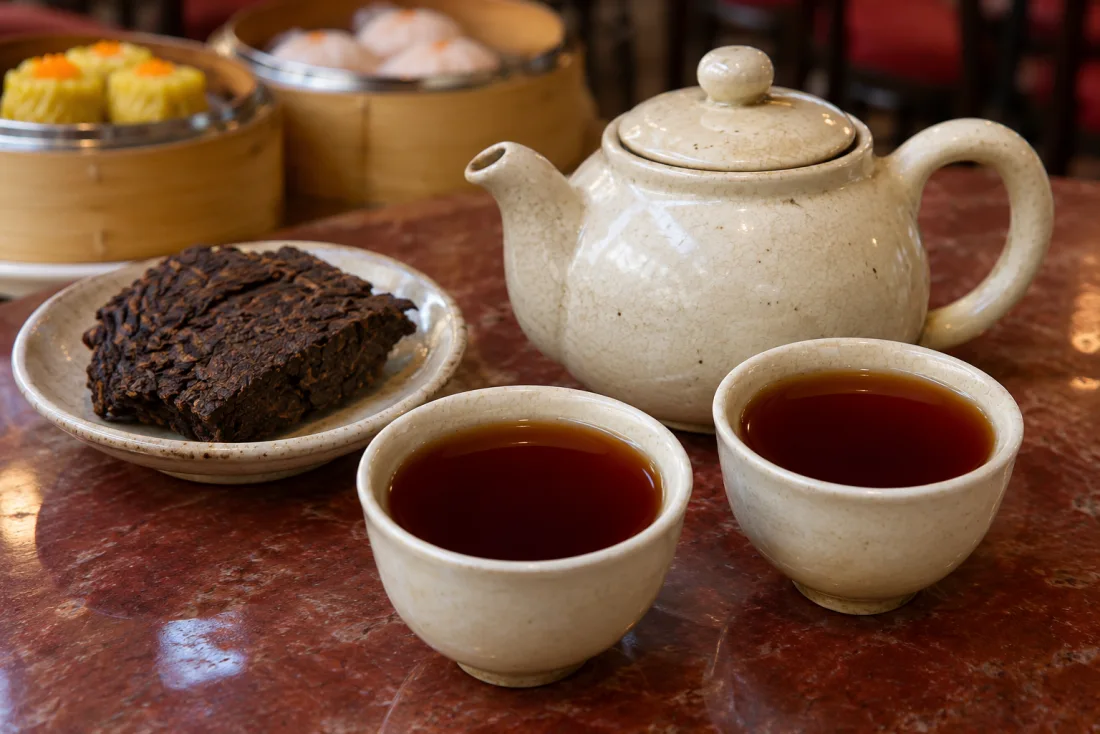

Recognizing ripe Pu’erh
A Thai menu may simply list hot Chinese tea by the pot. The word Pu’erh identifies this leaf choice. Ripe Pu’erh can be clear chestnut or mahogany, with color varying by strength.
Yunnan tea leaves
Some Thai Chinese restaurants specify ripe Pu’erh from Yunnan. Ripe leaves are fermented during processing and can be loose or compressed. Raw Pu’erh has a different production and maturation profile.
Brewing and dividing a pot
Hot water opens the leaves. The brewed liquid can be poured through a strainer into a server and shared. Steeping, pot size and refill arrangements depend on the restaurant.
Earthy aroma and mellow finish
Ripe Pu’erh can smell of wood, earth or dry fruit. Strength and astringency depend on the leaves and brew. A natural tea aroma does not mean that fruit or sweetener has been added.
On Thai Chinese menus
Cafés and dim sum restaurants in Thailand may list Pu’erh by the pot or specify a particular aged tea. Guests can share the pot with steamed and fried dishes.
Allergens and tea snacks
Plain brewed tea naturally contains caffeine. Check additions and shared equipment. Dim sum and sweet pastries served with tea have their own wheat, egg, milk, crustacean, sesame or nut information.
If you have a food allergy, tell the restaurant before ordering and ask about ingredients, sauces and shared cooking equipment.