
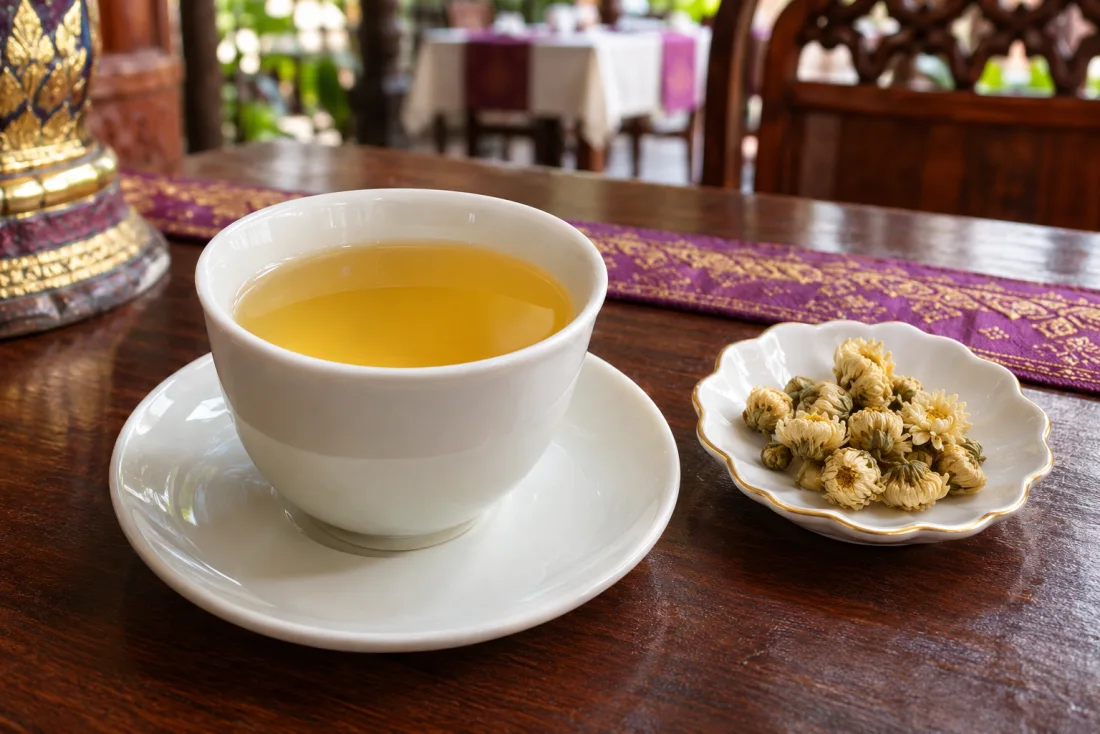

Recognising the colour and aroma
Restaurants may use a porcelain cup or heatproof glass. A strained cup is clear from straw-gold to amber. A few petals may remain. Darker colour can come from a stronger infusion or additional plants, depending on the recipe.
Hot and cold versions in Thailand
Kek huai appears on menus at Thai-Chinese restaurants, hotpot venues and herbal drink shops. The word ron specifies a hot drink. Plain versions use chrysanthemum flowers rather than tea leaves. Cold bottled and iced drinks are also available.
Preparing the flowers, water and sugar
Steep or simmer dried food-grade chrysanthemum in water and strain. Rock sugar is optional. Shops may make a batch ahead, or add liquorice or another herb in a house recipe. Ask if the drink is brewed with other plants.
What the drink tastes like
The aroma is light and floral, and a plain cup may have a slightly herbal or bitter finish. Rock sugar can soften that finish. Taste changes as the drink cools, and colour alone cannot show how sweet it is.
Ordering hot or unsweetened
Ask for ron for hot and mai sai namtan for no added sugar. A premade batch may already be sweetened. A menu can say whether the drink is brewed to order and whether sweetness can be chosen.
Allergens and recipe questions
A plain flower and water infusion does not add milk, egg or nuts. Individual reactions to chrysanthemum or related plants are possible. Check extra herbs, honey or syrups and shared teapots, strainers and cups.
If you have a food allergy, tell the restaurant before ordering and ask about ingredients, sauces and shared cooking equipment.