
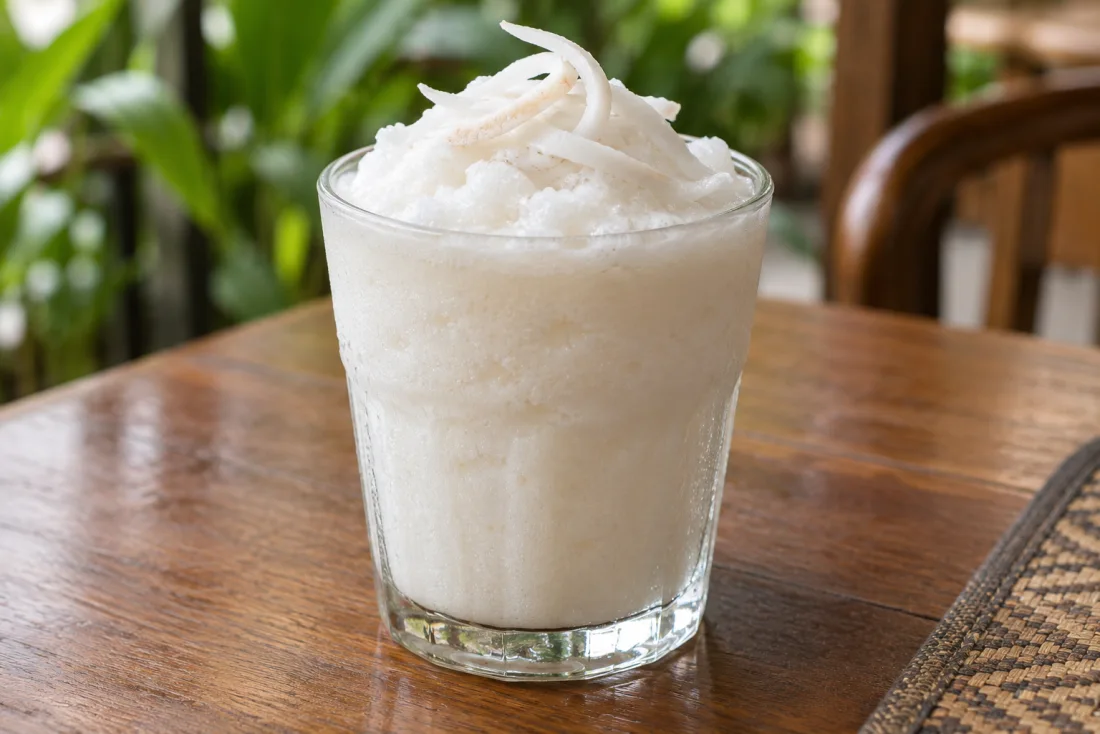

A young coconut shake in Thailand
Pan means blended. Thai cafés may use a freshly opened aromatic coconut or prepared young flesh. Menus sometimes list a fresh milk version separately. The finished shake is usually pale.
Young coconut flesh, water and ice
Coconut water makes the blend easier to drink, while tender flesh adds body. Syrup or a little salt can balance the recipe. Fresh milk, condensed milk or coconut milk can add richness. A few pieces of flesh can be left intact for garnish.
Blending the flesh and the water
Scoop the flesh and blend it with coconut water and ice. A longer blend gives a finer texture, while leaving a few shreds adds a bite. Ice-rich versions separate as they melt. Milk can be added by the cup.
The flavour of plain and milky shakes
The plain version is icy and gently sweet. Fresh milk feels smooth and condensed milk adds sweetness. Coconut milk brings a longer fatty finish. As ice melts, syrup and the coconut juice become easier to taste.
A blended shake and fresh coconut water
Fresh coconut water usually stays clear, with slices of coconut sometimes added. A shake blends the pieces with ice. Ask about dairy, frozen flesh, flavoured syrup or toppings when choosing.
Allergens in the base and the blender
The drink contains coconut. Dairy and soy can appear in milk, creamer or alternative milks. Some toppings contain other allergens. Ask about the ingredients and shared blender jars. Leaving off the garnish does not remove coconut from the base.
If you have a food allergy, tell the restaurant before ordering and ask about ingredients, sauces and shared cooking equipment.