
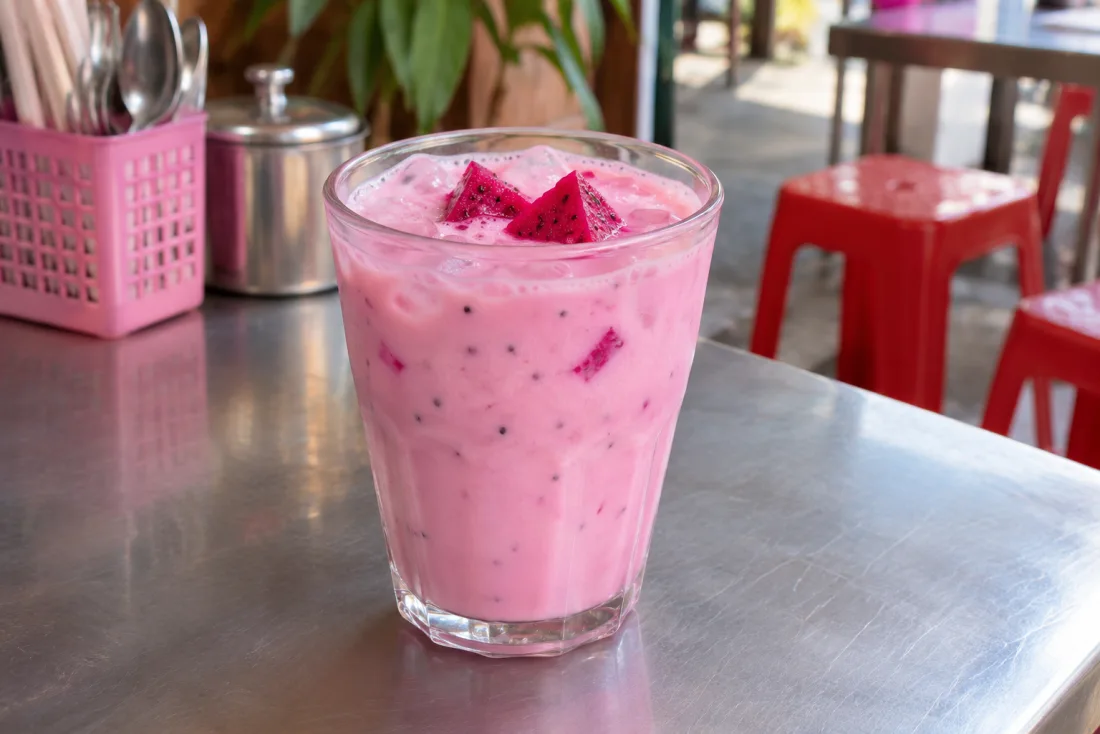

Reading a regular milk-based serving
Thai menus can explicitly say fresh milk, while a Chiang Mai merchant offers a 12-ounce white dragon fruit yoghurt shake. Fresh milk and yoghurt are separate preparations. A 12-ounce yoghurt example does not set the volume of every milk shake.
Fruit, seeds and milk
Remove the peel and keep the tiny black seeds with the fruit. Blend the pieces with cold milk and ice. One Thai recipe adds plain yoghurt and honey to fresh milk. Yoghurt brings cultured tang and a thicker feel.
Mild fruit and cultured acidity
White fruit gives an ivory base and red fruit can look pale pink. Dairy adds roundness and leaves the tiny seeds visible. A yoghurt version is tangier, while honey can soften its finish. Colour does not establish the fruit or milk ratio.
Serving an individual cup
Pour into a short glass or standard takeaway cup. The Chiang Mai yoghurt example is 12 ounces. Stir if fine ice melts or seeds settle. A spoon can help with thicker yoghurt and any fruit pieces.
Other dragon fruit bases
Juice is more pourable. Fruit blended with ice lacks dairy aroma, while coconut milk brings coconut flavour. Extra fruit or yoghurt changes both flavour and texture. Ask about the actual base and toppings.
Allergens in milk and yoghurt versions
Both cow’s milk and yoghurt contain milk. Plant versions may introduce coconut, soy or nuts. Ask about shared tools and honey where relevant. Avoid dragon fruit itself if you are allergic to it.
If you have a food allergy, tell the restaurant before ordering and ask about ingredients, sauces and shared cooking equipment.