

Dragon fruit and the Thai menu
Kaeo mangkon pan means blended pitaya. A Thai fresh-fruit vendor lists fresh dragon fruit and a 22-ounce cup. The Thai Department of Agriculture describes fruit types grown locally. Pitaya belongs to the cactus family, with origins in Central America.
Two natural colours
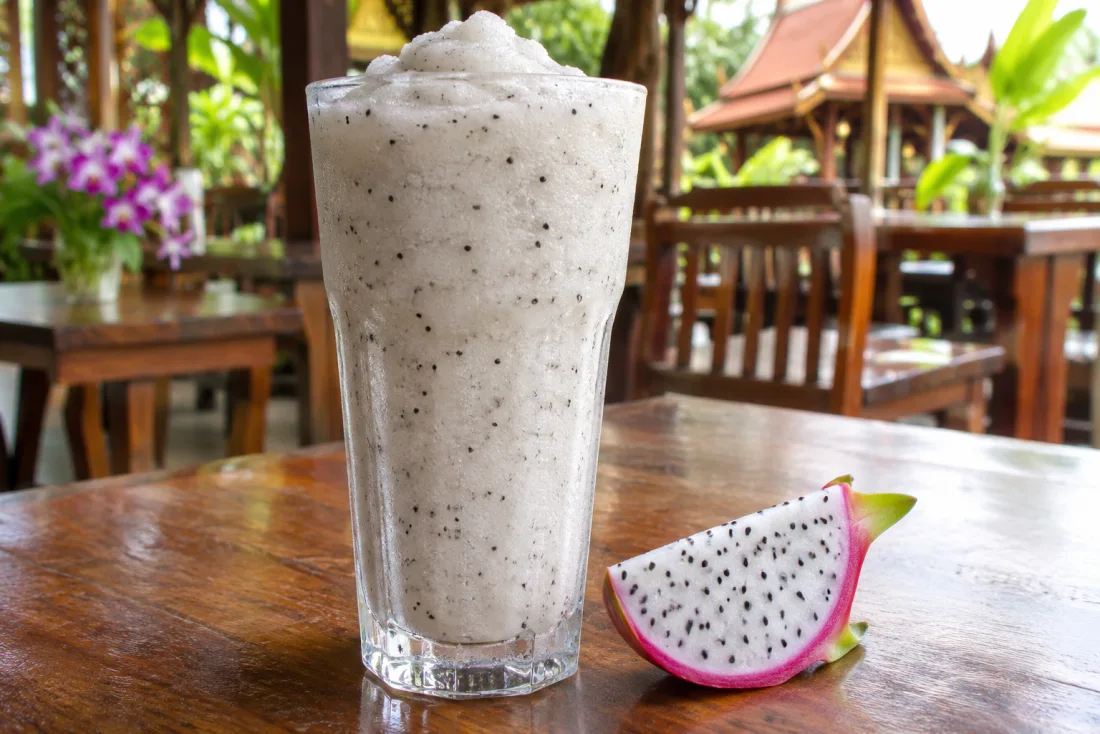
The leafy outer peel is removed and the flesh blended. The white-fleshed fruit makes a pale shake with visible black seeds. Red flesh can be deep pink or magenta, with similar seeds. Ice can lighten both, and the colour alone does not reveal the exact cultivar or dairy content.
Fresh texture and flavour
Juicy flesh blends into a light slurry that can hold the small seeds. Frozen chunks can replace some ice for greater body. The fruit usually has mild sweetness and a subtle aroma, while extra syrup can dominate it. Ice can soften the perceived fragrance.
Serving a larger cup
Twenty-two ounces is one Thai vendor's example. Transparent glasses show the colour, and takeaway cups work just as well. Cup volume includes ice, pulp and air. Stir if the frozen texture relaxes and the tiny seeds settle.
Fruit, mixed fruit and dairy
Lime gives a brighter finish. Yoghurt or banana makes the drink heavier. Added berries can also create a magenta colour. Extracted or filtered pitaya juice is a different preparation and can lose some of its visible seeds. Ask about the base if the ingredient list matters.
Allergens and blender contact
A plain fruit-and-ice version needs no milk. Dairy and other allergens can be introduced through yoghurt, milk or shared equipment used with nuts or soy. Avoid dragon fruit if you have an allergy to it. Ask separately about added sugar and premixes.
If you have a food allergy, tell the restaurant before ordering and ask about ingredients, sauces and shared cooking equipment.