

 shrimp
 ground pork
Shrimp wontons in Thai noodle shops
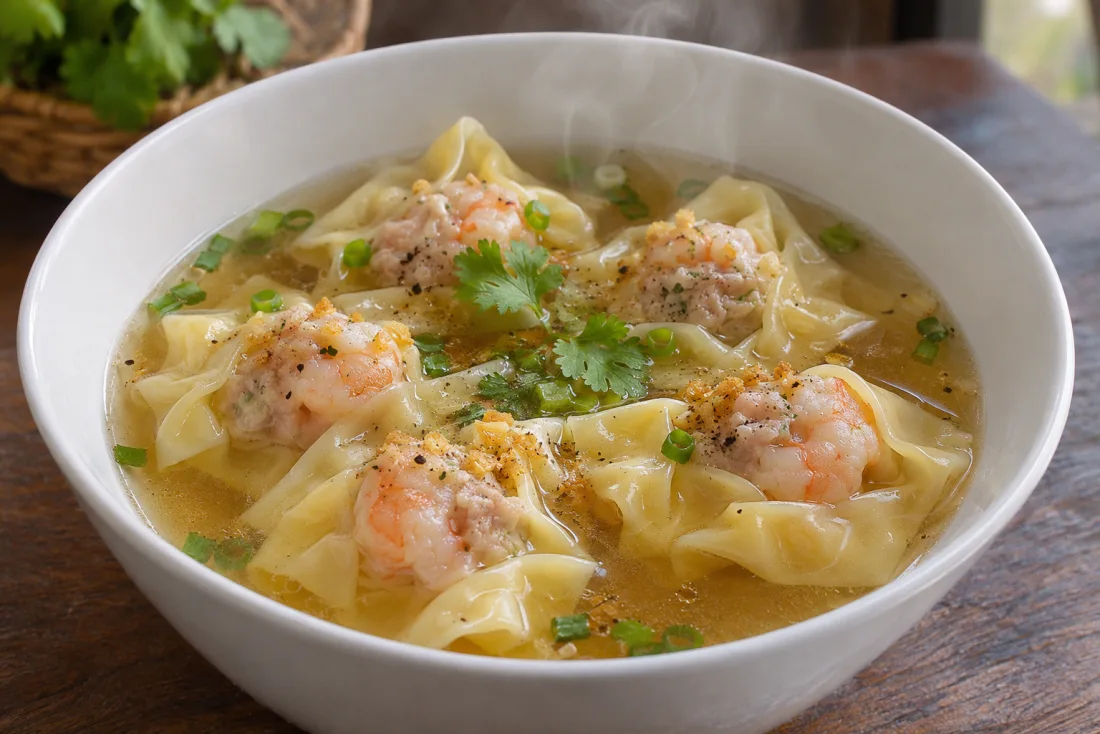
Kiao kung means shrimp wontons. They may be served in soup, alongside egg noodles or as a dry bowl. The name identifies shrimp while this particular recipe also uses pork. The preparation does not establish one place of origin.
Shrimp, pork filling, wrappers and stock
The documented version uses seasoned shrimp, springy minced pork, sesame oil, cooking wine, pepper, and wonton wrappers. The broth includes pork bones, shrimp heads, garlic and coriander root.
Springy filling and savory broth
The wrappers soften around pieces of shrimp and the fine pork mixture. Shrimp heads give the broth seafood depth, pork bones add savoriness, and sesame and pepper add fragrance.
Wrapping, boiling and serving
Seal the wrappers around the filling and cook until the pork and shrimp are fully done. Prepare the broth separately and pour it over the wontons. Some shops add greens, fried garlic or noodles.
Clear soup and other menu styles
Order a bowl with or without noodles. A dry version may carry more seasoning on the wrapper. Ask whether the filling and stock both contain pork or shrimp, even if they are not visible.
Allergens, pork and cooking wine
Shrimp is a crustacean, sesame oil is sesame, and wrappers commonly contain wheat and may contain egg. The reference also uses pork and cooking wine. Ask about premade seasonings, fish or soy sauces and shared tools.
If you have a food allergy, tell the restaurant before ordering and ask about ingredients, sauces and shared cooking equipment.