
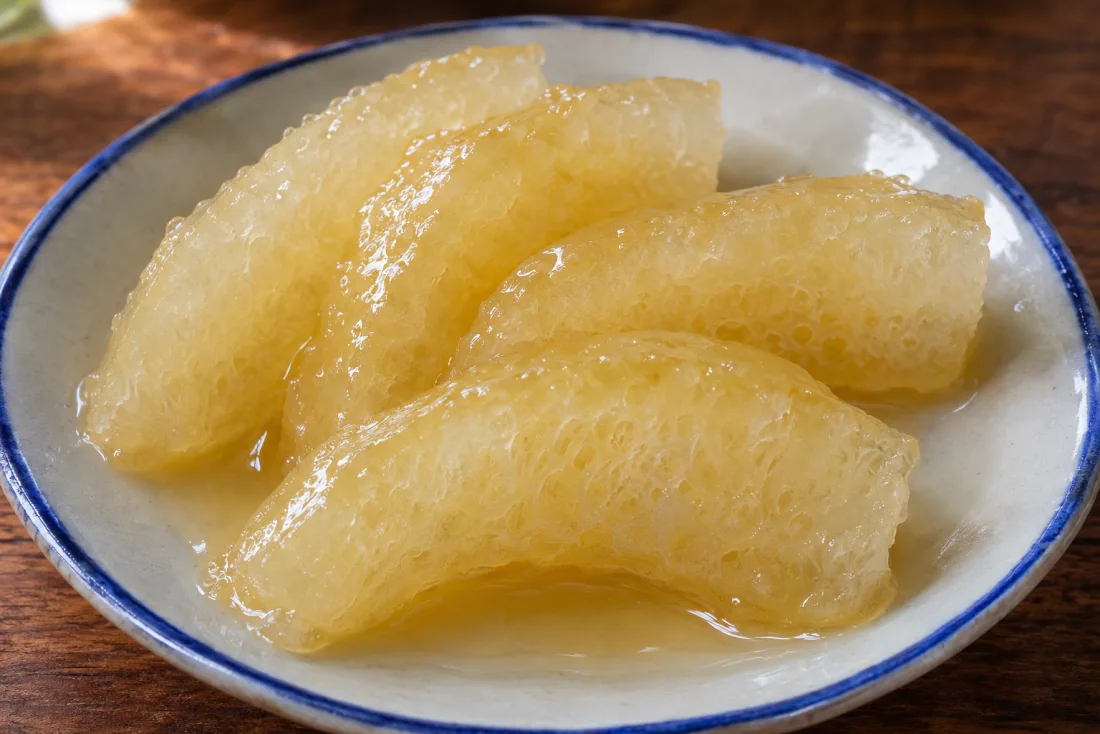

The white layer of the peel
The recipe uses the spongy white inner peel after trimming away the green surface. Thick cut pieces keep their fine pores and become a little translucent as they take up syrup. The structure is distinct from the juice sacs of a raw pomelo segment.
Preserves in homes and local groups
Thai recipes preserve both fruit and thick peel. A community group in Tha Khao Pho in Chai Nat developed smaller candied pith pieces with variations in sweetness and colour. The Department of Employment records a version with a dry sugar crust. These document use in specific places and do not fix one place of origin.
Pomelo pith, sugar, water and salt
A simple version uses just these four ingredients. The pith takes up sweet liquid through its porous structure. Extra scents or colours depend on the recipe. A wet batch retains some clear syrup, while a drier batch develops visible sugar grains.
Reducing bitterness before candying
The outer peel is trimmed off. Soaking, rinsing and softening lessen the harsh flavour while keeping the pieces intact. A drier method reduces syrup until sugar crystallises. A moist method keeps a little syrup for serving. Takeaway portions can use sticks or small pieces.
Chewy interior and two finishes
Moist pieces are glossy and soft; dry pieces start with a light sugary crunch, with a chewy centre in both. Pomelo gives a gentle peel aroma behind the sweetness. Serve in small portions with unsweetened tea. Other candied fruits can look similar, so the porous pith is a useful visual clue.
Citrus ingredients and shared equipment
Pomelo is still present after cooking. If avoiding citrus, ask what fruit was used and avoid assuming candying removes it. Flavours and colours may vary by producer. Shared pans, knives or packaging tools could contact peanuts, sesame, wheat or other products, so ask about the actual ingredients and equipment.
If you have a food allergy, tell the restaurant before ordering and ask about ingredients, sauces and shared cooking equipment.