

 chicken
 fermented shrimp seasoning
Winter melon in the Thai name
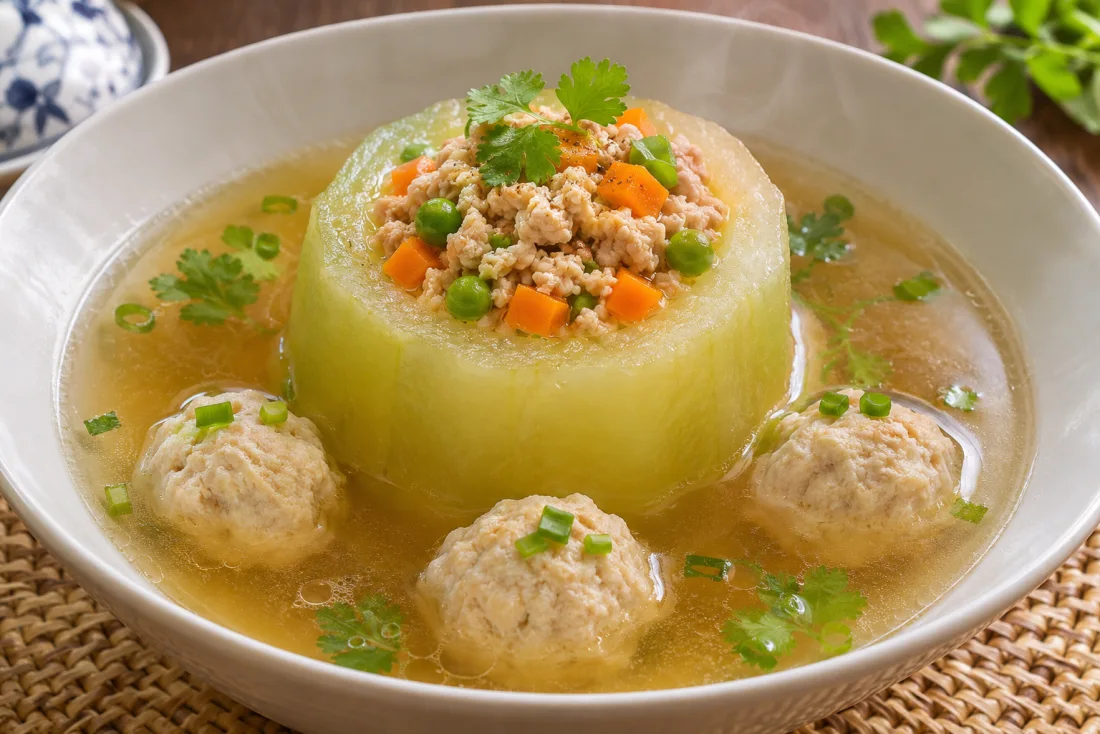
Fak here means winter melon and tun indicates a gently cooked dish. A thick ring of pale melon can hold the chicken filling. Cooked melon becomes slightly translucent. It differs from orange pumpkin, which is usually fak thong.
Chicken and its broth on a Thai table
A historical Bangkok cookbook separates the meat and bones, then uses the bones for broth. Carrot, melon and cooked chicken filling make a shared dish or a larger individual bowl. The dish records one Thai preparation.
Winter melon, chicken, carrot and beans
The original lists winter melon, chicken, canned beans, carrot, garlic, wheat flour, pepper, traditional shrimp seasoning and sugar. It does not specify a species of canned bean. Wheat flour helps bind the chicken, and the meat and bones supply the main flavor.
Cook the center of the filling
Prepare chicken broth in a clean pot. Fill and cook the trimmed melon until the chicken center is done. USDA guidance uses 74°C for poultry. Separate tools that handled raw chicken from cooked melon, garnish and broth.
Tender melon and clear chicken flavor
Winter melon becomes yielding and juicy, while minced chicken brings savoriness and a light peppery warmth. Carrot and cooked beans vary the texture. Rice absorbs some of the broth.
Allergens in the filling, seasoning and beans
The historical flour contains wheat. Traditional shrimp seasoning can contain crustaceans, and fish sauce or oyster sauce introduces other seafood allergens. Ask about soy, beans, broth and shared equipment. Removing fillings does not undo their contact with the soup.
If you have a food allergy, tell the restaurant before ordering and ask about ingredients, sauces and shared cooking equipment.