
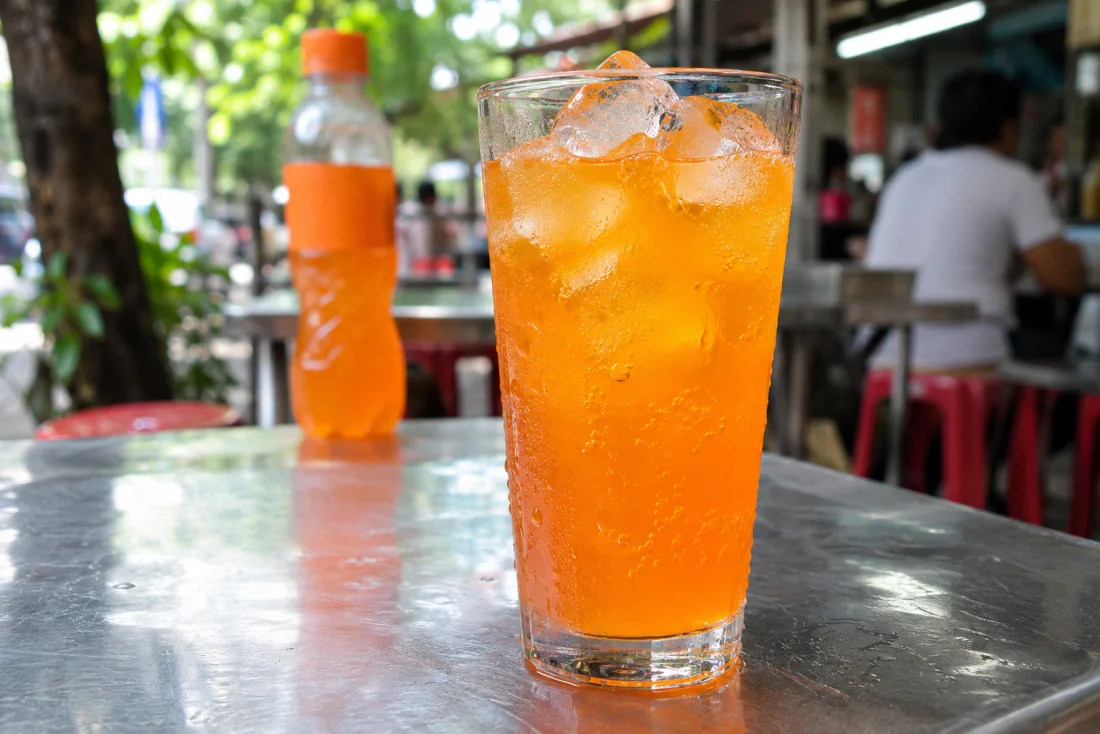

What small bottle means
Thai menus may list cans, bottles and large formats separately for the same flavour. A 500 mL bottle is sold locally. Small bottle is a relative menu description, so the actual volume can differ by shop. A glass supplied separately doesn't change the original package.
What makes it orange-flavoured
The Thai bottler lists carbonated water, sugar and sweeteners including sucralose and acesulfame potassium, together with an acidifier, flavouring, colour and preservative. Read the exact bottle for the current formulation. Orange colour describes an experience and doesn't establish juice content.
A sweet, lively pour
A gentle pour over ice makes a short cap of foam, with small bubbles rising through the orange liquid. Sweetness and orange aroma lead, followed by a tangy edge. Cold from the bottle preserves its original intensity. Melting ice gradually softens sweetness, acidity and aroma.
Why the screw cap matters
A small bottle can be handed over alongside an ice-filled glass and poured in stages. Snack shops may offer it by the bottle or serve it as a glassful beside barbecue and fried food. The closed cap helps between pours, though a previously opened bottle gradually loses carbonation.
The can and the juice counter
A 325 mL can is another documented local format, intended to be opened and finished without a resealable cap. Package type isn't enough to establish identical ingredients. Freshly squeezed juice has fruit aromatics and sometimes pulp, while this drink emphasizes sweet-tart flavour and carbonation.
Allergens and restaurant additions
The listed sugar, acidifier and sweeteners don't establish the complete allergen status. Anyone sensitive to citrus or flavour ingredients should check the actual label. Fruit slices, syrups or an ice-cream float can change the contents and introduce milk. Shared jugs or scoop utensils can also transfer traces.
If you have a food allergy, tell the restaurant before ordering and ask about ingredients, sauces and shared cooking equipment.