
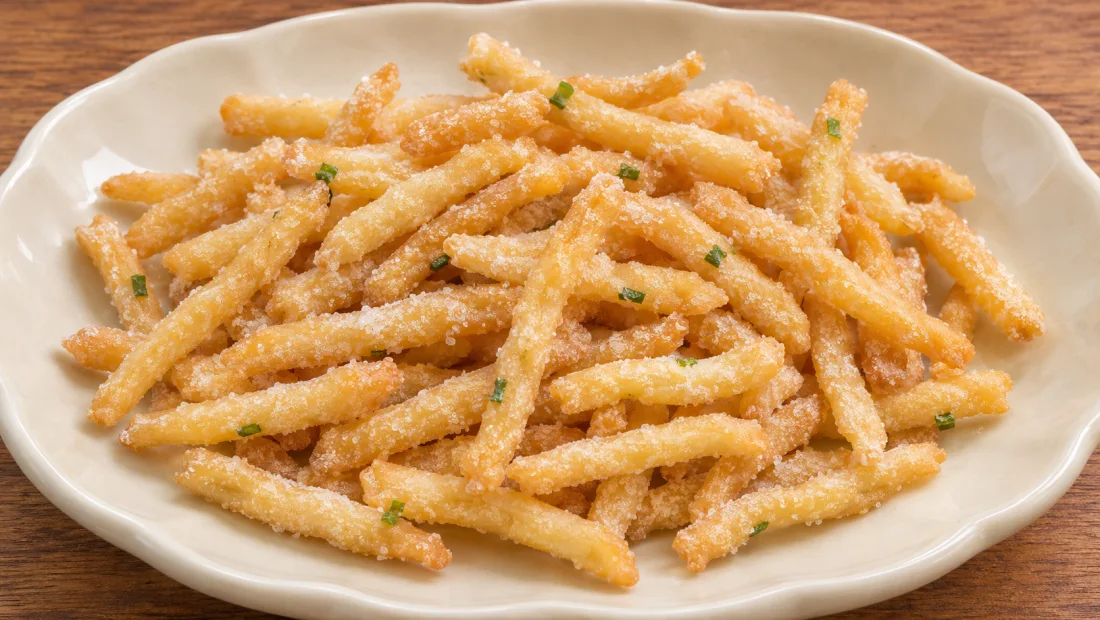

Why the snack is named for lotus stems
ก้านบัว means lotus stem. Thai cooking demonstrations show small, elongated pieces rather than flat cookies or large breakfast fritters. The resulting snack is served dry and can accompany tea or coffee. Several recipes survive without establishing one province of origin.
Wheat dough and a dry sugar coating
Wheat flour is the core in the representative recipes, while egg, coconut milk or leavening can vary. Cut the dough into small sticks, fry and toss in cooked sugar until the outer layer can set. Fine crystals appear on the dry coat. Scallion is documented as a seasoning in certain versions.
Thin, crisp and gently sweet
The slender pieces snap, with shallow bubbles and fine sugar crystals at the surface. Wheat aroma and toastiness come through underneath. Salt or a little scallion can soften the impression of sweetness. A thicker stick can have a more open interior while still breaking crisply.
A small serving or a snack basket
One image shows shorter sticks with traces of scallion. Another displays thicker matte sticks and their broken edges. Both show dry, finished snacks. Portions may be sold by weight, basket or bag. An illustration does not identify quantity or shelf life.
Reading the name in the market
The Thai snack name is more precise than a generic fried cookie. Say whether the restaurant uses dry glaze, scallion or a different seasoning. A home cook can also use a spicy variation. An item served with separate syrup should disclose that as a serving variation.
Allergens and flour
Wheat contains gluten. Egg and coconut occur in some recipes and prepared flour mixes can contain milk or soy. Review oil or tools shared with other snacks. The glaze gives no indication of what is inside the dough. Use the ingredient label for prepacked portions.
If you have a food allergy, tell the restaurant before ordering and ask about ingredients, sauces and shared cooking equipment.