

 minced pork
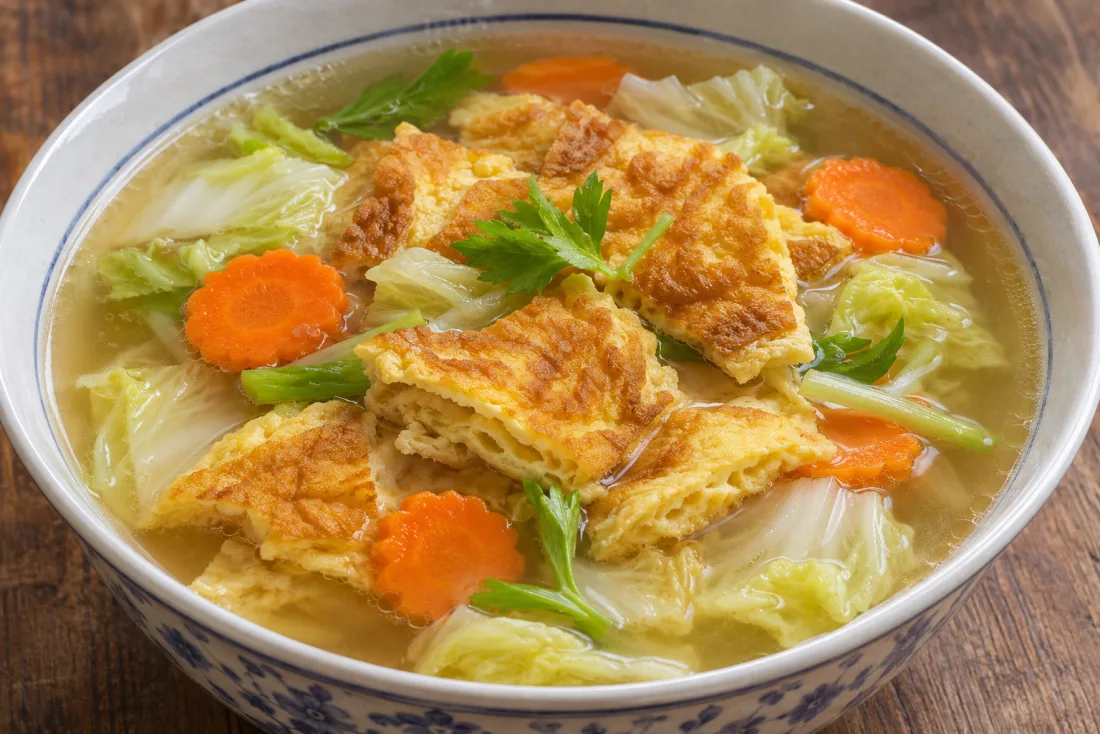
A clear soup with omelette pieces
Gaeng jeud is a family of mild soups. Khai nam identifies an egg version, and this style uses beaten egg fried into an omelette before it is cut into pieces. It is served as a gentle soup with rice or alongside spicier Thai dishes.
How the egg becomes tender
The fully set omelette can be cut into thick portions or narrow strips. Thick egg holds the broth inside small air pockets, while thin pieces curl. Adding it near serving keeps some fragrance from the lightly browned edges. This is distinct from small egg ribbons cooked directly in stock.
Vegetables and clear broth
Pork or chicken bones can make a light stock, seasoned with garlic, coriander root, pepper or soy sauce. Napa cabbage softens, while carrots and celery add sweet or green notes. Some recipes finish with fried garlic or scallions.
With or without cooked pork balls
A simple bowl may feature only egg and vegetables in the broth. Another uses fully cooked little balls of seasoned minced pork, with a firmer bite. No visible meat does not establish the type of stock. Ask whether the kitchen makes a vegetable broth if that matters.
Serving it at a Thai meal
Enjoy the omelette soon after it reaches the table to catch the light fried edges. Sip the broth before adding any sauce. A menu may list tofu or glass noodle soups as separate mild dishes. Ask which vegetables and cooked meatballs come in the specific bowl.
Allergens and stock
Egg is the defining allergen. Soy sauces may contain soy and wheat. Fish sauce contains fish and oyster sauce can introduce molluscs. Broth, meatballs and seasonings can have additional ingredients. Ask about celery and shared soup ladles or frying equipment if relevant.
If you have a food allergy, tell the restaurant before ordering and ask about ingredients, sauces and shared cooking equipment.