

 minced pork
Glass noodles in a home-style Thai soup
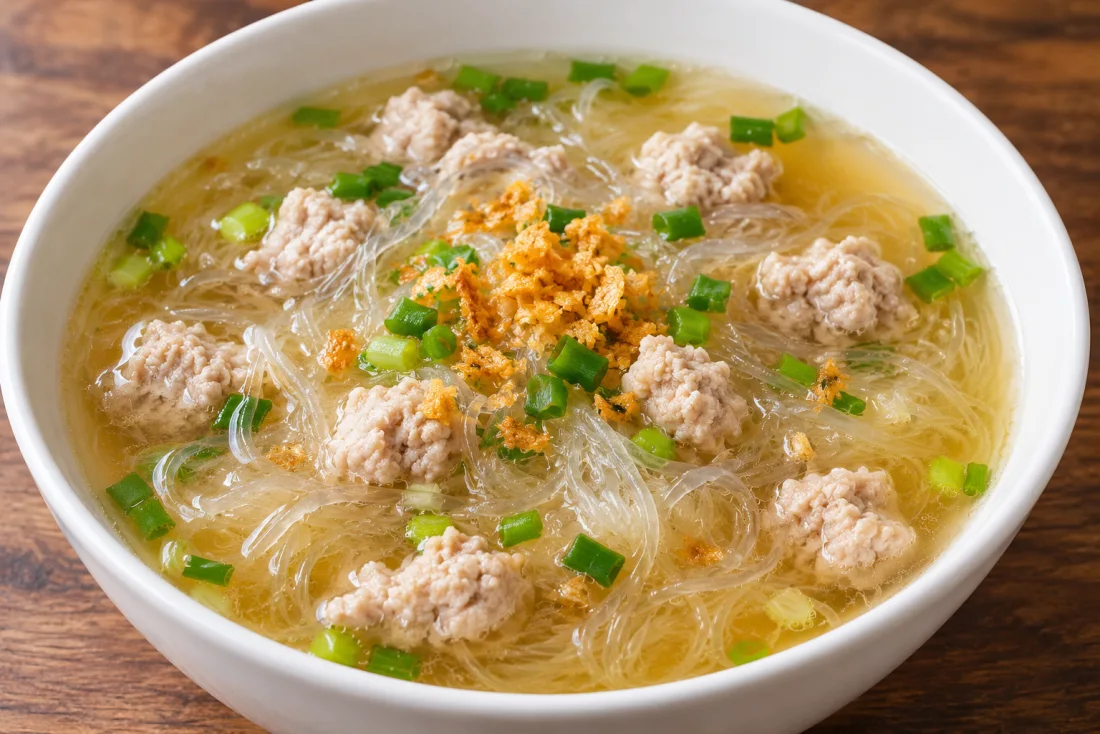
Gaeng jued is a mild soup and woon sen means glass noodles. A Thai teaching recipe puts noodles, napa cabbage, minced pork balls and egg tofu in a clear broth. Other versions can use fish balls, vegetables or mushrooms.
Noodles, broth and pork balls
Thai glass noodles often use mung bean starch, sometimes blended with other starches. Soak or cook the noodles as needed. Add them near the end, or cut them short and mix them into the meatballs. Garlic, coriander root and pepper can flavor the broth.
Mild savor and a springy bite
The broth may taste gently of pork, napa cabbage, pepper and garlic. Clear noodles are smooth and slightly springy and soften as they sit. Tofu and vegetables add different textures. A clear broth can still contain seasoned stock.
Eating with rice or from a small bowl
Share broth, noodles and meat or vegetables. Spoon a little soup over rice if desired. Some cooks add softened noodles at serving to preserve their texture. Let very hot meatballs and soup cool to a comfortable temperature.
Northern glass noodle curry and other noodles
A northern pork and glass noodle curry can include tomato and chili paste. Yam is a glass noodle salad and pad woon sen is a stir-fry. Glass noodles use starch such as mung bean, while rice noodles use rice.
Allergens in noodle, broth and toppings
Check the noodle starch blend, soy and wheat in stock or seasonings, egg in egg tofu, and fish or shrimp in seasonings and toppings. Check oyster sauce if used. Ask about shared pots, strainers, ladles and boards.
If you have a food allergy, tell the restaurant before ordering and ask about ingredients, sauces and shared cooking equipment.